
Envelope Budgeting: What It Is and Whether It Still Holds Up

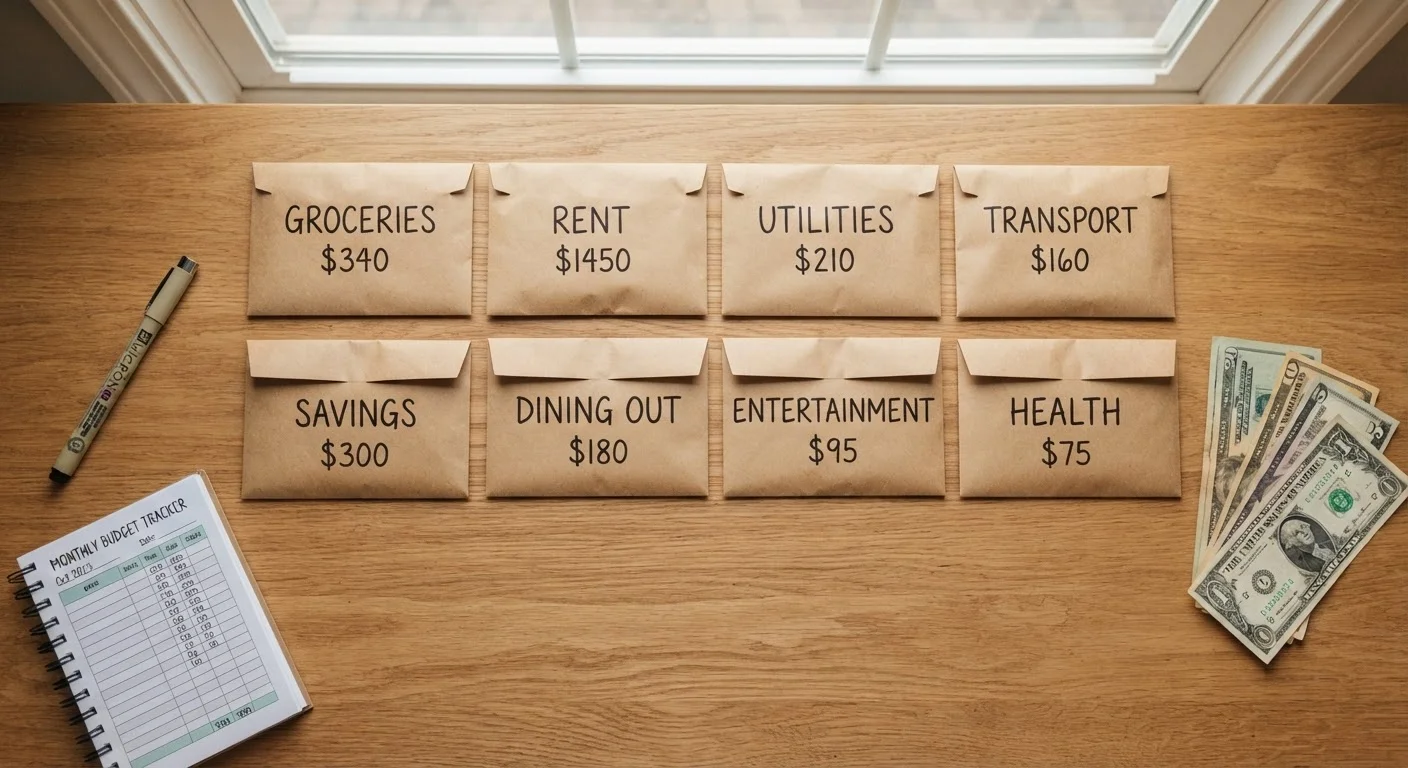
Photo: AnswersVista.com | Trustworthy Information Every Day editorial
Key Takeaways
- Envelope budgeting assigns physical cash to spending categories, creating a hard spending limit per category.
- The method is most effective for variable, discretionary expenses like groceries and dining out.
- Digital alternatives mimic the envelope concept without requiring cash withdrawals.
- The system can break down when most spending happens online or via card transactions.
- Envelope budgeting works best as a short-term habit-building tool, not necessarily a permanent system.
Forces intentional spending before the month begins
By allocating cash upfront, you make deliberate trade-off decisions rather than spending reactively. This pre-commitment removes the temptation to rationalize purchases in the moment.
Provides a hard, visible spending limit per category
An empty envelope signals a clear stop - there's no ambiguity about whether you've overspent. This transparency is difficult to replicate with card statements reviewed after the fact.
No technology or special account required
The system works for anyone with cash and envelopes, making it accessible to those who are unbanked, tech-averse, or simply prefer a low-friction approach.
Reduces impulse spending through the pain of paying
Studies have found that people typically spend less when using physical cash compared to cards. The act of handing over bills makes expenditure feel more consequential.
Builds budgeting habits quickly for beginners
Because the system is simple and immediate, it's an effective entry point for people who have never budgeted before and need a concrete, tangible structure to follow.
Impractical for online and card-only transactions
Rent payments, utility autopay, subscription services, and e-commerce purchases can't be made with envelope cash. This limits the system's reach to only a portion of most people's spending.
Cash is a security risk if lost or stolen
Unlike bank deposits, cash has no federal protection if it disappears. Keeping meaningful sums at home or carrying them increases personal financial risk.
Requires regular ATM visits and cash handling
Withdrawing and sorting cash each pay period takes time and may involve ATM fees. This friction can erode motivation, especially for busy households.
Rigid category limits don't reflect real-world variability
Unexpected car repairs or medical co-pays don't fit neatly into preset envelopes. Rigid boundaries can force awkward transfers or simply break the system under real-life pressure.
Doesn't integrate well with joint finances
Couples or households sharing expenses may find it difficult to coordinate who holds which envelope, creating friction for everyday shared purchases.
How the Envelope System Works
Envelope budgeting is a cash-based spending framework that dates back at least to the early twentieth century, long before personal finance apps existed. The concept is straightforward: at the start of each budget period - typically a month or a paycheck cycle - you withdraw cash and divide it into labeled envelopes, each representing a spending category.
Common categories include groceries, dining out, gas, entertainment, clothing, and personal care. When an envelope runs dry, spending in that category stops until the next budget period. There's no borrowing from next month, and no creative accounting. The physical cash is the limit.
This structure appeals to its simplicity. You don't need software, a bank account with special features, or a spreadsheet. A stack of envelopes and a clear-eyed look at your income is all that's required. It fits neatly within the broader family of zero-based budgeting principles, where every dollar is given a purpose - for more on that framework, see how zero-based budgeting compares.
The Case For Envelope Budgeting
The envelope method's durability isn't accidental. Several psychological and practical factors make it genuinely effective for the right person.
Forces intentional spending before the month begins
By allocating cash upfront, you make deliberate trade-off decisions rather than spending reactively. This pre-commitment removes the temptation to rationalize purchases in the moment.
Provides a hard, visible spending limit per category
An empty envelope signals a clear stop - there's no ambiguity about whether you've overspent. This transparency is difficult to replicate with card statements reviewed after the fact.
No technology or special account required
The system works for anyone with cash and envelopes, making it accessible to those who are unbanked, tech-averse, or simply prefer a low-friction approach.
Reduces impulse spending through the pain of paying
Studies have found that people typically spend less when using physical cash compared to cards. The act of handing over bills makes expenditure feel more consequential.
Builds budgeting habits quickly for beginners
Because the system is simple and immediate, it's an effective entry point for people who have never budgeted before and need a concrete, tangible structure to follow.
~18%
Americans who use cash for most purchases
According to a Pew Research Center survey, the share of Americans who use cash for all or almost all purchases has declined sharply over the past decade, complicating purely cash-based budgeting systems.
60%+
Adults living paycheck to paycheck
Multiple annual surveys, including those conducted by LendingClub, have found that a majority of U.S. adults report spending most or all of their monthly income, underscoring the need for structured spending systems.
For people new to budgeting, the tactile experience of handling cash builds awareness that card swipes simply don't. Research consistently shows that people tend to spend less when paying with cash versus a card - a phenomenon sometimes called the "pain of paying." When you hand over a $20 bill, the transaction feels more real than a tap of your phone.
The system also requires you to confront your budget before spending, not after. That pre-commitment is a meaningful behavioral guardrail, especially for variable categories that tend to expand quietly - groceries, coffee, takeout - until they've eaten through your savings margin.
Where the System Falls Short
Despite its strengths, envelope budgeting has friction points that are hard to ignore in a modern financial life.
Impractical for online and card-only transactions
Rent payments, utility autopay, subscription services, and e-commerce purchases can't be made with envelope cash. This limits the system's reach to only a portion of most people's spending.
Cash is a security risk if lost or stolen
Unlike bank deposits, cash has no federal protection if it disappears. Keeping meaningful sums at home or carrying them increases personal financial risk.
Requires regular ATM visits and cash handling
Withdrawing and sorting cash each pay period takes time and may involve ATM fees. This friction can erode motivation, especially for busy households.
Rigid category limits don't reflect real-world variability
Unexpected car repairs or medical co-pays don't fit neatly into preset envelopes. Rigid boundaries can force awkward transfers or simply break the system under real-life pressure.
Doesn't integrate well with joint finances
Couples or households sharing expenses may find it difficult to coordinate who holds which envelope, creating friction for everyday shared purchases.
The most significant structural problem is that much of daily spending has moved online or to card-based transactions. Paying rent, utilities, streaming subscriptions, and online purchases with cash is either impractical or impossible. This means the envelope method, in its pure form, covers only a slice of your total budget.
Security is another concern. Carrying large amounts of cash or keeping it at home creates real risk. Unlike a bank account, cash lost or stolen is simply gone. For anyone living in an area with safety concerns - or who travels frequently - this is a meaningful drawback.
For a broader look at how manual and automated approaches stack up, manual budgeting vs. automated tools covers the trade-offs in detail.
Digital Envelope Apps: A Middle Ground
Modern Adaptations Worth Knowing
The envelope system's core logic - pre-allocating money to categories before you spend - has been adapted widely in the digital age. Several budgeting apps replicate the envelope structure virtually, letting users assign portions of their income to digital "buckets" that track spending automatically against those limits. This preserves the discipline of the method without requiring a trip to the ATM.
A hybrid approach also works for many people: use cash envelopes for the categories where you're most prone to overspending (say, groceries and dining out), and track everything else digitally. You get the behavioral benefit of physical cash where it matters most, without the logistical headaches for fixed or online expenses.
Whichever approach you use, the underlying discipline - deciding where money goes before it arrives - is supported by most modern budgeting frameworks. For a comparison, see how the 50/30/20 rule handles category allocation.
This article is for general informational and educational purposes only and does not constitute personalized financial advice. Consider consulting a qualified financial professional regarding your specific circumstances.
The content provided on our blog site traverses numerous categories, offering readers valuable and practical information. Readers can use the editorial team’s research and data to gain more insights into their topics of interest. However, they are requested not to treat the articles as conclusive. The website team cannot be held responsible for differences in data or inaccuracies found across other platforms. Please also note that the site might also miss out on various schemes and offers available that the readers may find more beneficial than the ones we cover.