
Tracking Spending Without an App: Low-Tech Methods That Work

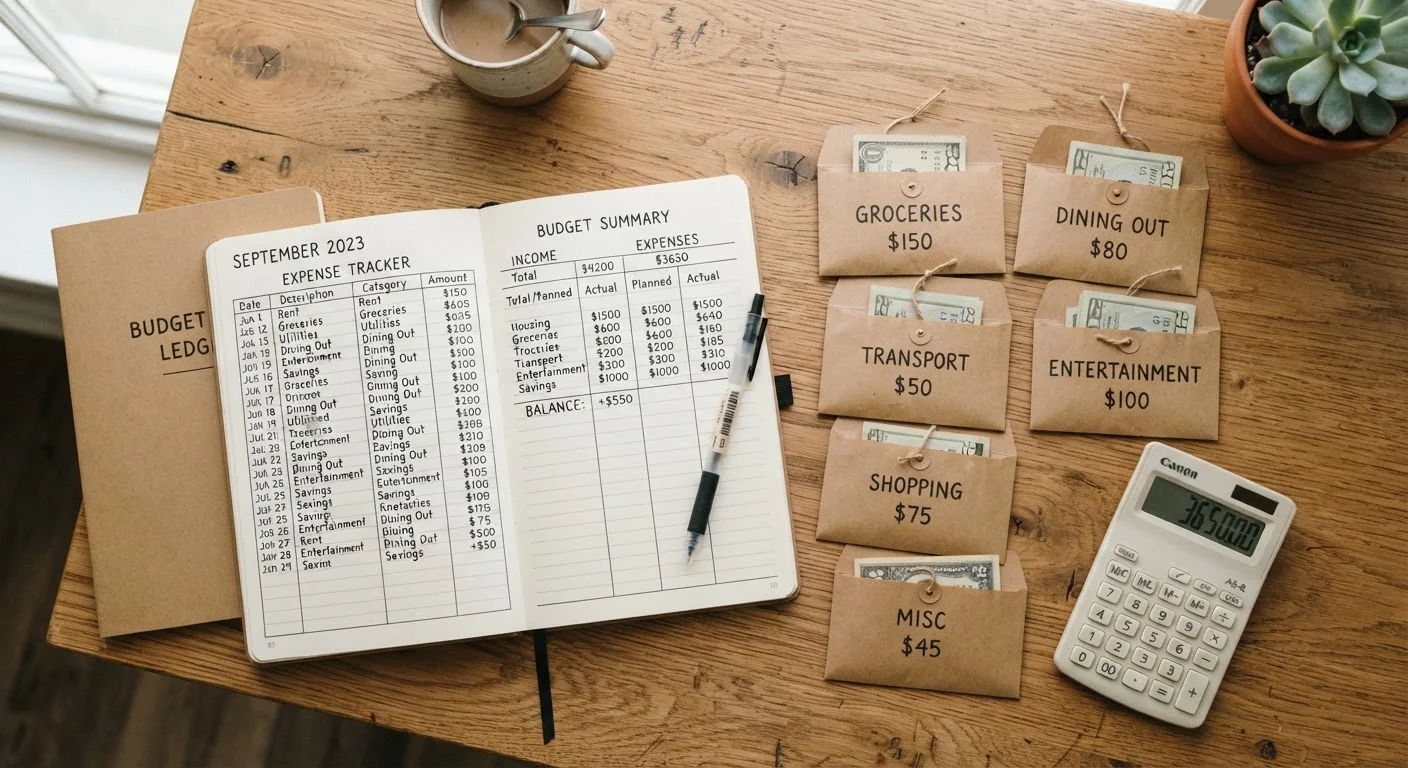
Photo: AnswersVista.com | Trustworthy Information Every Day editorial
Key Takeaways
- Pen-and-paper budgeting methods are proven effective and require no smartphone, subscription, or internet access.
- The envelope system physically separates spending categories, making overspending nearly impossible.
- A daily spending log takes under five minutes and dramatically improves awareness of where money goes.
- Weekly cash reconciliation catches errors and patterns before they compound into bigger problems.
- Low-tech methods often build stronger money habits because the manual effort increases mindfulness.
Why Low-Tech Budgeting Still Works
Not every effective budgeting system lives on a screen. For many people, apps create friction - privacy concerns, subscription fees, syncing issues, or simply the distraction of having a phone in hand. The good news: some of the most reliable spending-tracking methods involve nothing more than a pen, paper, and a few envelopes.
Research in behavioral economics consistently shows that writing things down by hand increases retention and conscious decision-making. When you physically record a $14 lunch or $60 gas fill-up, it registers differently than a passive transaction log. That friction is the point. If you've tried apps and found them easy to ignore, a tactile system may be exactly what creates the accountability you need.
These methods also work well alongside a regular financial review. Once you've tracked a month of spending manually, tools like the monthly budget audit checklist can help you interpret what you've gathered and reset your plan. Curious how manual methods compare to automation overall? See our overview of manual versus automated budgeting to weigh the trade-offs for your situation.
Start With Just One Week
5 Low-Tech Methods That Keep Spending Visible
The Daily Spending Log
Keep a small pocket notebook - or even a folded index card - with you and write down every purchase as it happens. Include the amount, category, and a one-word description. At the end of each day, total the entries and compare against your daily allowance for that category.
The key is immediacy: logging a purchase right after it happens prevents the end-of-week guessing game of where $200 disappeared. Many people are surprised to discover that small, frequent purchases - coffee, convenience store stops, vending machines - account for a significant portion of weekly spending once documented consistently.
Logging purchases immediately eliminates the guessing game of where money went.
The Cash Envelope System
At the start of each pay period, withdraw your budgeted cash for variable spending categories - groceries, dining, entertainment, personal care - and divide the bills into labeled envelopes. When an envelope is empty, spending in that category stops for the period.
This method makes limits concrete and visible in a way that digital balances rarely do. It works especially well for categories like groceries, where small overages add up quickly. For inspiration on trimming one of the most common budget lines, see how shopping habits can reduce weekly grocery costs without changing what you eat.
When the envelope is empty, spending stops - there's no way to accidentally overspend.
The Weekly Spending Grid
Draw a simple grid on a sheet of paper: days of the week across the top, spending categories down the left side. Each day, enter the amount spent in each category. Totals run across rows (weekly category total) and down columns (daily total spend).
This bird's-eye format lets you spot patterns at a glance - heavy spending on Fridays, recurring charges mid-month, or categories that consistently blow past their column target. A 10-minute Sunday review of the grid is often enough to recalibrate the coming week before small drift becomes a bigger shortfall.
A weekly grid reveals spending patterns at a glance with just a 10-minute Sunday review.
The Receipt Collection Method
Collect every receipt throughout the week in a designated envelope or folder. On a set day - Sunday evening works for most people - sort receipts into categories, add each pile, and record the totals in a simple ledger. Discard the receipts once logged.
This batching approach suits people who find real-time logging disruptive but still want complete records. It also doubles as a fraud check: reviewing receipts weekly catches duplicate charges or billing errors that might otherwise go unnoticed for months. The same discipline applies when planning larger expenses, such as using a travel budget framework to track trip-related receipts separately.
Weekly receipt sorting doubles as both a budget check and a fraud-detection habit.
The Running Balance Ledger
Like a paper checkbook register - but for all spending, not just checks - a running balance ledger starts each month with your total available funds and subtracts every purchase as it occurs. The remaining balance is always visible, functioning as a real-time meter of how much you have left to spend.
This method works best for people who think in terms of a single spending pool rather than siloed categories. It requires diligent updating - skipping even a few entries blurs the balance - but for those who keep up with it, the psychological effect of watching a number count down is a powerful spending brake.
Watching a single number count down every time you spend is a powerful natural brake.
Cash-Heavy Methods and Card Users
Making Your Method Stick
The best tracking system is the one you'll actually use consistently. Start with just one method - don't layer all five at once. Give it a full month before judging its effectiveness, because the first couple of weeks are an adjustment period, not a representative sample.
Consistency matters more than perfection. If you miss recording a day, pick up the next day without guilt. Over time, you'll notice patterns: categories that surprise you, weeks that trend higher, and habits that quietly drain your budget more than you realized. That awareness is the real outcome of any tracking system, low-tech or otherwise.
This article is for general informational and educational purposes only and does not constitute personalized financial advice. Consult a qualified financial professional for guidance specific to your circumstances.
The content provided on our blog site traverses numerous categories, offering readers valuable and practical information. Readers can use the editorial team’s research and data to gain more insights into their topics of interest. However, they are requested not to treat the articles as conclusive. The website team cannot be held responsible for differences in data or inaccuracies found across other platforms. Please also note that the site might also miss out on various schemes and offers available that the readers may find more beneficial than the ones we cover.