
Training a Dog From Day One: What New Owners Need to Know

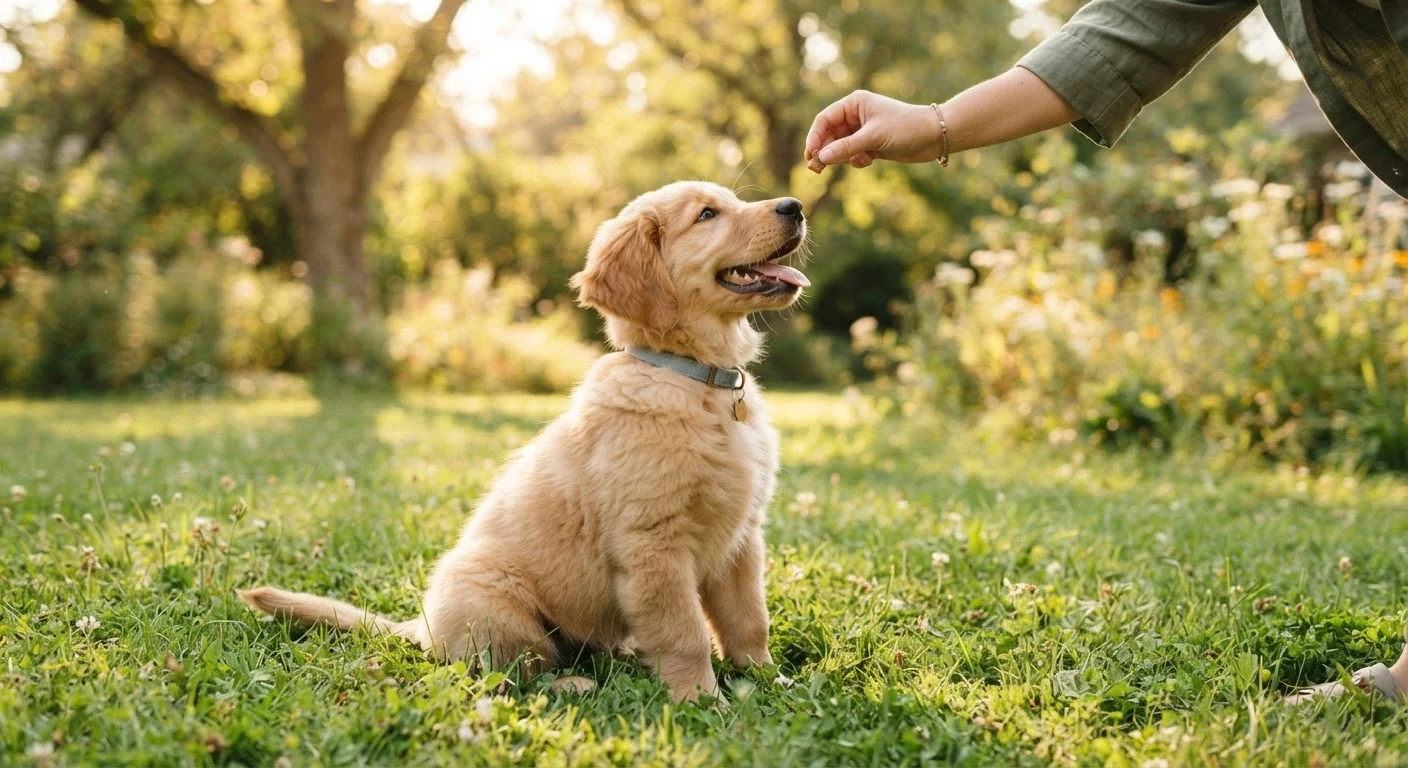
Photo: AnswersVista.com | Trustworthy Information Every Day editorial
Key Takeaways
- Training begins the moment your dog arrives home - every interaction is a lesson.
- Positive reinforcement is backed by behavioral science and is more effective than punishment-based methods.
- Short, consistent training sessions of 5-10 minutes are far more effective than infrequent long ones.
- All members of the household must use the same cues and rules to avoid confusing the dog.
- Early socialization is a critical part of training, not a separate concern.
- A professional trainer or veterinary behaviorist can help when problem behaviors persist.
Why Day One Matters More Than You Think
Many new owners assume training starts once the dog has "settled in." In reality, your dog begins learning the moment they cross your threshold. The first experiences in your home shape expectations: where they sleep, whether jumping gets attention, what happens when they chew the wrong thing. Waiting even a few weeks allows habits - good or bad - to solidify.
This is especially true for puppies, whose critical socialization window runs roughly from 3 to 14 weeks of age. During this period, positive exposure to people, sounds, surfaces, and other animals has an outsized effect on long-term temperament. But adult and rescue dogs benefit just as much from clear, consistent guidance from the start. Check out our first-30-days health checklist to coordinate training alongside those essential early vet steps.
Puppies and Adult Dogs Both Benefit Early
The Core Principles of Positive Reinforcement
Positive reinforcement means adding something the dog values - a treat, praise, play - immediately after the dog performs a desired behavior. This makes the behavior more likely to happen again. It's the approach most strongly supported by behavioral science and endorsed by major veterinary and animal behavior organizations.
Positive reinforcement
A training method where a reward is added immediately after a desired behavior to make that behavior more likely to occur again.
Marker word
A short, consistent sound or word (like "yes") used at the exact moment a dog performs the right behavior, signaling that a reward is coming.
Socialization window
A developmental period in young puppies, roughly 3-14 weeks, during which positive exposure to new experiences has the greatest influence on long-term temperament.
Impulse control
A dog's ability to pause and wait rather than immediately reacting to something exciting or tempting - taught through exercises like stay and leave it.
Rate of reinforcement
How frequently rewards are given during training; a higher rate early in learning helps the dog understand what behavior is being rewarded.
Recall
The trained behavior of a dog returning to the owner on cue - often called "come" - considered one of the most important safety skills.
Three elements make positive reinforcement work:
- Timing: The reward must come within 1-2 seconds of the behavior, or the dog can't connect the two. A clicker or a consistent marker word like "yes" bridges the gap between the behavior and the treat.
- Rate of reinforcement: Early in learning, reward every correct response. As the behavior becomes reliable, you can reward intermittently - but don't fade rewards too soon.
- Value: Use rewards your dog actually wants. What motivates one dog may bore another. For more on debunking outdated training ideas, see common training myths and what research shows.
Essential Commands to Teach First
Don't try to teach everything at once. Prioritize cues that create safety and a communication foundation:
- Sit: One of the easiest behaviors to shape and a natural substitute for jumping up. Ask for a sit before meals, before going outside, or before greetings.
- Stay: Builds impulse control and keeps your dog safe in unpredictable situations. Start with one-second stays at close range before adding duration or distance.
- Come (recall): The most important safety cue. Always make coming to you a positive event - never call your dog to scold them.
- Leave it: Teaches your dog to disengage from objects or food on cue, a critical skill for preventing accidental ingestion of harmful items.
- Loose-leash walking: Not "heel" in a formal sense, but simply walking without pulling. Practice in low-distraction environments first.
Make Recall a Celebration Every Time
Building Consistency: Routines, Rules, and Everyone in the Household
Dogs learn through patterns. Inconsistency - one family member allowing the dog on the sofa while another forbids it - creates confusion, not defiance. Before your dog arrives, agree on house rules as a household: which furniture is off-limits, what the cue words will be for each behavior, and how jumping or demand barking will be handled.
Routine also reduces anxiety. A predictable schedule for feeding, walks, play, and rest gives your dog a framework for what to expect, which generally makes them calmer and more receptive to learning. Keep training sessions short (5-10 minutes for puppies) and spread them throughout the day rather than cramming everything into one long session.
Socialization fits here too - it isn't separate from training. Planned, positive exposure to new environments, people, and sounds is structured learning. Avoid the common missteps outlined in our guide on new pet owner pitfalls.
When to Seek Professional Help
Self-directed training works well for the majority of new dog owners, but there are clear signs it's time to bring in a professional. If your dog shows aggression toward people or other animals, extreme fear responses, resource guarding, or separation-related distress that isn't improving, consult a certified professional trainer (look for credentials such as CPDT-KA) or a veterinary behaviorist.
Some behavioral issues have a medical component - a dog in pain may snap, and anxiety can have physiological underpinnings - so a veterinary check-in is always worthwhile before assuming a behavior is purely a training problem. Our pet health hub covers the health factors that can influence behavior.
If you're weighing training formats, our guide on group classes vs. private sessions can help you decide what suits your dog's temperament and your own schedule. Whichever path you choose, starting early, staying consistent, and building trust are the fundamentals that make everything else possible.
Frequently Asked Questions
The content provided on our blog site traverses numerous categories, offering readers valuable and practical information. Readers can use the editorial team’s research and data to gain more insights into their topics of interest. However, they are requested not to treat the articles as conclusive. The website team cannot be held responsible for differences in data or inaccuracies found across other platforms. Please also note that the site might also miss out on various schemes and offers available that the readers may find more beneficial than the ones we cover.