
Term Life vs. Whole Life Insurance: Understanding What You're Actually Comparing

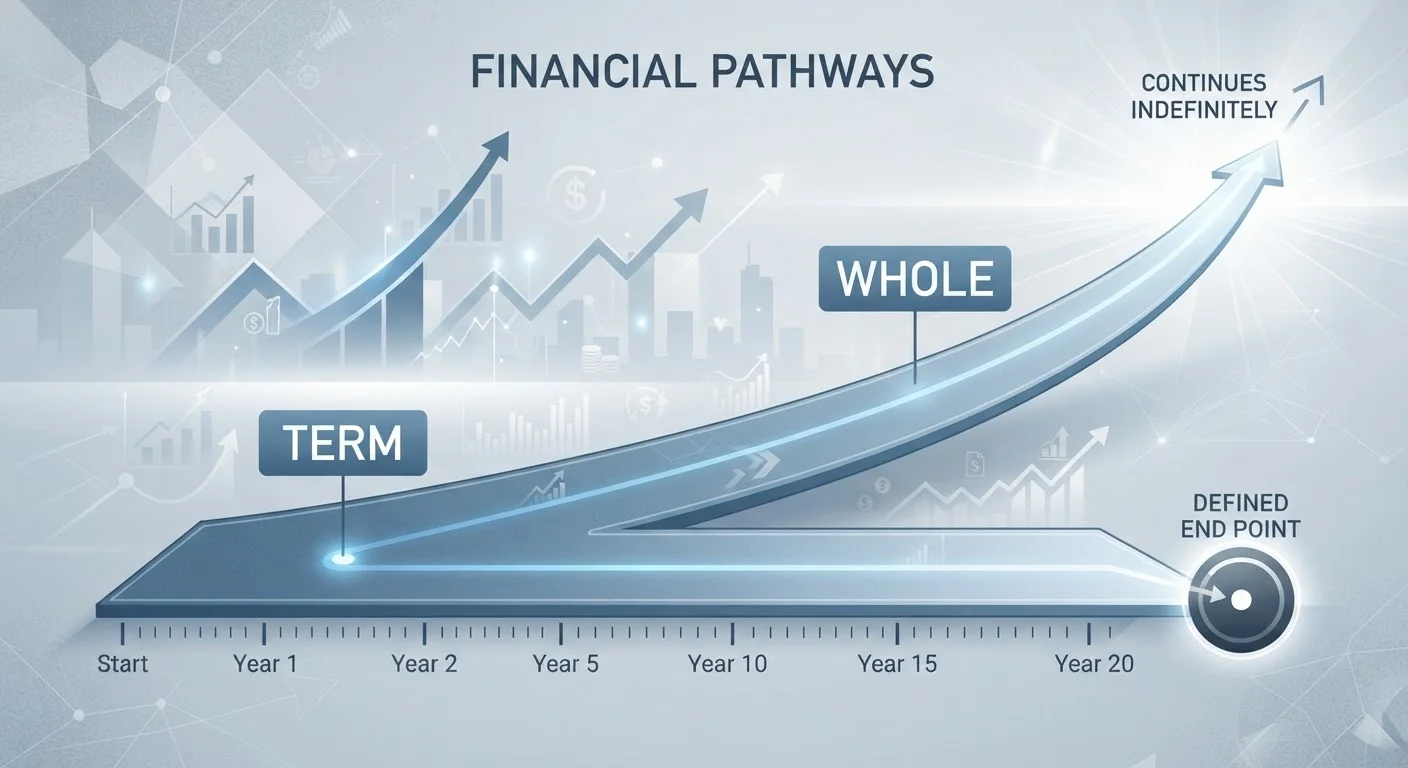
Photo: AnswersVista.com | Trustworthy Information Every Day editorial
Key Takeaways
- Term life covers a fixed period; whole life covers the insured's entire lifetime.
- Whole life premiums are substantially higher because part of each payment builds cash value.
- The cash value in whole life grows slowly in early years and is not the same as the death benefit.
- Term life is generally simpler to evaluate; whole life involves more complex contractual terms.
- Neither product is universally superior - your financial situation and goals determine which is appropriate.
- A licensed financial adviser or insurance professional should be consulted before purchasing either product.
The Core Structural Difference
Life insurance exists to provide a financial benefit to designated beneficiaries when the policyholder dies. Both term and whole life accomplish that basic function - but they are built on fundamentally different architectures, and confusing one for the other leads to mismatched coverage decisions.
Term life insurance is a contract for a defined period - commonly 10, 20, or 30 years. If the insured dies during that term, the policy pays the death benefit. If the term expires while the insured is still living, the coverage ends with no payout and no accumulated value. The premium is determined at issue and reflects the probability of death within the chosen window, the death-benefit amount, and the applicant's health profile.
Whole life insurance does not expire. Coverage remains in force for the insured's entire lifetime, provided premiums are paid. A portion of each premium funds the death benefit, while another portion accumulates as cash value within the policy at a rate specified by the insurer. This dual-purpose structure is what drives the significant premium difference between the two products.
Understanding this structural split is essential before evaluating any other feature of either policy type. The right product for your situation depends on what you actually need the insurance to do - and when. For a broader look at how financial decisions connect, see our guide to financial goals versus financial plans.
How Premiums and Cash Value Actually Work
Premium pricing is where the two product types diverge most visibly. A healthy 35-year-old purchasing a $500,000 term policy might pay a fraction of what a comparable whole life policy would cost. The gap exists because term premiums fund only the risk of death within a finite window, while whole life premiums must also fund a guaranteed lifetime benefit and a cash-value accumulation mechanism.
| Criterion | Term Life | Whole Life |
|---|---|---|
| Coverage duration | Fixed term (e.g., 10-30 years) | Lifetime (permanent) |
| Premium level | Lower for equivalent death benefit | Significantly higher |
| Cash value | None | Accumulates over time |
| Death benefit paid if... | Death occurs within the term | Death occurs at any age |
| Complexity | Relatively straightforward | More complex contractual terms |
| Policy loan option | Not available | Available against cash value |
| Primary planning use | Income replacement, debt coverage | Estate planning, permanent legacy |
The cash value in a whole life policy deserves careful attention. It is not the same as the death benefit - when a policyholder dies, beneficiaries typically receive the death benefit, not the death benefit plus the cash value. The cash value belongs to the policyholder during their lifetime: they may borrow against it or, in some cases, surrender the policy for its accumulated value minus any applicable fees. However, cash-value growth in the early years of a whole life policy is slow, partly because a significant portion of early premiums covers insurer costs and commissions.
Term insurance has no cash value. When the term ends, no funds are returned. Some term policies offer a return-of-premium rider that refunds premiums if the insured outlives the term, but this feature substantially raises the premium cost and adds contractual complexity that should be evaluated carefully.
~5-15×
Whole life premium multiple over comparable term
Industry sources and consumer financial educators commonly cite whole life premiums as several multiples higher than term for the same death-benefit amount, though exact ratios vary by age, health, and insurer.
20-30 yrs
Most common term lengths purchased
Financial planning guidance generally aligns term length with the duration of major financial obligations such as mortgage payoff timelines or years until dependents reach adulthood.
What Each Product Is - and Isn't - Designed For
One of the most persistent sources of confusion is treating whole life as a superior version of term life. They are distinct instruments with different intended applications.
Term life is designed to replace income or cover specific obligations during years when dependents or debts make a sudden death financially catastrophic. A 20-year term purchased while children are young and a mortgage is active addresses that precise exposure. When the term ends, children are typically financially independent and the mortgage may be retired - reducing or eliminating the coverage need.
Whole life addresses different planning scenarios. Individuals who want to ensure a death benefit is paid regardless of longevity - for estate equalization among heirs, to cover anticipated estate tax liabilities, or to fund a specific charitable legacy - may find permanent coverage structurally appropriate. The cash-value component can also serve as a policy loan source in certain financial strategies, though it should never be evaluated in isolation from its costs and opportunity cost relative to other savings vehicles.
Treating either product as universally better misframes the decision. The right question is not which type is superior but what does this coverage need to accomplish, and for how long. Just as understanding fine print matters in other financial contracts - see our guide to reading contract fine print - policy language in life insurance deserves the same scrutiny before signing.
This article is for general informational purposes only and does not constitute financial, legal, or insurance advice. Consult a qualified, licensed financial adviser or insurance professional before making any coverage decisions based on your personal circumstances.
The content provided on our blog site traverses numerous categories, offering readers valuable and practical information. Readers can use the editorial team’s research and data to gain more insights into their topics of interest. However, they are requested not to treat the articles as conclusive. The website team cannot be held responsible for differences in data or inaccuracies found across other platforms. Please also note that the site might also miss out on various schemes and offers available that the readers may find more beneficial than the ones we cover.