
Road-Tripping the American South: Culture, Food, and Routes Worth Knowing

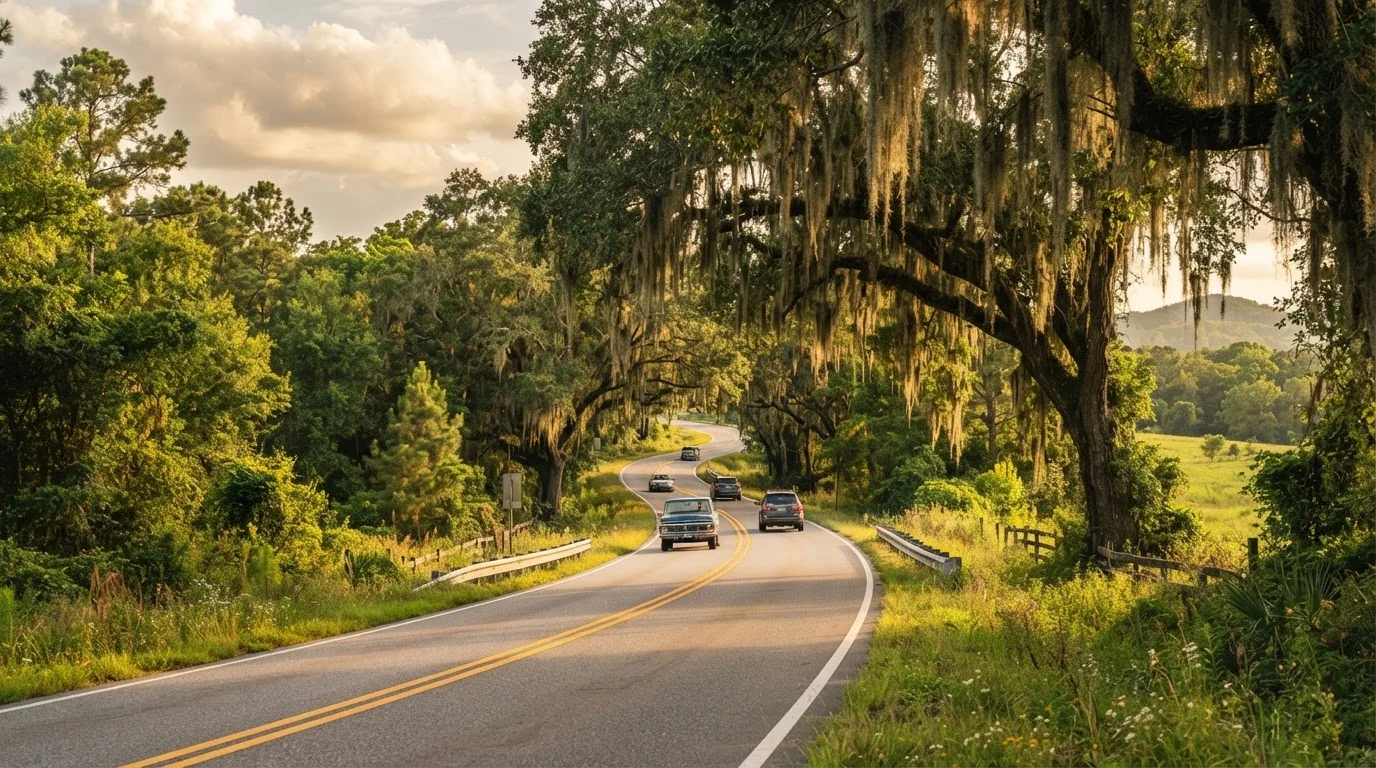
Photo: AnswersVista.com | Trustworthy Information Every Day editorial
Key Takeaways
- The South's best experiences are concentrated in small towns and secondary highways, not interstates.
- Three distinct route corridors — the Gulf Coast, the Mississippi Delta, and the Appalachian foothills — each offer a different character.
- Food is inseparable from regional culture; understanding local traditions deepens the experience.
- Summer heat and hurricane season are real planning considerations for Gulf and coastal routes.
- A loose itinerary beats a rigid schedule — the South has a way of offering unexpected detours worth taking.
Why the South Rewards Slow Travel
The American South is one of the most culturally layered regions in the country. Its history — painful, complex, and resilient — is embedded in the architecture of its cities, the music drifting from open doors, and the recipes passed through generations. Rushing through it on interstates mostly means missing it.
Slow travel here means choosing US highways over I-highways when time allows, stopping in towns that don't appear on highlight reels, and building breathing room into your schedule. If you're still figuring out how to structure that kind of trip, the guide to building an itinerary that actually works is a useful starting point — especially its advice on balancing anchor stops with flexible days.
The South also has a genuine hospitality culture that tends to slow things down in the best way. A casual conversation at a diner counter can redirect your afternoon entirely. That's a feature, not an inconvenience.
Three Routes Worth Mapping
Rather than treating the South as one undifferentiated region, it helps to pick a corridor that matches your interests.
The Gulf Coast Route
Running roughly from Pensacola, Florida, through Mobile, Alabama, and on to New Orleans, this stretch rewards beach towns, seafood culture, and Creole architecture. New Orleans anchors it as a world-class food and music city. The towns in between — Biloxi, Bay St. Louis, Pass Christian — offer a quieter slice of Gulf life without the crowds.
The Mississippi Delta Blues Trail
From Memphis, Tennessee, south through the Delta to Vicksburg, this route follows the geographic birthplace of American blues music. Clarksdale, Mississippi, is the emotional center — small, honest, and home to the Delta Blues Museum. This route is not polished, which is precisely its value.
The Appalachian Foothills Loop
Connecting Asheville, North Carolina, with Chattanooga, Tennessee, and curving through northern Georgia, this inland route trades heat for elevation, offering cooler temperatures, craft culture, and access to portions of the Blue Ridge Parkway. It suits travelers who want mountain scenery alongside Southern small-town character.
When choosing between routes, let your travel dates drive the decision as much as your interests. The Gulf Coast in July is punishing; the Appalachian loop stays ten to fifteen degrees cooler.
On the Delta Blues Trail, drive during the day but plan evenings in Clarksdale or Memphis — live music in small venues is where the cultural payoff actually happens.
Cultural Landmarks You Shouldn't Skip
Several sites carry genuine weight and deserve more than a passing stop.
- The National Civil Rights Museum (Memphis, TN): Built at the Lorraine Motel, it is one of the most important historical museums in the United States. Budget at least three hours.
- Oak Alley Plantation (Vacherie, LA): Like many plantation sites, it is working to present a fuller history — including the lives of enslaved people — rather than a romanticized one. Engage with that history deliberately.
- The Delta Blues Museum (Clarksdale, MS): Modest in size but significant in depth. It contextualizes how blues music shaped not just American culture but global popular music.
- Asheville's River Arts District (Asheville, NC): A working artist community spread through former industrial buildings. It shows a different face of the modern South — creative, diverse, and locally driven.
For a broader list of US cities with distinct cultural character worth building a trip around, see our look at underrated US cities.
What to Eat and Where to Look
Southern food is regional, specific, and not monolithic. What counts as barbecue in Memphis (dry-rubbed ribs) is different from what you'll find in the Carolinas (pulled pork, vinegar sauce) or Texas (brisket). Treating these as interchangeable misses the point.
19
States in the US South region
The Census Bureau's definition of the South covers 19 states, underscoring the region's geographic and cultural diversity.
4+
Distinct barbecue regional styles
Food historians and culinary writers commonly identify at least four distinct regional barbecue traditions within the South alone, each with different meats, techniques, and sauces.
Food Traditions Worth Seeking Out
- Low Country cuisine (coastal South Carolina and Georgia)
- Shrimp and grits, she-crab soup, and rice-based dishes reflecting West African culinary influence.
- Creole and Cajun cooking (Louisiana)
- Distinct from each other — Creole is urban New Orleans, Cajun is rural Acadiana. Both are worth understanding on their own terms.
- Meat-and-three diners
- A Southern institution: choose a protein and three sides. The sides — especially field peas, collards, and mac and cheese — are often the main event.
In general, the best food tends to come from the least glamorous-looking places. Gas station boudin in Louisiana and roadside BBQ joints with hand-lettered signs consistently outperform their appearance.
Ask Locals Where They Actually Eat
Practical Logistics Before You Leave
A few realities worth knowing before you go:
- Heat: June through August is genuinely brutal across most of the South. Gulf humidity makes 90°F feel significantly hotter. If you have flexibility, spring (March–May) and fall (September–October) are far more comfortable for driving and walking.
- Hurricane season: Officially June 1 through November 30, with peak activity in August and September. If your route touches the Gulf Coast, check forecasts and understand that conditions can change quickly.
- Cell coverage: Rural Mississippi and parts of the Appalachian route can have limited signal. Download offline maps before you go.
- Sunday closures: Many small-town restaurants and shops still close on Sundays or keep limited hours. Plan ahead.
The overlooked logistics of trip planning covers several of these practical gaps that are easy to underestimate until you're already on the road. And if you're still weighing whether to drive or fly to your starting city, the road trip vs. flying comparison breaks down the real variables.
The South moves at its own pace. The travelers who enjoy it most are usually the ones willing to do the same.
The content provided on our blog site traverses numerous categories, offering readers valuable and practical information. Readers can use the editorial team’s research and data to gain more insights into their topics of interest. However, they are requested not to treat the articles as conclusive. The website team cannot be held responsible for differences in data or inaccuracies found across other platforms. Please also note that the site might also miss out on various schemes and offers available that the readers may find more beneficial than the ones we cover.