
Whole Foods vs. Processed Foods

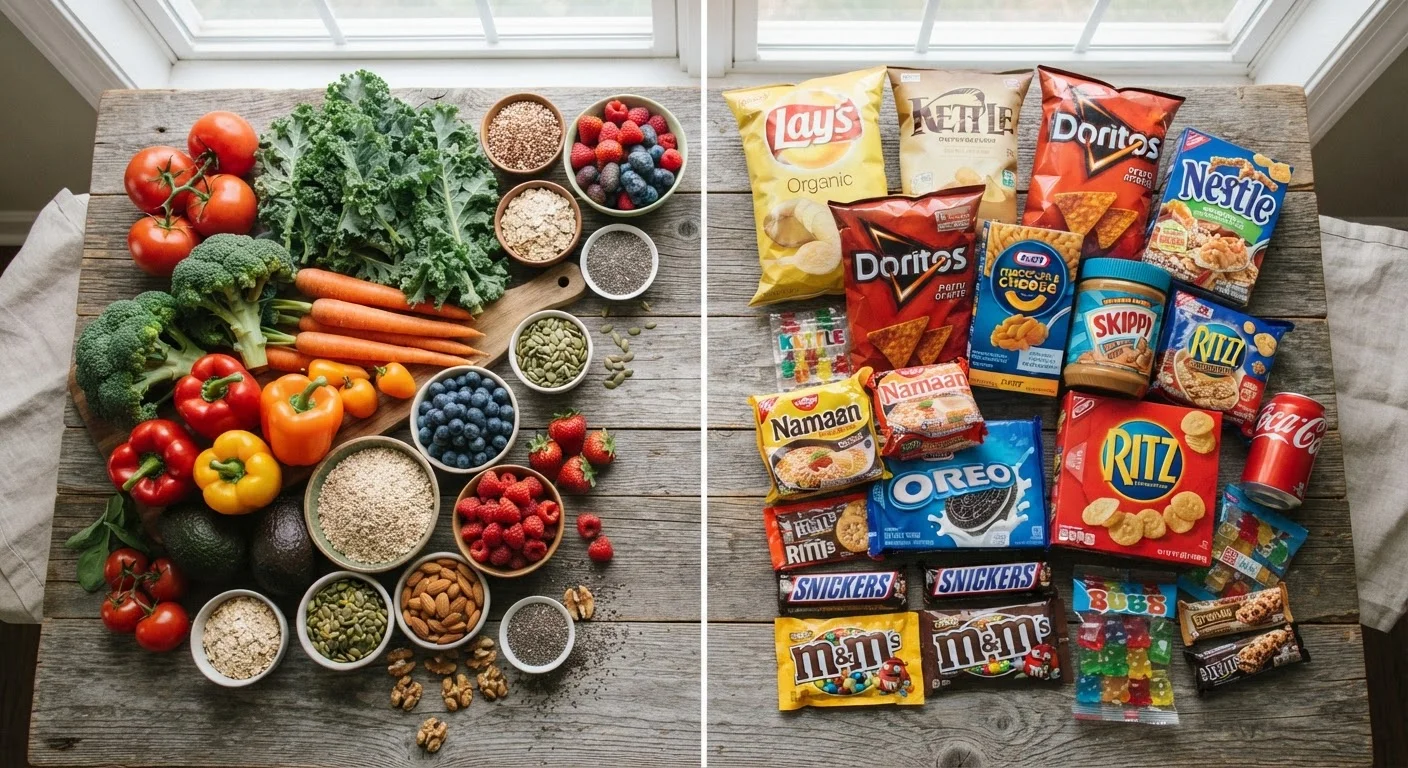
Photo: AnswersVista.com | Trustworthy Information Every Day editorial
Key Takeaways
- Processing exists on a spectrum - not all processed foods are nutritionally equivalent.
- Ultra-processed foods often contain added sugars, sodium, and additives that displace more nutrient-dense options.
- Whole foods tend to deliver more fiber, vitamins, and minerals per calorie than heavily processed alternatives.
- A practical, balanced approach - rather than rigid elimination - supports sustainable healthy eating.
- Reading nutrition labels helps consumers identify where a food falls on the processing spectrum.
Defining the Terms: What Makes a Food 'Whole' or 'Processed'?
A whole food is one that remains close to its natural state - think an apple, a handful of almonds, dried lentils, or a piece of salmon. These foods may be washed, cut, or cooked, but their fundamental nutritional structure is largely intact.
Processed foods, by contrast, have undergone some form of industrial or culinary alteration. This category is broad by design. The NOVA classification system - widely used in nutrition research - organizes foods into four groups based on the extent and purpose of processing:
- Group 1: Unprocessed or minimally processed foods (fresh fruit, plain yogurt, raw nuts)
- Group 2: Processed culinary ingredients (olive oil, flour, salt)
- Group 3: Processed foods (canned vegetables, cheese, cured meats)
- Group 4: Ultra-processed foods (soft drinks, packaged snack cakes, reconstituted meat products)
The critical distinction is between moderate processing - which can preserve nutrition and extend usability - and ultra-processing, which often involves significant addition of sugars, refined starches, industrial fats, and chemical additives with limited nutritional benefit. Understanding where a food falls on this spectrum is more useful than a binary whole-versus-processed judgment.
| Criterion | Whole Foods | Processed Foods |
|---|---|---|
| Nutritional integrity | Naturally intact vitamins, minerals, fiber | Varies; can be reduced or fortified |
| Fiber content | Generally high | Often low in ultra-processed varieties |
| Added sugars & sodium | Absent or negligible | Frequently elevated in ultra-processed foods |
| Shelf life | Short; requires refrigeration or prompt use | Extended; convenient for storage |
| Preparation time | Often requires cooking or prep | Usually quick or ready-to-eat |
| Cost | Variable; fresh produce can be pricier | Often lower cost per serving |
| Ingredient transparency | Inherently simple - the food is the ingredient | May include additives, preservatives, flavorings |
How Ultra-Processing Affects Nutritional Value
When foods are heavily processed, several nutritional changes can occur. Refining grains removes the bran and germ - the parts richest in fiber and B vitamins. Heat and mechanical processing can degrade heat-sensitive vitamins like vitamin C and folate. Manufacturers often add back synthetic nutrients (a process called fortification) to compensate, but the overall nutritional profile may still differ from the original food.
Ultra-processed foods also tend to be engineered for palatability - combining salt, sugar, and fat in ratios that can make it easy to eat beyond fullness cues. Research published in peer-reviewed journals, including work from the National Institutes of Health, suggests that diets high in ultra-processed foods are associated with higher caloric intake and certain adverse health outcomes, though the mechanisms are still being studied.
Not All Processing Is Equal
Fiber is one of the clearest nutritional casualties of heavy processing. Most Americans consume less than the recommended daily amount of dietary fiber, and ultra-processed foods - typically low in fiber - tend to dominate the U.S. food supply. Whole and minimally processed foods remain the most reliable sources of this essential nutrient.
For a closer look at one specific processed ingredient, see our guide to added sugar, which explains where it hides and how it differs from naturally occurring sugars.
A Practical Framework: Finding Balance Without Guilt
Nutrition science consistently points toward dietary patterns rather than individual food judgments. Eating an occasional packaged snack does not undermine a nutritious overall diet, just as eating a salad once doesn't compensate for a pattern of highly processed eating. Context and consistency matter far more than any single food choice.
A practical approach looks something like this:
- Build meal foundations from whole or minimally processed foods - vegetables, fruits, legumes, whole grains, and lean proteins form a nutrient-dense base.
- Use moderately processed staples strategically - canned tomatoes, frozen edamame, plain Greek yogurt, and whole-grain bread are processed but nutritionally sound and time-saving.
- Treat ultra-processed foods as occasional, not foundational - not forbidden, just not the primary source of daily nutrition.
Reading labels is a key practical skill here. Short ingredient lists, recognizable ingredients, and lower added sugar and sodium are markers worth noting. Our article on grocery shopping with nutrition in mind offers a structured checklist for applying these principles at the store.
For those looking to build eating habits that hold over the long term, sustainable eating habits covers the broader behavioral and lifestyle principles that support consistent, balanced nutrition without rigid rules.
This article provides general nutrition information for educational purposes only and is not a substitute for personalized advice from a registered dietitian or qualified healthcare professional.
The content provided on our blog site traverses numerous categories, offering readers valuable and practical information. Readers can use the editorial team’s research and data to gain more insights into their topics of interest. However, they are requested not to treat the articles as conclusive. The website team cannot be held responsible for differences in data or inaccuracies found across other platforms. Please also note that the site might also miss out on various schemes and offers available that the readers may find more beneficial than the ones we cover.