
The Anatomy of a Home Electrical Panel

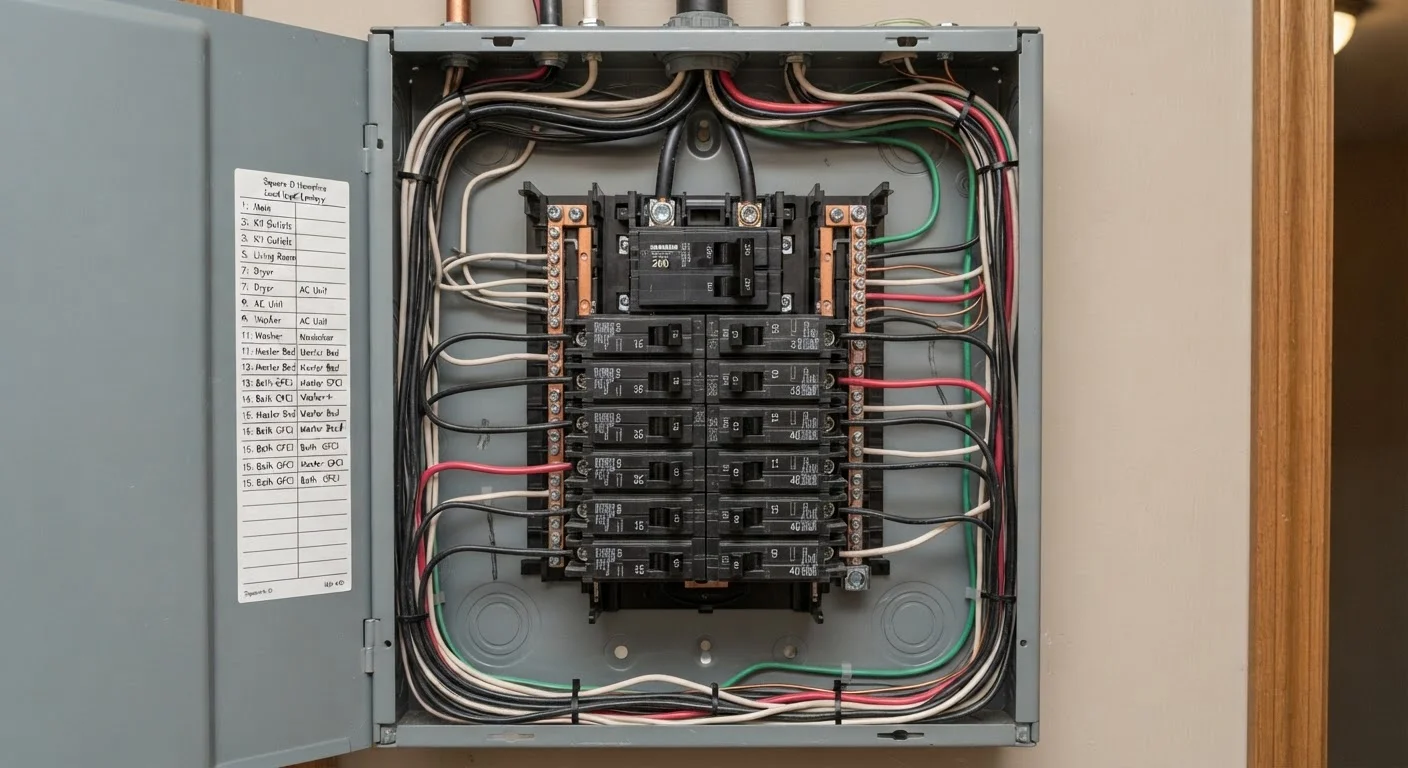
Photo: AnswersVista.com | Trustworthy Information Every Day editorial
Key Takeaways
- The main breaker controls all power to the house and is the first thing to locate in an emergency.
- Individual circuit breakers protect specific rooms or appliances from dangerous overloads.
- Bus bars are the internal metal rails that carry power from the main breaker to individual circuits.
- A 200-amp panel is standard in most modern homes and supports typical household electrical loads.
- Any work inside the panel beyond resetting a breaker should be done by a licensed electrician.
- Labels on breakers are your map - keeping them accurate saves time and prevents mistakes.
The Main Breaker: Your Home's Master Switch
At the top of every modern electrical panel sits the main breaker - a large double-pole switch, typically rated between 100 and 200 amps. It controls all power flowing from the utility meter into your home. Flipping the main breaker to OFF cuts electricity to every circuit simultaneously, which is critical during emergencies or when an electrician needs to work safely inside the panel.
The two thick wires entering the panel from above (called service entrance conductors) connect directly to the main breaker. These wires are always energized - they carry live voltage from the utility company and are never safe to touch, even when the main breaker is switched off. This distinction is essential: the main breaker protects your home's circuits, not the incoming lines themselves.
Locate Your Main Breaker Now
Bus Bars, Neutral Bars, and the Ground Bar
Once power passes through the main breaker, it flows to two vertical metal rails called hot bus bars. These bars run down the center or sides of the panel, and each individual circuit breaker clips onto one (for 120V circuits) or both (for 240V circuits) of them. Think of the bus bars as the backbone that distributes power to every breaker in the box.
Alongside the hot bus bars, you'll find the neutral bar - a silver terminal strip where the white neutral wires from each circuit terminate. Current travels out through the hot wire, powers your appliances, and returns via the neutral. The ground bar (often bonded to the neutral bar in the main panel) connects all bare copper or green ground wires, providing a safe return path in the event of a fault.
Main Panel vs. Sub-Panel
Circuit Breakers: Protection for Every Room
Individual circuit breakers snap onto the bus bars and protect specific areas or appliances. Standard single-pole breakers handle 120-volt circuits - outlets, lighting, and small appliances - and are typically rated 15 or 20 amps. Double-pole breakers span two slots and supply 240 volts to high-demand equipment like electric dryers, water heaters, and air conditioners.
When current through a circuit exceeds the breaker's rating, a built-in bimetallic strip heats up and trips the switch to the center or OFF position, cutting power before wiring overheats. This is not a malfunction - it's the system working as designed. Beyond standard breakers, you may see AFCI breakers (Arc Fault Circuit Interrupters), which detect dangerous arcing in wiring and are now required by code in bedrooms and living areas in new construction. GFCI breakers protect circuits near water sources and trip in milliseconds if they detect a ground fault.
200A
Standard panel amperage in new U.S. homes
The National Electrical Code and most utility companies recommend 200-amp service for new residential construction to accommodate modern electrical loads.
~40%
U.S. home fires attributed to electrical failure
According to the U.S. Fire Administration, electrical malfunctions are among the leading causes of residential structure fires, underscoring the importance of properly functioning breakers.
15-20A
Typical rating for standard household circuits
Most 120-volt circuits in American homes are protected by 15-amp or 20-amp breakers, matched to the wire gauge used in that circuit.
Reading Your Panel Like a Pro
The inside door of your panel should have a circuit directory - a label listing which breaker controls which area of the home. Accurate labeling is one of the most practical things a homeowner can maintain. If your directory is blank or outdated, walk through each breaker methodically using a simple lamp or plug-in outlet tester to map every circuit. Just as understanding spec sheets helps you interpret product data - see how to read product specification sheets - reading your panel directory correctly helps you act quickly when something goes wrong.
Panel amperage also matters when planning home upgrades. Adding an EV charger, workshop, or finished basement may exceed your current panel's capacity. A licensed electrician can assess whether a panel upgrade is warranted. For homeowners who are also tackling larger home improvement projects, understanding your electrical infrastructure fits naturally alongside organizing and optimizing your whole home.
This article is for general educational purposes only. Electrical work beyond basic breaker resets should always be performed by a licensed electrician. Verify all local codes and permit requirements before undertaking any electrical project.
Frequently Asked Questions
The content provided on our blog site traverses numerous categories, offering readers valuable and practical information. Readers can use the editorial team’s research and data to gain more insights into their topics of interest. However, they are requested not to treat the articles as conclusive. The website team cannot be held responsible for differences in data or inaccuracies found across other platforms. Please also note that the site might also miss out on various schemes and offers available that the readers may find more beneficial than the ones we cover.