
Clicker Training vs. Verbal Markers: Which Works Better for Your Pet?

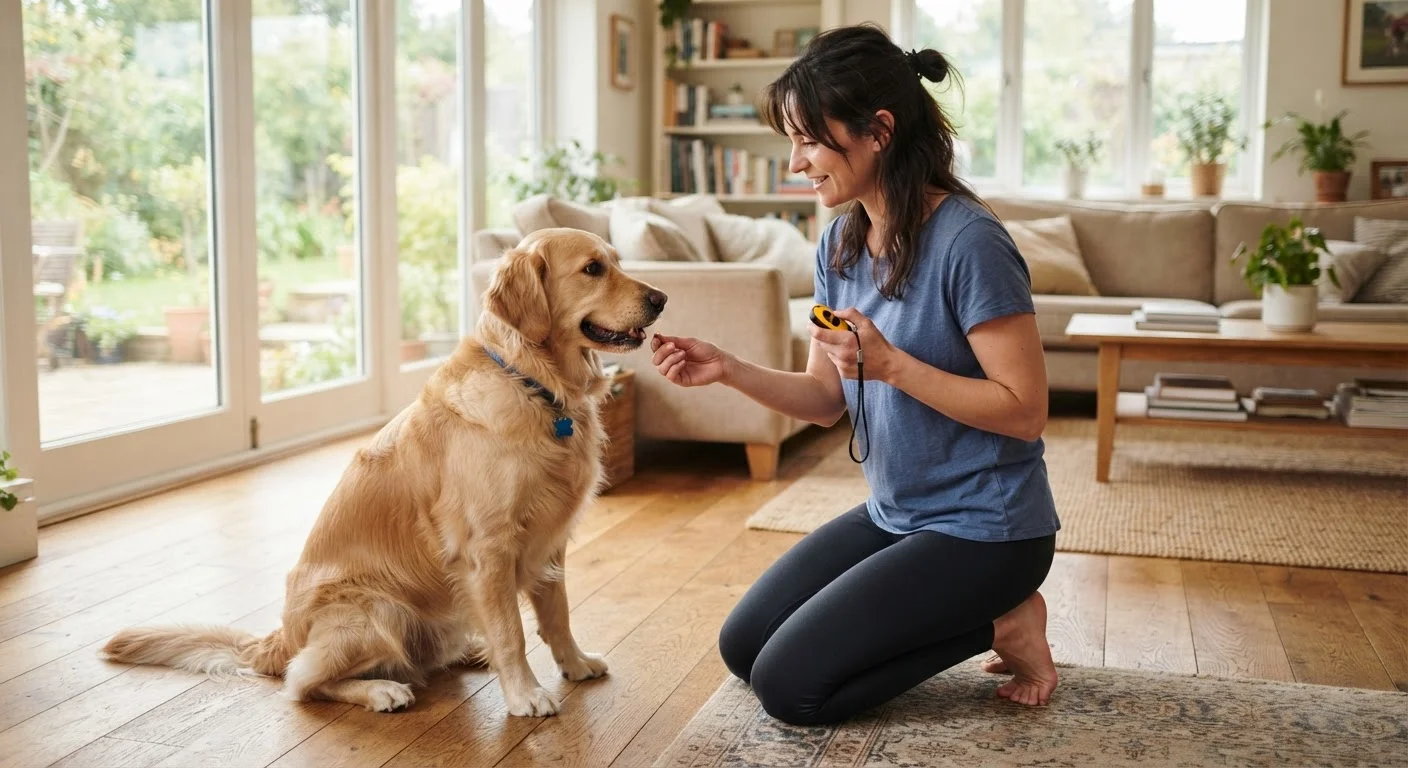
Photo: AnswersVista.com | Trustworthy Information Every Day editorial
Key Takeaways
- Both clickers and verbal markers work by bridging the gap between a correct behavior and the reward that follows.
- Clickers offer a uniquely consistent, emotion-neutral sound that is easier to standardize across training sessions.
- Verbal markers are always available but can vary in tone, volume, and emotional coloring - which affects reliability.
- The best marker is whichever one the owner can use with accurate timing and genuine consistency.
- Most pets can be trained successfully with either method when paired with proper positive reinforcement.
What Is a Marker and Why Does It Matter?
A marker is a signal - sound, word, or gesture - that tells your pet exactly which behavior earned a reward. Because rewards like treats can't be delivered the instant a behavior happens, the marker bridges that gap. It essentially says, "That! Right there - that's what you did correctly."
This concept is central to positive reinforcement training, where the goal is to connect a behavior to a consequence clearly enough that the animal understands what to repeat. Without a reliable marker, timing errors blur the message and slow learning.
Both clickers and verbal markers serve this bridging function. The question is which does it more effectively - and for whom.
How Clicker Training Works
A clicker is a small handheld device that produces a short, sharp click when pressed. During training, the click is conditioned by repeatedly pairing it with a treat until the animal recognizes it as a reliable predictor of reward. After that, the click marks the exact moment a correct behavior occurs.
The main advantage is acoustic consistency. A click sounds the same at 8 a.m. as it does at 8 p.m., whether you're calm or slightly frustrated. Human voices, by contrast, naturally carry emotional tone. The clicker's neutrality makes it easier for the animal to associate it purely with the behavior, not with your current mood.
Clickers are commonly used in dog, cat, rabbit, horse, and even marine mammal training. Their precision is particularly valuable when shaping complex behaviors in small increments - a technique called shaping.
| Criterion | Clicker Training | Verbal Markers |
|---|---|---|
| Consistency of signal | Identical every time | Varies with mood and tone |
| Equipment required | Yes - handheld clicker | None - voice only |
| Ease for beginners | Moderate - extra tool to manage | High - natural and hands-free |
| Multi-trainer households | Excellent - same sound always | Variable - different voices differ |
| Use with hearing-impaired pets | Adaptable (vibration/visual versions) | Not applicable |
| Precision for complex behaviors | High | Moderate |
| Practical for public settings | Moderate - device required | High - always available |
How Verbal Markers Work
A verbal marker is a short, consistent word - typically "yes," "good," or a clipped sound like "yep" - used the same way a clicker is: to pinpoint a correct behavior the moment it happens. The word is conditioned through the same pairing process: word, then reward, repeated until the animal connects them.
The appeal is obvious: you always have your voice. There's no equipment to forget, drop, or lose. For owners juggling a leash, a bag, and a distracted dog on a walk, that simplicity matters.
The challenge is vocal variability. If you say "yes" warmly when your dog sits perfectly but flatly when you're distracted, your pet is receiving slightly different signals. Over time, this can slow conditioning or create confusion - especially in early training. Consistency in delivery is one of the most important factors in training success, and verbal markers require active effort to maintain it.
Conditioned vs. Primary Reinforcers
Which Should You Choose?
The honest answer: both methods work. Research in animal learning supports either conditioned reinforcers as effective teaching tools when used correctly. The more important variable is your timing and consistency, not the specific marker format.
That said, there are practical differences worth weighing. Clickers tend to have an edge when teaching precise, technically demanding behaviors - agility, scent work, or complex trick sequences. Verbal markers often win on convenience and naturalness for everyday reinforcement like sit, stay, or loose-leash walking.
Some trainers use both strategically: a clicker during focused training sessions, a verbal marker for quick real-life rewards. If you're preparing for your first session, consider reviewing a preparation checklist for new pet owners before committing to either tool.
Ultimately, the best marker is the one you'll use with genuine attention and reliability. An inconsistently used clicker is no better than an inconsistently spoken word. Start with whichever feels most manageable, and refine from there.
~0.2 sec
Optimal marker timing window after correct behavior
Animal learning research generally indicates that markers delivered within approximately 0.2 seconds of a behavior most effectively reinforce that specific action.
10-20
Repetitions to condition a new marker
Most trainers and behavioral texts suggest that pairing a neutral marker with a reward 10-20 times is sufficient for most pets to begin recognizing it as a predictor of reinforcement.
The content provided on our blog site traverses numerous categories, offering readers valuable and practical information. Readers can use the editorial team’s research and data to gain more insights into their topics of interest. However, they are requested not to treat the articles as conclusive. The website team cannot be held responsible for differences in data or inaccuracies found across other platforms. Please also note that the site might also miss out on various schemes and offers available that the readers may find more beneficial than the ones we cover.