
The Honest Trade-Offs of Using Food Rewards in Training

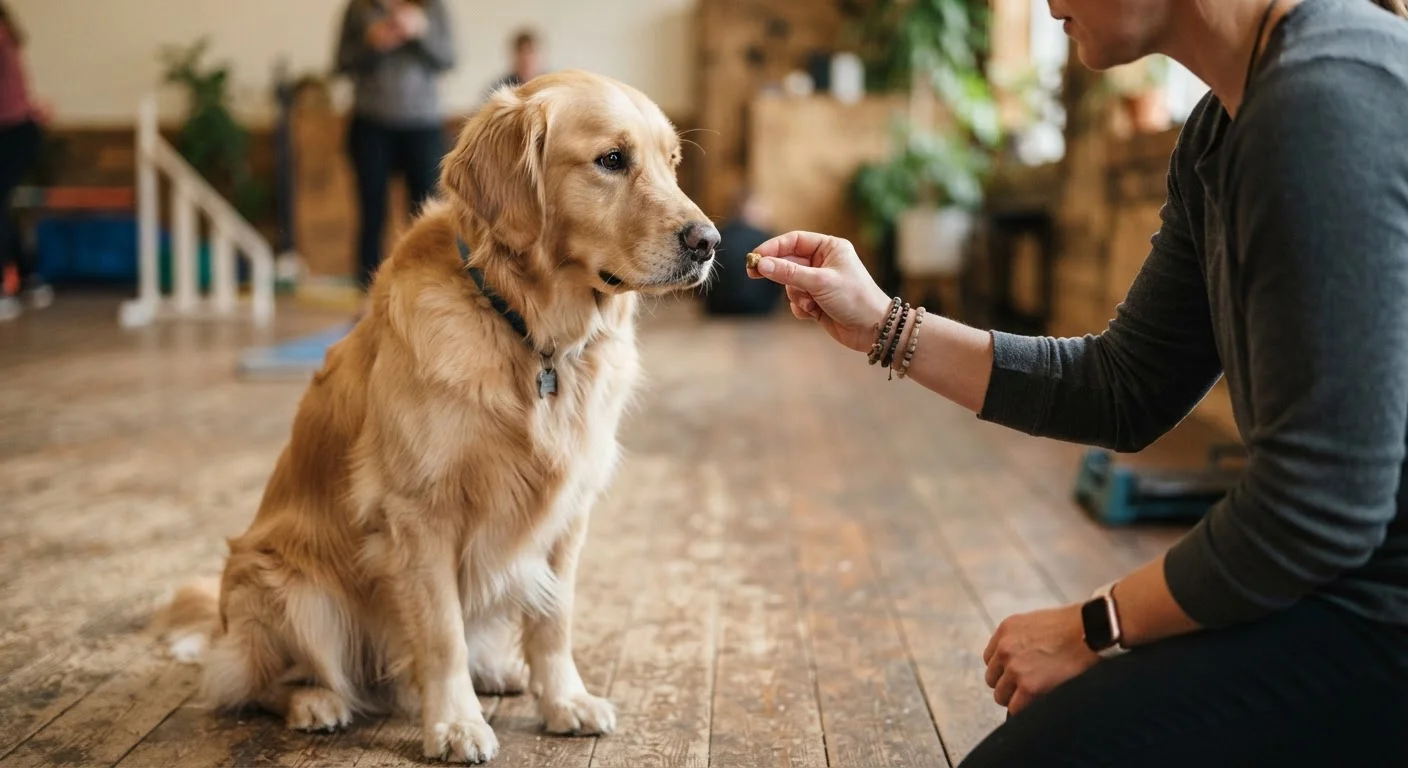
Photo: AnswersVista.com | Trustworthy Information Every Day editorial
Key Takeaways
- Food rewards reliably motivate most pets and speed up early learning of new behaviors.
- Over-reliance on treats can create a pet that only responds when food is visible.
- Treat calories count - frequent training rewards should be factored into daily food intake.
- Fading treats over time, rather than cutting them abruptly, helps maintain trained behaviors.
- Food is one tool among several; combining it with praise and play produces more durable results.
Biologically motivating for nearly all species
Food satisfies a primary biological need, making it effective across a wide range of animals with minimal prior conditioning required.
Speeds up early learning of new behaviors
Clear, immediate food reinforcement helps pets make the connection between a behavior and a positive outcome faster than many other reward types.
Easy to deliver with precise timing
Small treats can be given within a half-second of the desired behavior, which is critical - the closer the reward follows the action, the clearer the learning signal.
Accessible and practical for most owners
Food rewards require no special equipment or training background, making them an approachable starting point for everyday pet owners.
Supports a positive emotional association with training
When training consistently produces food rewards, pets tend to approach sessions with eagerness rather than anxiety, making future learning easier.
Can lead to treat dependency if overused
Pets rewarded with food on every correct response may begin to treat the food as a prerequisite rather than a consequence, performing only when a treat is visible.
Contributes extra calories to daily intake
Frequent training sessions using commercial treats can meaningfully increase caloric intake, posing a real concern for weight management, especially in small breeds and indoor cats.
Less effective for pets with low food motivation
Some animals - particularly anxious pets, or those that are not food-driven - respond poorly to food reinforcement and may need alternative reward types like play or tactile praise.
Requires deliberate fading to build lasting behavior
Without a planned strategy to reduce and vary food rewards over time, owners risk building behaviors that are fragile in real-world situations where treats aren't present.
Why Food Rewards Work So Well
Food is what animal behaviorists call a primary reinforcer - it satisfies a biological need, which means most animals will work to obtain it without any prior conditioning. Unlike praise or toys, which pets have to learn to value, food carries built-in motivating power.
This is why food rewards produce fast, measurable results, particularly in early training. When a dog sits and immediately receives a small treat, the brain's reward system links that action to a positive outcome. Repetition strengthens that neural connection, and the behavior becomes more reliable over time. The same principle applies to cats, birds, rabbits, and many other species.
For a deeper look at the science behind this approach, see our guide to positive reinforcement in pet training.
Biologically motivating for nearly all species
Food satisfies a primary biological need, making it effective across a wide range of animals with minimal prior conditioning required.
Speeds up early learning of new behaviors
Clear, immediate food reinforcement helps pets make the connection between a behavior and a positive outcome faster than many other reward types.
Easy to deliver with precise timing
Small treats can be given within a half-second of the desired behavior, which is critical - the closer the reward follows the action, the clearer the learning signal.
Accessible and practical for most owners
Food rewards require no special equipment or training background, making them an approachable starting point for everyday pet owners.
Supports a positive emotional association with training
When training consistently produces food rewards, pets tend to approach sessions with eagerness rather than anxiety, making future learning easier.
The Real Limitations You Should Know About
Despite their effectiveness, food rewards come with genuine trade-offs that trainers and owners frequently encounter. The most common concern is treat dependency - a pet that performs a cue reliably when a treat is visible but falls apart when the food disappears. This happens when owners consistently reward every correct response without varying the reinforcement schedule over time.
Dietary impact is a second, often underestimated issue. Training sessions can involve dozens of repetitions, and those small treats add up. For small dogs or cats especially, frequent training treats can meaningfully shift daily caloric intake. The solution is straightforward: use small, low-calorie rewards, use a portion of the pet's regular kibble as training treats, or reduce meal portions on heavy training days. Our article on nutritional trade-offs between dry and wet pet food covers caloric density differences worth considering when choosing training treats.
Can lead to treat dependency if overused
Pets rewarded with food on every correct response may begin to treat the food as a prerequisite rather than a consequence, performing only when a treat is visible.
Contributes extra calories to daily intake
Frequent training sessions using commercial treats can meaningfully increase caloric intake, posing a real concern for weight management, especially in small breeds and indoor cats.
Less effective for pets with low food motivation
Some animals - particularly anxious pets, or those that are not food-driven - respond poorly to food reinforcement and may need alternative reward types like play or tactile praise.
Requires deliberate fading to build lasting behavior
Without a planned strategy to reduce and vary food rewards over time, owners risk building behaviors that are fragile in real-world situations where treats aren't present.
Using Food Rewards More Strategically
The goal of food-reward training is to build behaviors that eventually become reliable on their own - not to create a pet that only performs on a pay-per-response basis. A few practical strategies help achieve that.
Variable reinforcement schedules are one of the most useful tools. Once a pet reliably performs a behavior, rewarding intermittently - rather than every single time - actually strengthens the behavior over the long term. This is the same mechanism that makes certain habits sticky in humans.
Pairing food with other reinforcers early on is equally important. If a dog learns that a sit earns both a treat and enthusiastic praise, praise alone can eventually maintain the behavior. This also helps in situations where food isn't accessible.
It's also worth addressing common misconceptions. Many owners worry that using treats means "bribing" their pet, or that it undermines a real bond. The evidence doesn't support this. Our article on persistent pet training myths breaks down why the bribery concern, while understandable, misrepresents how reinforcement actually works.
Training Treats Don't Have to Be Commercial Products
For owners curious about how food-reward methods compare to correction-based alternatives, reward-based vs. correction-based training offers a balanced breakdown of both approaches.
~70%
Pet owners who use treats as a primary training tool
Survey data from the American Pet Products Association consistently finds treats among the most commonly used training aids across dog and cat owners in the U.S.
10%
Recommended treat limit as share of daily calories
Most veterinary nutritionists suggest treats - including training rewards - should make up no more than 10% of a pet's total daily caloric intake to avoid nutritional imbalance.
The content provided on our blog site traverses numerous categories, offering readers valuable and practical information. Readers can use the editorial team’s research and data to gain more insights into their topics of interest. However, they are requested not to treat the articles as conclusive. The website team cannot be held responsible for differences in data or inaccuracies found across other platforms. Please also note that the site might also miss out on various schemes and offers available that the readers may find more beneficial than the ones we cover.