
Why Your Dog Keeps Ignoring Commands - And What's Actually Going On

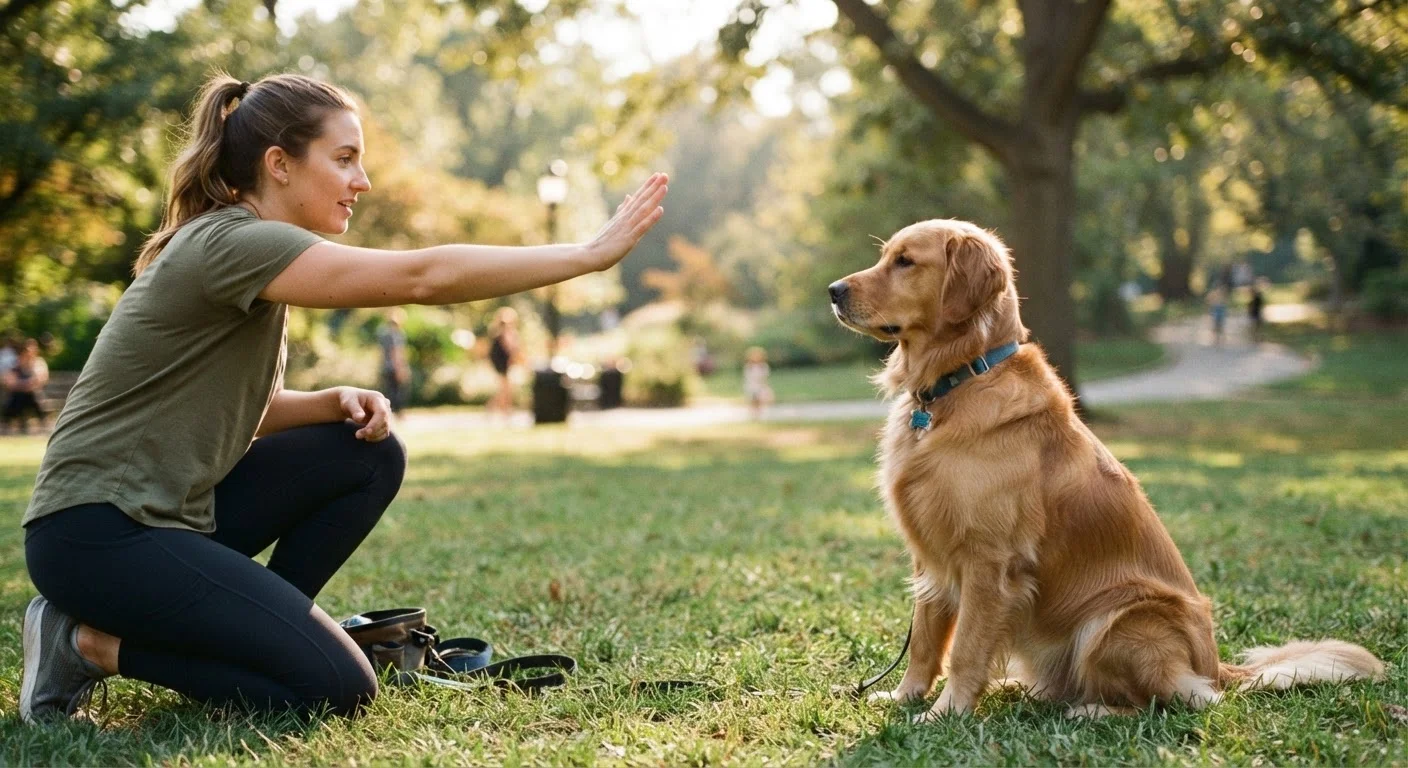
Photo: AnswersVista.com | Trustworthy Information Every Day editorial
Key Takeaways
- Dogs rarely ignore commands out of stubbornness - training mechanics or environment are usually the real cause.
- Inconsistent cue words and unclear reinforcement schedules confuse dogs more than owners realize.
- Distraction level and generalization gaps explain most recall failures outside the home.
- Addressing the root cause - rather than repeating the command louder - is what actually fixes the problem.
The Real Reason Your Dog Isn't Listening
When a dog stops responding to commands, the instinct is to assume defiance. In reality, dogs don't process disobedience the way humans do. What looks like ignoring is almost always a communication or training problem - not a personality flaw. Understanding this shift in framing is the first step toward fixing the breakdown.
Behaviorally speaking, a dog responds to a cue when three things are in place: the cue is clear and consistent, the dog has been reinforced reliably for that response, and the environment is manageable enough for the dog to focus. When any one of those elements is missing, the behavior falls apart. The mistakes below are where those elements most commonly go wrong.
If you're new to dog ownership and noticing several of these patterns at once, it's worth reviewing common new pet owner pitfalls - many training struggles trace back to early habits formed in the first weeks home.
Using the same cue word in multiple ways or letting it get "poisoned" by repeated failure.
Repeating a command multiple times before the dog responds.
Training only in one location and expecting the behavior everywhere.
Relying on luring with food indefinitely without fading the prompt.
Asking for commands in situations where the dog is already overwhelmed or over-threshold.
Building Commands That Actually Stick
Once you understand why commands break down, the fix becomes much more systematic. The goal isn't to repeat yourself more firmly - it's to rebuild each cue from scratch in a lower-stakes environment and then deliberately practice raising the difficulty.
Start every new cue indoors with minimal distractions, then gradually introduce complexity: move to the yard, then a quiet sidewalk, then a busier park. Each environment is essentially a new test. Dogs don't generalize automatically - a solid "sit" in the kitchen may genuinely mean nothing in a new place until you've trained it there too.
Avoid Punishment for "Ignoring" Commands
For a closely related challenge, loose-leash training mechanics follow the same progression: clarity, consistency, and graduated distraction. And if your dog's lack of response comes with barking, lunging, or freezing, that pattern may reflect reactivity - a separate but trainable challenge covered in managing reactive dogs.
Finally, many owners are unknowingly working against themselves by following outdated training philosophies. Common training myths - like the idea that dogs need to be "shown who's boss" - can actively slow progress. Evidence-based, positive reinforcement methods consistently outperform punishment-based approaches in both speed of learning and the dog-owner relationship.
This article is for general informational and educational purposes only. For dogs showing signs of fear, aggression, or significant behavioral concerns, consult a certified professional dog trainer or veterinary behaviorist.
The content provided on our blog site traverses numerous categories, offering readers valuable and practical information. Readers can use the editorial team’s research and data to gain more insights into their topics of interest. However, they are requested not to treat the articles as conclusive. The website team cannot be held responsible for differences in data or inaccuracies found across other platforms. Please also note that the site might also miss out on various schemes and offers available that the readers may find more beneficial than the ones we cover.