
A Shopper's Glossary: Markdown, Clearance, Rollback, and Other Price Terms Defined

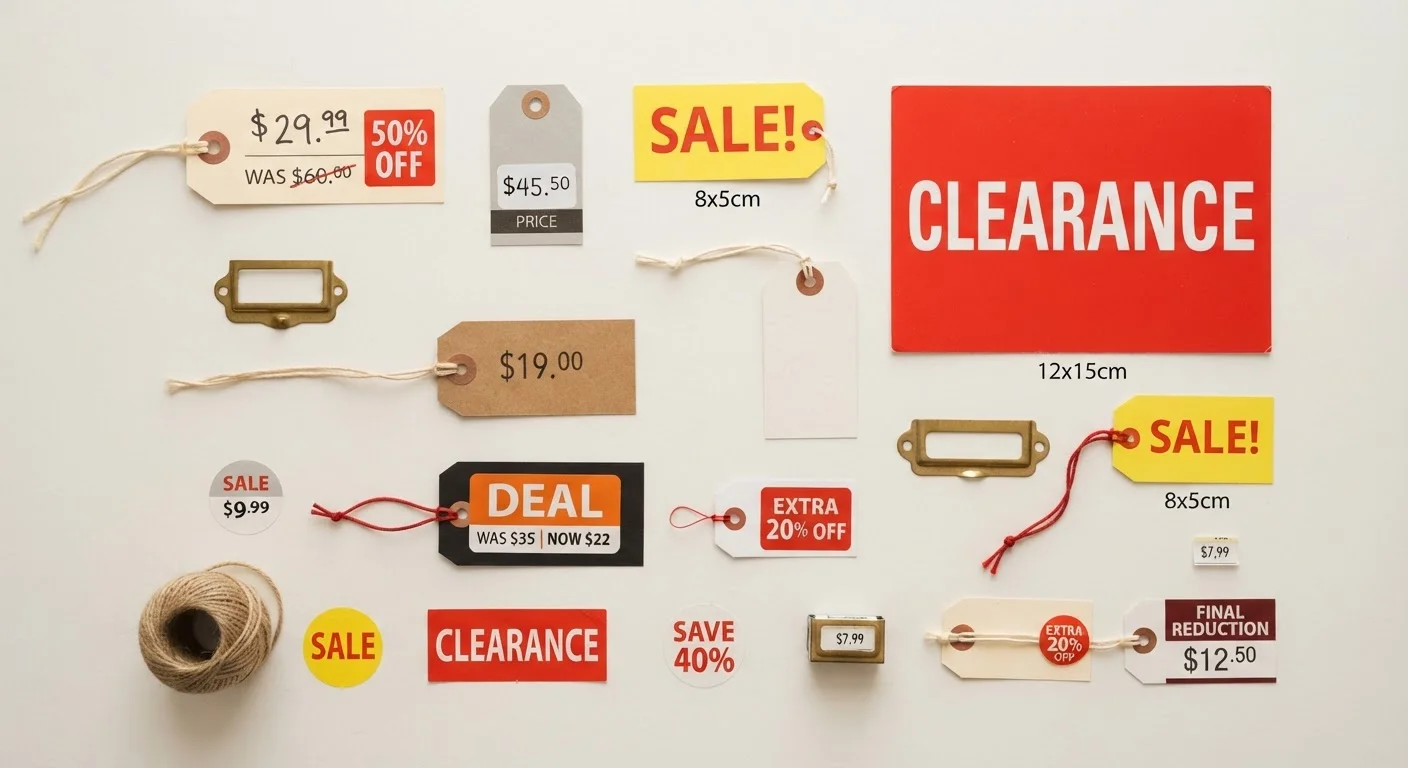
Photo: AnswersVista.com | Trustworthy Information Every Day editorial
Why Retail Pricing Language Matters
Walk through any store or scroll any e-commerce page and you'll encounter a thicket of pricing labels: clearance, rollback, markdown, sale, limited-time offer. These terms are not interchangeable, and understanding the distinction can meaningfully change how you shop.
Retailers design pricing language to trigger action. A savvy shopper reads these labels the way a navigator reads road signs - not as commands, but as information. This glossary decodes the most common terms so you know what each one actually signals about value, timing, and restocking likelihood.
For a broader look at how pricing displays are engineered to influence behavior, see how retail pricing illusions shape spending. And if you're building the financial habits to back up smarter shopping, a budgeting terms glossary is a natural companion.
| Markdown | A permanent price reduction applied to existing inventory (Standard retail industry terminology) |
| Clearance | End-of-cycle discount to sell remaining units; stock not replenished (Standard retail industry terminology) |
| Rollback | Temporary price reduction; original price returns after a set period (Commonly associated with large-format discount retailers) |
| MSRP | Manufacturer's Suggested Retail Price - a reference point, not a mandate (Standard retail and manufacturing terminology) |
| Loss Leader | Item priced at or below cost to attract shoppers; retailer recoups margin elsewhere (Standard retail industry terminology) |
| Price Match | Retailer agrees to honor a lower price found at a qualifying competitor (Varies by retailer policy) |
| Flash Sale | Steep discount available only for a short, defined window - often hours (Common in e-commerce) |
| Bundle Price | Combined price for two or more items sold together, usually below individual totals (Standard retail industry terminology) |
Core Pricing Terms, Defined
Markdown
A markdown is a permanent reduction from an item's previous selling price. Unlike a time-limited sale, a markdown is not reversed - the retailer has decided the item's price point needs to drop to sustain sales velocity. Markdowns are common at the end of a season or product cycle. When you see a marked-down price, do not expect the item to return to its prior price at that retailer.
Clearance
Clearance goes a step further. Clearance items are being phased out of a retailer's inventory entirely - think discontinued colors, last season's styles, or models being replaced by newer versions. The retailer's goal is to recover floor space and cash, not to maintain the item long-term. Clearance stock is typically not replenished; once it's gone, it's gone. Discounts often deepen in stages over weeks.
~40%
Share of U.S. apparel sold 'on sale'
Industry analysts have long noted that promotional pricing is so frequent in apparel retail that the 'original' price is rarely the price most buyers pay.
Up to 90%
Maximum common clearance discount depth
Clearance markdowns often progress in stages - starting around 25-30% and deepening over weeks until remaining units are sold.
Rollback
A rollback is a temporary price reduction - the retailer lowers the price for a defined period, then returns it to the original level. This is meaningfully different from a markdown. If you're considering a rollback item but aren't ready to purchase, note the original price so you can confirm the rollback is still in effect when you return.
Sale Price vs. Original Price
The displayed original price (sometimes called the reference price or was price) is meant to anchor your perception of value. Be aware: in some cases the original price reflects a price the item was sold at only briefly or in limited quantities. The sale price is what you'll pay now, but it's worth asking whether the reference price was ever widely charged.
Pricing Terms Vary by Retailer
MSRP
MSRP - Manufacturer's Suggested Retail Price - is a price recommended by the manufacturer, not a legal floor or ceiling. Retailers may sell above or below MSRP. When an item is advertised as being sold below MSRP, that's meaningful context only if you verify that comparable sellers actually charge MSRP as their standard price.
Loss Leader
A loss leader is an item priced at or near the retailer's cost - sometimes below it - to draw shoppers into the store or onto the site. The retailer accepts a thin or negative margin on that item expecting you'll add higher-margin items to your cart. Recognizing a loss leader helps you take advantage of the deal without overspending on surrounding items.
Price Match
A price match policy means the retailer will meet a lower price offered by a qualifying competitor. Policies vary widely: some require proof at point of purchase; others allow post-purchase requests within a window. Always read the specific policy - exclusions for marketplaces, membership clubs, or clearance items are common.
Flash Sale and Limited-Time Offer
A flash sale runs for a short, defined window - often a few hours. The urgency is real in the sense that the price does expire, but the discount depth should still be evaluated on its own merits. A mediocre deal with a tight deadline is still a mediocre deal. Limited-time offers follow similar logic with a longer or less precise window.
Bundle Pricing
Bundle pricing combines multiple items at a total price lower than buying each separately. The value is genuine only if you need or will use all items in the bundle. Buying a bundle to get one item at a lower per-unit cost - while leaving others unused - rarely represents actual savings.
The content provided on our blog site traverses numerous categories, offering readers valuable and practical information. Readers can use the editorial team’s research and data to gain more insights into their topics of interest. However, they are requested not to treat the articles as conclusive. The website team cannot be held responsible for differences in data or inaccuracies found across other platforms. Please also note that the site might also miss out on various schemes and offers available that the readers may find more beneficial than the ones we cover.