
Price Anchoring, Decoy Pricing, and Other Retail Illusions That Shape What You Spend

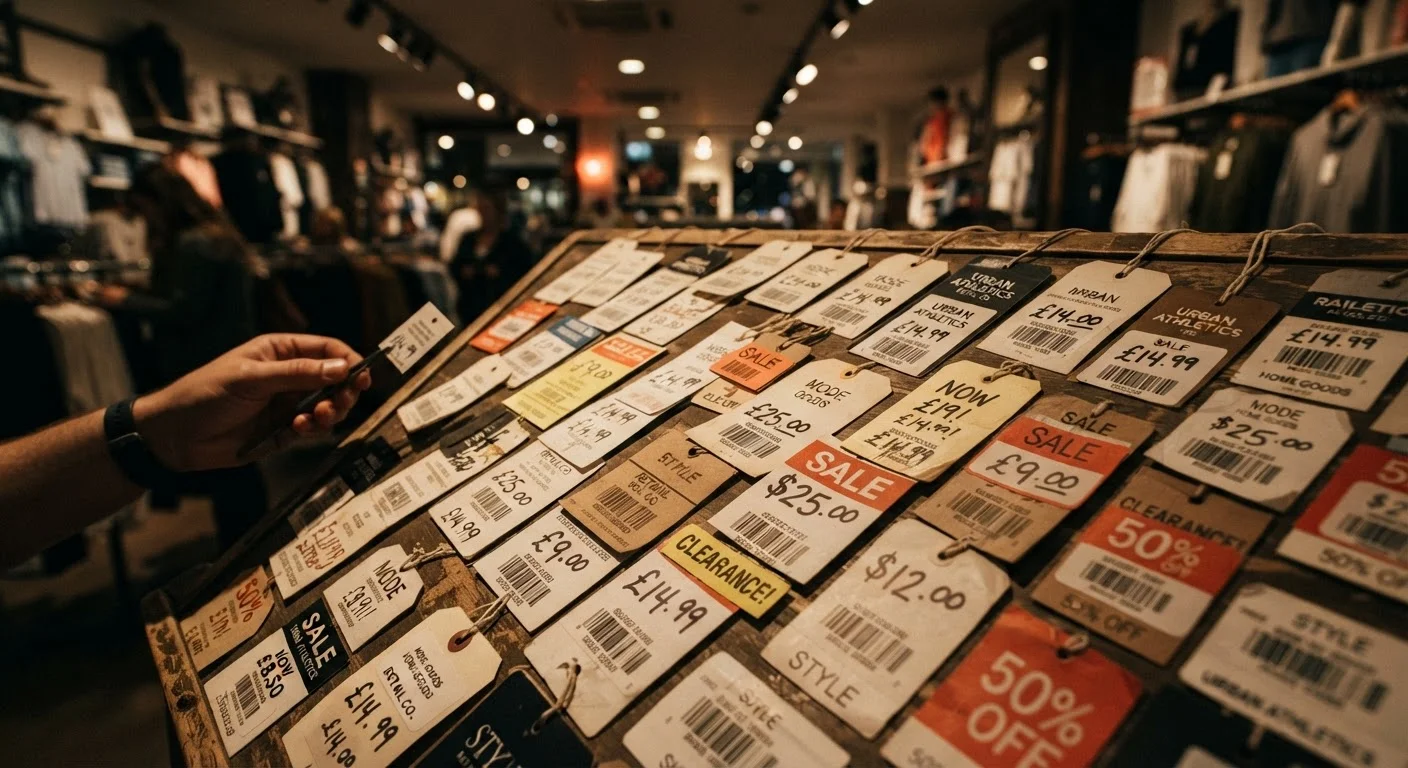
Photo: AnswersVista.com | Trustworthy Information Every Day editorial
Key Takeaways
- Price anchoring uses an inflated reference price to make the actual price feel like a bargain.
- Decoy pricing steers you toward a specific option by adding a strategically unattractive third choice.
- Recognizing these tactics doesn't require distrust - just a shift in what question you ask.
- Comparing against your own baseline price, not the retailer's, is a more reliable decision framework.
- Many pricing illusions work best under time pressure - slowing down disrupts their effect.
Why Retail Pricing Is Never Accidental
Every price you see in a store or on a product page was put there deliberately. The number itself matters, but so does what surrounds it - the price crossed out above it, the option placed beside it, the size of the font. Retailers and product designers apply decades of behavioral research to these displays, and the result is a shopping environment that subtly shapes decisions before you consciously engage with them.
This isn't a conspiracy - it's standard commercial practice. But understanding the mechanics behind common pricing techniques gives you a more honest view of what you're actually being offered. The goal here isn't suspicion toward every price tag; it's building a clearer internal compass so you spend based on what something is worth to you, not what the display implies it's worth.
For a broader look at how psychological levers operate at the shelf and online, see our article on how retailers engineer sale price perception.
Myth
A crossed-out "original" price proves I'm getting a discount.
Fact
Reference prices are set by the seller and may never have reflected a price at which the item commonly sold.
Price anchoring works by displaying a higher number first - typically labeled "was," "original," or "MSRP" - so the actual asking price appears discounted by contrast. Regulatory standards around advertised reference prices vary, and enforcement is inconsistent. In some cases, items are priced at the "original" level for only a brief or token period before the "sale" begins. The crossed-out number creates a mental benchmark the retailer controls entirely. A more reliable test: research what similar items typically sell for across several sources before entering a specific retailer's pricing ecosystem.
Myth
Choosing the middle option in a pricing tier is always the safest, most reasonable choice.
Fact
The middle option is often engineered to look attractive - it may not reflect the best value for your actual needs.
Decoy pricing commonly presents three tiers where the bottom option is stripped down, the top is conspicuously expensive, and the middle seems balanced. This structure is intentional: the middle option carries the highest margin or most features the seller wants to move. The extreme options exist partly to frame the middle as sensible. The real question is whether the middle tier's features align with what you'll actually use - not whether it looks reasonable compared to the extremes flanking it. Evaluating each tier against your specific requirements, rather than against each other, bypasses this effect.
Myth
Bigger packages always cost less per unit than smaller ones.
Fact
Per-unit cost favors larger sizes in many categories, but not universally - smaller or mid-size packages sometimes offer a lower unit price.
The assumption that bulk equals savings is widespread enough that retailers sometimes price mid-size or smaller packages at a lower per-unit cost, knowing most shoppers won't check. Promotional pricing on smaller sizes, private-label competition, and category-specific dynamics all affect where the unit-price advantage actually sits. The only reliable method is to calculate or look up the unit price for each size side by side. Many grocery chains are required to display unit pricing on shelf labels - using that figure removes the guesswork entirely.
Myth
Limited-time offers mean the price will genuinely go up after the deadline.
Fact
Many countdown timers and "limited time" labels reset or recur, and the promoted price may persist indefinitely.
Urgency cues compress decision time and raise the emotional stakes of not buying. But the expiration implied is not always real. Online retailers in particular have been documented running the same "ending soon" promotions on continuous cycles. Before accepting urgency at face value, consider whether you've seen the same item promoted the same way previously, and whether the category tends to follow predictable discount patterns. Seasonal pricing research can give you a more grounded sense of when prices in a given category genuinely shift. Our article on retail pricing calendars outlines typical patterns by product category.
Myth
A higher price signals higher quality, so spending more is usually the safer choice.
Fact
Price and quality correlate inconsistently across product categories; higher price often reflects branding, packaging, or positioning rather than performance.
Price-quality inference - the tendency to assume that expensive means better - is one of the most durable cognitive shortcuts in consumer behavior. Retailers and brands that understand this sometimes price products higher precisely to signal quality, independent of any actual improvement in materials or performance. Consumer testing and independent review data routinely find mid-range and lesser-known items matching or exceeding premium-priced alternatives in measurable performance. Using specification comparisons and independent testing information, where available, is more reliable than using price as a quality proxy. See our guidance on product comparison frameworks for a structured approach.
Anchoring and Decoys in Practice
Anchoring and decoy pricing are two of the most studied - and most consistently effective - retail illusions. Anchoring plants a high reference price early so that the real asking price looks restrained by comparison. Decoy pricing introduces a third option designed not to sell well, but to make one of the other two look obviously superior.
Both tactics exploit the same cognitive shortcut: humans evaluate options relatively, not absolutely. We ask "compared to what?" rather than "what is this actually worth to me?" Retailers control the "compared to what" part of that equation.
~20%
Typical lift from decoy option on target-tier sales
Academic studies on decoy effects in consumer choice consistently find that adding an asymmetrically dominated option increases selection of the intended target by roughly 15-25%.
~40%
Shoppers who don't check unit prices before buying
Surveys on grocery shopping behavior suggest a substantial share of shoppers rely on package size and total price rather than calculating per-unit cost at point of purchase.
The antidote in both cases is to bring your own anchor. Before browsing, decide what you'd consider a fair price for the category based on prior research or your own budget ceiling. That external reference makes retailer-supplied anchors less sticky. For help assessing what's genuinely worth paying, our piece on value versus sticker price walks through a practical framework.
Other Common Pricing Illusions Worth Knowing
Beyond anchoring and decoys, a few other structural techniques appear frequently enough to be worth naming:
- Charm pricing - Prices ending in .99 or .95 are perceived as meaningfully lower than the next round number, even when the difference is a single cent. Research in behavioral economics consistently shows that left-digit anchoring (reading $19.99 as "in the $19 range") influences perceived value.
- Bundle framing - Grouping items into a bundle makes the total harder to evaluate against individual prices, which can obscure whether the bundle represents genuine savings or simply a higher total spend.
- Scarcity and urgency cues - "Only 3 left" or countdown timers compress the time available to evaluate a purchase rationally. These cues may reflect real inventory, but they function primarily to raise anxiety and lower scrutiny.
- Default upsells - Pre-selected add-ons, extended warranties, or upgraded tiers take advantage of inertia. Many buyers accept defaults without comparing the marginal cost to the marginal benefit.
Urgency Cues Are Designed to Bypass Reflection
These patterns appear across categories and channels. Once you recognize them, you'll start noticing them in subscription pricing, hotel room tiers, software plan pages, and grocery displays alike. See our related look at spending habits that compound quietly over time for how these moments accumulate.
Practical Adjustments That Actually Help
Awareness alone has limits - the illusions often work even when you know they're there. What changes behavior more reliably is changing the process:
- Set a category budget before you browse. Your own ceiling is a stronger anchor than any retailer's crossed-out price.
- Isolate each option before comparing. Ask whether you'd buy item A at its price if item B didn't exist. If yes, the comparison hasn't changed the fundamental value. If no, the comparison is doing the heavy lifting.
- Check unit pricing. Many pricing illusions dissolve when you convert everything to a common unit - per ounce, per month, per use. Our piece on reading unit price labels covers the mechanics of this in detail.
- Note hidden and ongoing costs. An anchored "deal" price can still be expensive once fees, subscriptions, or consumables are counted. See what to evaluate before buying for a checklist approach.
None of these steps require cynicism - just a brief pause and a different question. The shift from "is this a good deal compared to the original price?" to "is this a price I'd accept if I'd never seen any other number?" is small in practice but significant in outcome.
The content provided on our blog site traverses numerous categories, offering readers valuable and practical information. Readers can use the editorial team’s research and data to gain more insights into their topics of interest. However, they are requested not to treat the articles as conclusive. The website team cannot be held responsible for differences in data or inaccuracies found across other platforms. Please also note that the site might also miss out on various schemes and offers available that the readers may find more beneficial than the ones we cover.