
Unit Pricing: The Shelf Label Detail Most Shoppers Overlook

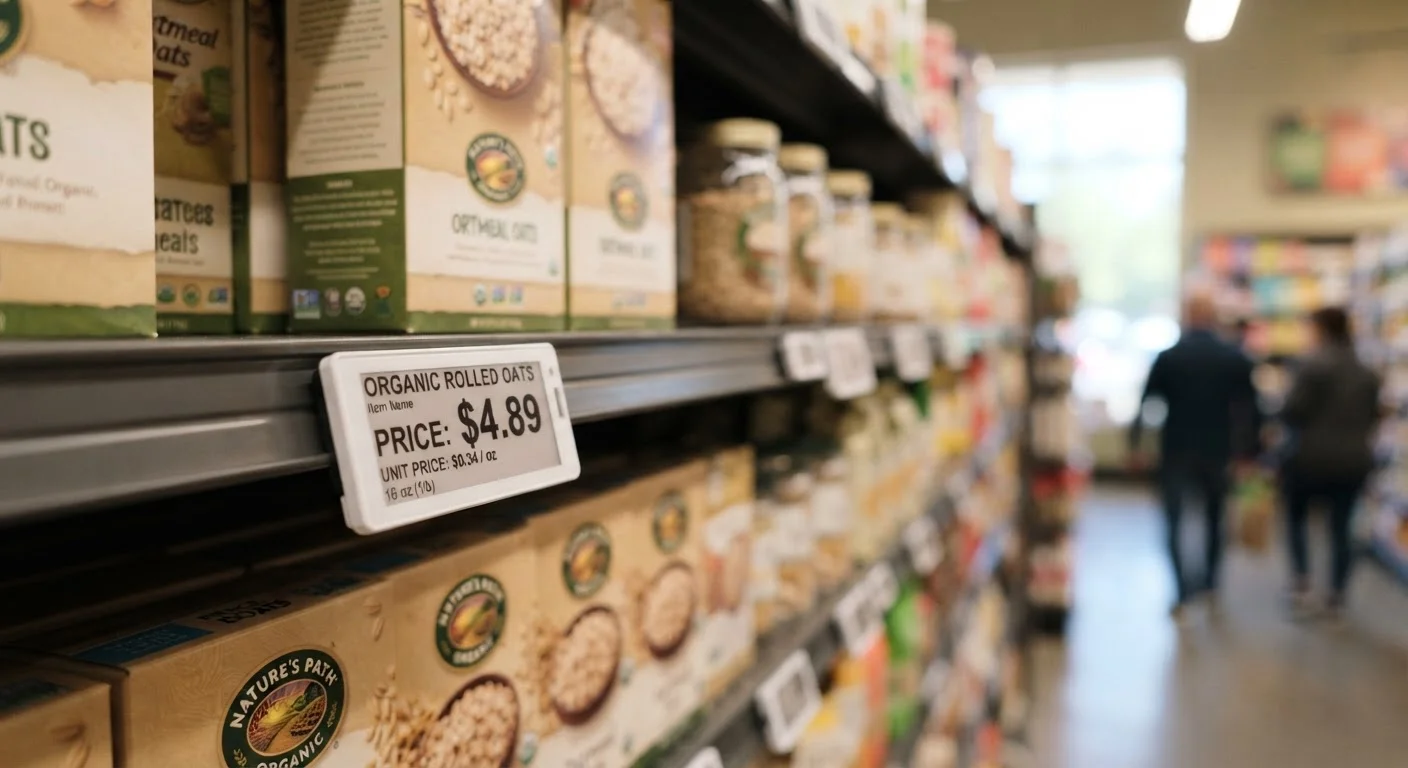
Photo: AnswersVista.com | Trustworthy Information Every Day editorial
Key Takeaways
- Unit price appears on most grocery shelf labels and shows cost per standard measure, not per package.
- Bigger packages often have a lower unit price, but not always - promotions and store brands can shift this.
- Comparing unit prices across sizes and brands is the most reliable way to find genuine value.
- Bulk buying only saves money if you use the product before it expires or goes to waste.
- Some retailers use inconsistent units across similar products, so always verify the unit label before comparing.
What Unit Price Actually Tells You
The total price on a shelf tag tells you what you'll pay at checkout. The unit price tells you what you're actually getting for that money. These two numbers can point in very different directions.
Consider two bottles of olive oil: one is 16 oz for $6.99, the other is 32 oz for $11.99. The larger bottle costs more upfront, but its unit price - about $0.37 per oz - is meaningfully lower than the smaller bottle's $0.44 per oz. Without the unit price, many shoppers default to the cheaper-looking sticker and walk away paying more per ounce.
Unit pricing works as a universal translator for products sold in different quantities. It strips away the packaging variable and leaves you with one clean, comparable number. That's why consumer advocates have pushed for its use in retail for decades, and why many states have made it a legal requirement.
Unit Price vs. Total Price: Not the Same Signal
How to Read the Shelf Label
Most shelf labels follow a standard layout: the large bold number is the total retail price, while the unit price is displayed in smaller print - sometimes in a different corner, sometimes in a separate box. It's easy to miss if you're not looking for it.
The unit is always specified alongside the price. Common units include:
- Per ounce (oz) - used for food, beverages, and many household products
- Per pound (lb) - common for bulk foods, meat, and produce
- Per count (ct) - used for items like vitamins, paper towels, or batteries
- Per fluid ounce (fl oz) - used for liquid products such as detergent or shampoo
- Per load or per use - sometimes used for detergents and cleaning products
That last category - per load or per use - is where comparisons get tricky. If one detergent is priced per ounce and another per load, you can't compare them directly without knowing the recommended dose per load. Retailers aren't always consistent about which unit they display, which is one reason unit pricing can occasionally mislead rather than clarify. See how this connects to broader retail tactics in our look at pricing illusions that shape spending.
30+
U.S. states with unit pricing laws
Consumer advocacy research has identified more than 30 states with some form of unit pricing regulation, though the scope and enforcement vary considerably.
Up to 30%
Potential per-unit cost difference between sizes
Studies examining grocery pricing have found unit price differences of up to 30% between the smallest and largest package sizes of the same product, depending on category and retailer.
When Bigger Isn't Actually Cheaper Per Unit
There's a widespread assumption that larger packages always carry a lower unit price. In many cases that's true - but not reliably. Retailers periodically price smaller sizes more aggressively during promotions, making the "family size" less competitive than usual. Store-brand smaller sizes sometimes undercut name-brand bulk options on a per-unit basis. And warehouse club pricing, while often favorable, isn't guaranteed to beat a sale price at a regular grocery store.
Our detailed breakdown on when bulk buying saves money covers this pattern thoroughly. The short version: always verify rather than assume, because the math doesn't always favor the bigger box.
There's also a consumption angle that unit pricing doesn't capture. Buying a 64-oz container of salad dressing at a low unit price is only a good deal if you use it all before it expires. Waste erases savings quickly - sometimes completely. The real cost of convenience packaging covers how single-serve and smaller-format products carry built-in premiums that are sometimes worth paying for, depending on your situation.
Do the Math When Units Differ
Putting Unit Price Into Practice
Using unit pricing effectively doesn't require a calculator in hand for every purchase. A few habits make it nearly automatic:
- Glance at the unit price first, not the total price, when comparing two items side by side.
- Verify the unit matches across products before drawing any comparison.
- Factor in usage rate - a lower unit price only translates to real savings if the product gets used.
- Check sale items carefully - a promoted smaller size may occasionally have a better unit price than the regular-priced large.
Unit pricing also matters beyond the grocery aisle. It applies to paper goods, cleaning products, pet food, personal care items, and more. The same logic that helps you choose between two boxes of cereal applies to laundry pods, dog kibble, and shampoo.
For a broader look at how sticker prices can obscure true cost, our piece on why upfront price misleads buyers and value versus price both add useful context. Unit pricing is one tool in a larger framework for spending on your own terms.
Frequently Asked Questions
The content provided on our blog site traverses numerous categories, offering readers valuable and practical information. Readers can use the editorial team’s research and data to gain more insights into their topics of interest. However, they are requested not to treat the articles as conclusive. The website team cannot be held responsible for differences in data or inaccuracies found across other platforms. Please also note that the site might also miss out on various schemes and offers available that the readers may find more beneficial than the ones we cover.