
When Buying in Bulk Saves Money - and When It Quietly Costs More

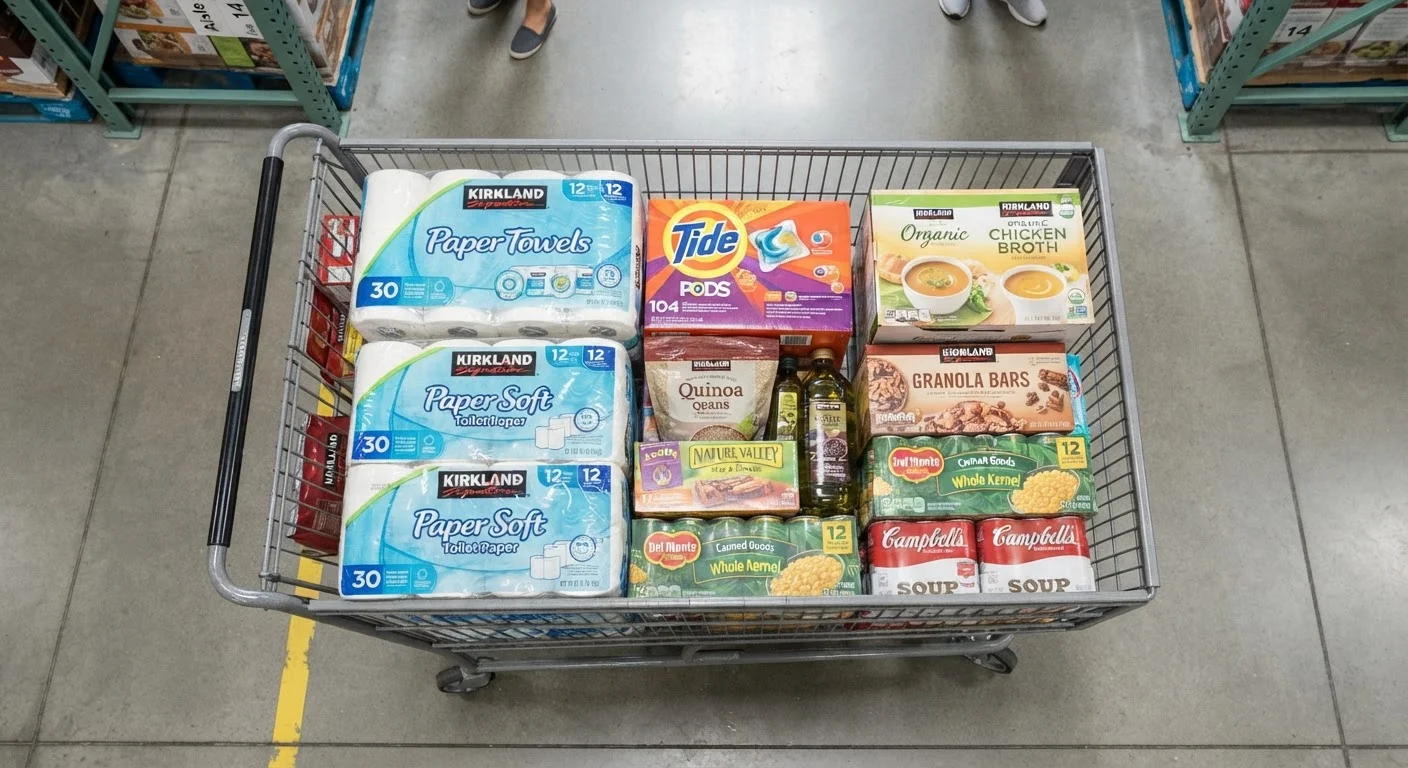
Photo: AnswersVista.com | Trustworthy Information Every Day editorial
Key Takeaways
- Unit price is the only reliable way to compare bulk versus standard packaging costs.
- Non-perishables and household staples are the strongest candidates for bulk purchasing.
- Storage space, spoilage risk, and upfront cash outlay can all erode bulk savings.
- Warehouse membership fees must be factored into the total cost equation.
- Buying in bulk is a genuine money-saver for some categories and a budget drain for others.
Lower cost per unit on staple items
For high-turnover products like paper towels, laundry detergent, and canned goods, the per-unit price in bulk packaging is consistently lower than standard retail sizes - often by 15-30%.
Fewer shopping trips required
Stocking up on non-perishables means less frequent store visits, saving time and reducing the chance of impulse purchases on unplanned trips.
Protection against price increases
Buying a larger supply at the current price insulates you from short-term inflation or supply disruptions on goods you know you'll use.
Consistent availability of needed items
Households that rely on specific products - allergy-safe foods, particular cleaning agents - reduce the risk of running out by maintaining a larger buffer stock.
Reduced per-transaction packaging waste
Fewer, larger packages can mean less total packaging material discarded over time compared with purchasing smaller quantities repeatedly.
Spoilage erases savings on perishables
Fresh or short-shelf-life items bought in bulk quantities frequently go bad before they're used, turning a perceived discount into a net financial loss once wasted food is calculated.
High upfront cash outlay strains budgets
Bulk purchases concentrate spending into single transactions, which can disrupt monthly cash flow even when the annualized cost is lower than buying smaller quantities.
Membership fees must be earned back through savings
Warehouse club annual fees typically start around $65 and only represent genuine value if the shopper saves more than that fee through discounted purchases over the year.
Storage space is a real constraint
Large-format packaging requires physical space to store properly. Without adequate storage, bulk purchases create clutter, damage risk, or simply can't be accommodated.
Encourages overconsumption of some items
Research on household purchasing behavior suggests that larger quantities of consumable goods - snacks, beverages - can increase usage rates, partially or fully offsetting unit-price savings.
Poor fit for items you haven't tested
Committing to bulk quantities of unfamiliar products - new foods, personal care items, or brands - risks locking in a large supply of something that doesn't work for your household.
The Core Logic of Bulk Buying
The appeal of bulk purchasing is straightforward: pay less per unit by buying more at once. Warehouse stores built entire business models on this premise, and for certain product categories, it holds up. The key phrase is unit price - the cost per ounce, sheet, load, or serving - not the sticker price on the package.
Before deciding whether a bulk purchase makes sense, divide the total price by the quantity and compare that figure against the standard-size equivalent at a regular retailer. Sometimes the warehouse package wins by a meaningful margin. Sometimes it doesn't - particularly when a grocery store sale or store-brand option closes the gap. True value and price aren't the same thing, and the bulk aisle is a good place to remember that distinction.
Product categories where bulk pricing consistently delivers savings include paper goods (toilet paper, paper towels), cleaning supplies, canned goods, dried pasta, rice, and certain frozen proteins. These share a critical trait: they're non-perishable or have a long shelf life, and demand for them doesn't fluctuate much household to household.
Pros of Buying in Bulk
When conditions are right, the advantages of bulk purchasing go beyond the unit-price discount alone.
Lower cost per unit on staple items
For high-turnover products like paper towels, laundry detergent, and canned goods, the per-unit price in bulk packaging is consistently lower than standard retail sizes - often by 15-30%.
Fewer shopping trips required
Stocking up on non-perishables means less frequent store visits, saving time and reducing the chance of impulse purchases on unplanned trips.
Protection against price increases
Buying a larger supply at the current price insulates you from short-term inflation or supply disruptions on goods you know you'll use.
Consistent availability of needed items
Households that rely on specific products - allergy-safe foods, particular cleaning agents - reduce the risk of running out by maintaining a larger buffer stock.
Reduced per-transaction packaging waste
Fewer, larger packages can mean less total packaging material discarded over time compared with purchasing smaller quantities repeatedly.
For households that shop consistently and have the storage infrastructure, bulk buying can reduce the total number of shopping trips made per month - a compounding time and fuel savings that rarely gets counted. See how bulk strategies fit into a broader approach to stretching a grocery budget without overhauling what you eat.
Cons of Buying in Bulk
The hidden costs of bulk buying are easy to overlook in the moment - especially when a large package feels like an obvious deal.
Spoilage erases savings on perishables
Fresh or short-shelf-life items bought in bulk quantities frequently go bad before they're used, turning a perceived discount into a net financial loss once wasted food is calculated.
High upfront cash outlay strains budgets
Bulk purchases concentrate spending into single transactions, which can disrupt monthly cash flow even when the annualized cost is lower than buying smaller quantities.
Membership fees must be earned back through savings
Warehouse club annual fees typically start around $65 and only represent genuine value if the shopper saves more than that fee through discounted purchases over the year.
Storage space is a real constraint
Large-format packaging requires physical space to store properly. Without adequate storage, bulk purchases create clutter, damage risk, or simply can't be accommodated.
Encourages overconsumption of some items
Research on household purchasing behavior suggests that larger quantities of consumable goods - snacks, beverages - can increase usage rates, partially or fully offsetting unit-price savings.
Poor fit for items you haven't tested
Committing to bulk quantities of unfamiliar products - new foods, personal care items, or brands - risks locking in a large supply of something that doesn't work for your household.
These drawbacks don't make bulk purchasing a bad strategy - they make it a conditional one. Recognizing them is what separates disciplined bulk shoppers from consumers who mistake volume for value. The habits that quietly drain a shopping budget often include bulk buying gone wrong: oversized quantities of perishables, duplicated pantry items, and purchases made because the warehouse environment itself encourages loading the cart.
The Variables That Determine Whether It Actually Pays Off
Four factors reliably predict whether a bulk purchase will save money or cost more in practice:
- Consumption rate: Will your household realistically use the full quantity before it expires or degrades? This is the single most important question.
- Storage capacity: Do you have the physical space to store the item properly? A 40-roll pack of paper towels requires somewhere to live.
- Upfront cash availability: Bulk purchases concentrate spending. Paying $60 at once instead of $15 four times across a month affects cash flow even if the annual total is lower.
- Membership cost amortization: Annual warehouse club fees typically run $65 or higher. If you shop infrequently or only buy items available elsewhere at comparable prices, the membership fee itself is a cost that needs to be recovered through savings.
~30%
Typical unit-price savings on household staples
Consumer research on warehouse club pricing generally finds unit-price advantages of 20-30% on non-perishable household goods compared to standard grocery retail prices.
$65+
Typical annual warehouse club membership fee
Major warehouse club memberships in the U.S. start at approximately $65 per year, a fixed cost that must be offset by savings to make membership financially worthwhile.
Understanding the full cost picture is part of what the What to Look For framework helps consumers apply across purchase decisions - not just bulk goods. And for a broader lens on how upfront price misleads buyers, the hidden cost of cheap is worth reading alongside this one.
Categories Where Bulk Buying Rarely Pays Off
Not every product belongs in a warehouse cart. Fresh produce purchased in bulk quantities almost always leads to waste unless you have a large household or a meal-prep system that consumes volume quickly. Specialty ingredients used occasionally - certain spices, specialty sauces, or baking supplies - rarely justify bulk quantities because the product degrades or expires before it's finished.
Trend-driven or highly personal items - snack foods, specific beverage flavors, personal care products you haven't tried before - are also poor bulk candidates. Taste preferences change, and locking into 72 units of something you end up not liking is a straightforward budget loss.
Finally, technology products and items with rapid version cycles (batteries in some contexts, ink cartridges, certain personal care devices) can become obsolete or incompatible before the supply runs out. The real cost of convenience runs in the opposite direction for bulk: you're trading flexibility for the illusion of a deal.
The content provided on our blog site traverses numerous categories, offering readers valuable and practical information. Readers can use the editorial team’s research and data to gain more insights into their topics of interest. However, they are requested not to treat the articles as conclusive. The website team cannot be held responsible for differences in data or inaccuracies found across other platforms. Please also note that the site might also miss out on various schemes and offers available that the readers may find more beneficial than the ones we cover.