
Cashback vs. Coupons: Two Discount Structures Worth Understanding

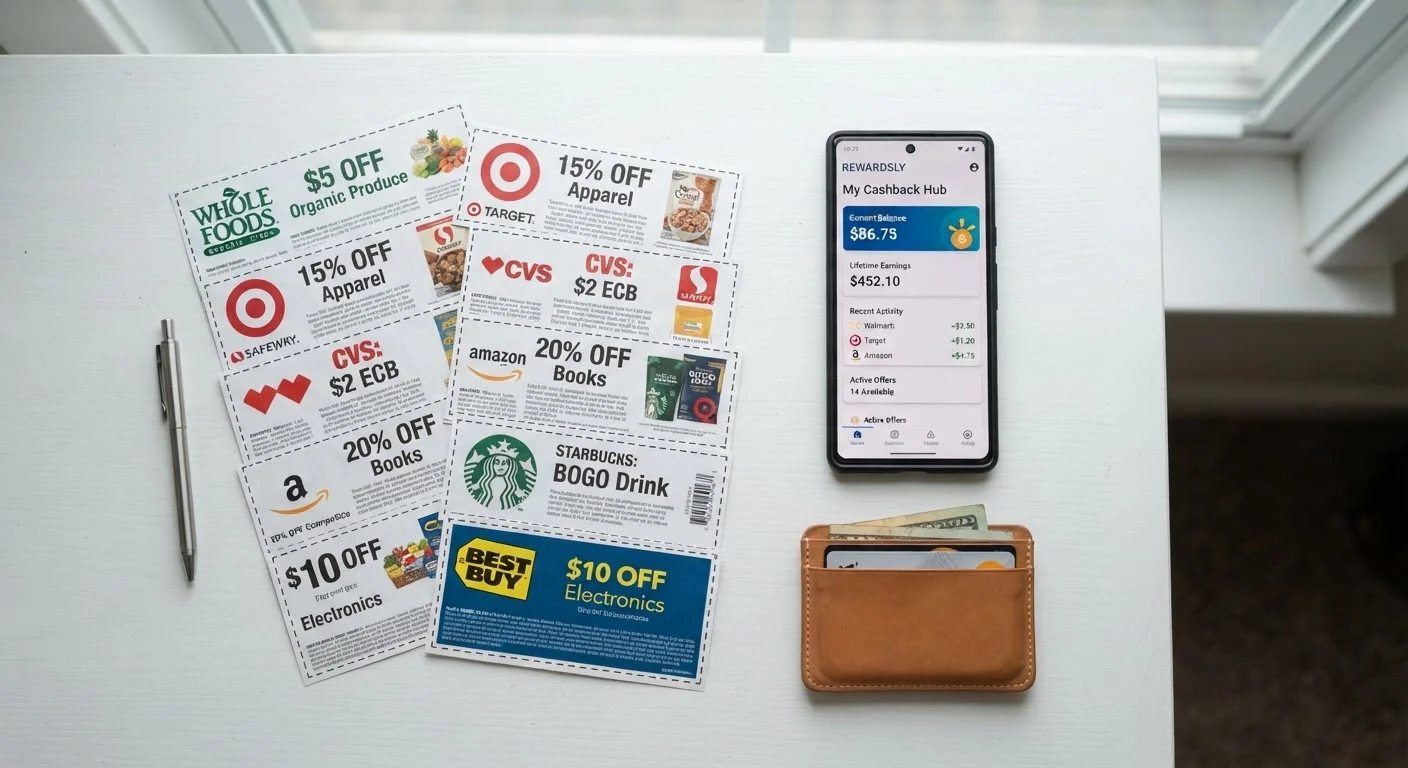
Photo: AnswersVista.com | Trustworthy Information Every Day editorial
Key Takeaways
- Cashback returns money after purchase; coupons reduce price before or at checkout.
- Coupons tend to offer deeper discounts on specific items but require active effort to find and redeem.
- Cashback programs are broader but often return a smaller percentage of spending.
- Both structures can encourage overspending if not used deliberately and within a budget.
- The most effective approach often combines both tools strategically rather than relying on one exclusively.
How Each Discount Structure Actually Works
These two savings mechanisms operate at opposite ends of the shopping timeline. Understanding the mechanics helps you use each one intentionally rather than by habit.
Cashback is a rebate system. You spend money, and a percentage comes back to you afterward - through a credit card statement credit, a bank deposit, an app balance, or reward points. The cashback rate is typically fixed per category (e.g., 3% on groceries, 1% on everything else) or merchant-specific through a portal or app. You usually don't have to do anything at the point of sale; the reward accrues automatically.
Coupons work differently. They are discount instruments - digital or paper - that reduce the purchase price of a specific item or transaction when redeemed. They must be applied before or during checkout, either by a cashier scanning a barcode, an app auto-applying a code, or the shopper entering a promo code online. The discount is visible immediately in the total.
| Criterion | Cashback Programs | Coupons |
|---|---|---|
| When savings apply | After purchase (rebate) | At or before checkout |
| Typical savings rate | 1%-5% of spend | 10%-50% on specific items |
| Effort required | Low - often automatic | Moderate - must find and apply |
| Flexibility | Broad, across purchases | Narrow, item or category specific |
| Immediacy of discount | Delayed (days to weeks) | Immediate at checkout |
| Risk of overspending | Moderate - rewards can justify extra spend | Moderate - discounts may prompt unplanned purchases |
This structural difference matters: cashback is passive and broad; coupons are active and targeted. Neither is inherently superior - the right tool depends on your shopping habits and how much effort you're willing to invest.
What You Give Up With Each Approach
Both tools come with trade-offs that aren't always obvious upfront.
With cashback, the primary limitation is yield. Most cashback rates fall between 1% and 5%, even on elevated-category cards or programs. On a $100 purchase, that's $1-$5 back - real money over time, but rarely transformative on any single transaction. There's also a delay: cashback may not post for days or weeks, and some programs have minimum redemption thresholds or expiration windows.
Cashback programs can also subtly encourage spending more across eligible categories just to accumulate rewards - a pattern worth watching, especially if your goal is managing overall expenses. For a broader look at how to approach that balance, see balancing saving and debt repayment.
1%-5%
Typical cashback return on purchases
Most cashback credit cards and apps return between 1% and 5% depending on spending category and program tier.
~$1,800
Average annual household coupon savings potential
Industry estimates from coupon clearinghouses suggest consistent coupon users can reduce annual grocery and household spending substantially, though actual savings vary widely by usage discipline.
With coupons, the trade-off is friction and selectivity. You must locate relevant coupons before shopping, verify they apply to what you actually want (not just a similar product), check expiration dates, and remember to use them. Manufacturer coupons may restrict to specific sizes or varieties, limiting flexibility. Digital coupons loaded to a store loyalty account add another step - and another data-sharing arrangement.
Coupons also don't scale passively. A disciplined coupon user invests consistent time. That's worth it for some shoppers; for others, it's not. For a broader discussion of how loyalty programs interact with coupon ecosystems, see how loyalty programs actually work.
When to Use One, Both, or Neither
The strongest position isn't choosing a side - it's understanding when each tool fits.
Cashback works well as a baseline layer: set it up once through a card or app and let it accumulate without changing how you shop. It's particularly effective for recurring, unavoidable expenses where no coupon is realistically available - utility payments, subscription services (where eligible), or professional purchases.
Coupons earn their place for planned, recurring purchases with predictable brand and size preferences - especially in grocery, household, and personal care categories where manufacturer discounts are common. If you're buying the same shampoo or laundry detergent every month, taking 30 seconds to check for a digital coupon in the retailer's app before checkout is a reliable, low-effort habit.
The combination strategy: apply a coupon at checkout to reduce the item's price, while also earning cashback on the final transaction amount through your payment method. Not every purchase allows this stack, but when it does, both savings apply simultaneously.
What neither tool should do is justify buying something you wouldn't otherwise need. A 20%-off coupon on a product you don't need is a 100% waste. Effective deal use is a component of a broader value-focused shopping mindset - one explored in depth in our guide to smart saving across major shopping categories.
This article provides general financial education and is not personalized financial advice. Consult a qualified financial professional for guidance specific to your situation.
The content provided on our blog site traverses numerous categories, offering readers valuable and practical information. Readers can use the editorial team’s research and data to gain more insights into their topics of interest. However, they are requested not to treat the articles as conclusive. The website team cannot be held responsible for differences in data or inaccuracies found across other platforms. Please also note that the site might also miss out on various schemes and offers available that the readers may find more beneficial than the ones we cover.