
Certifications and Safety Labels: Which Ones Actually Mean Something

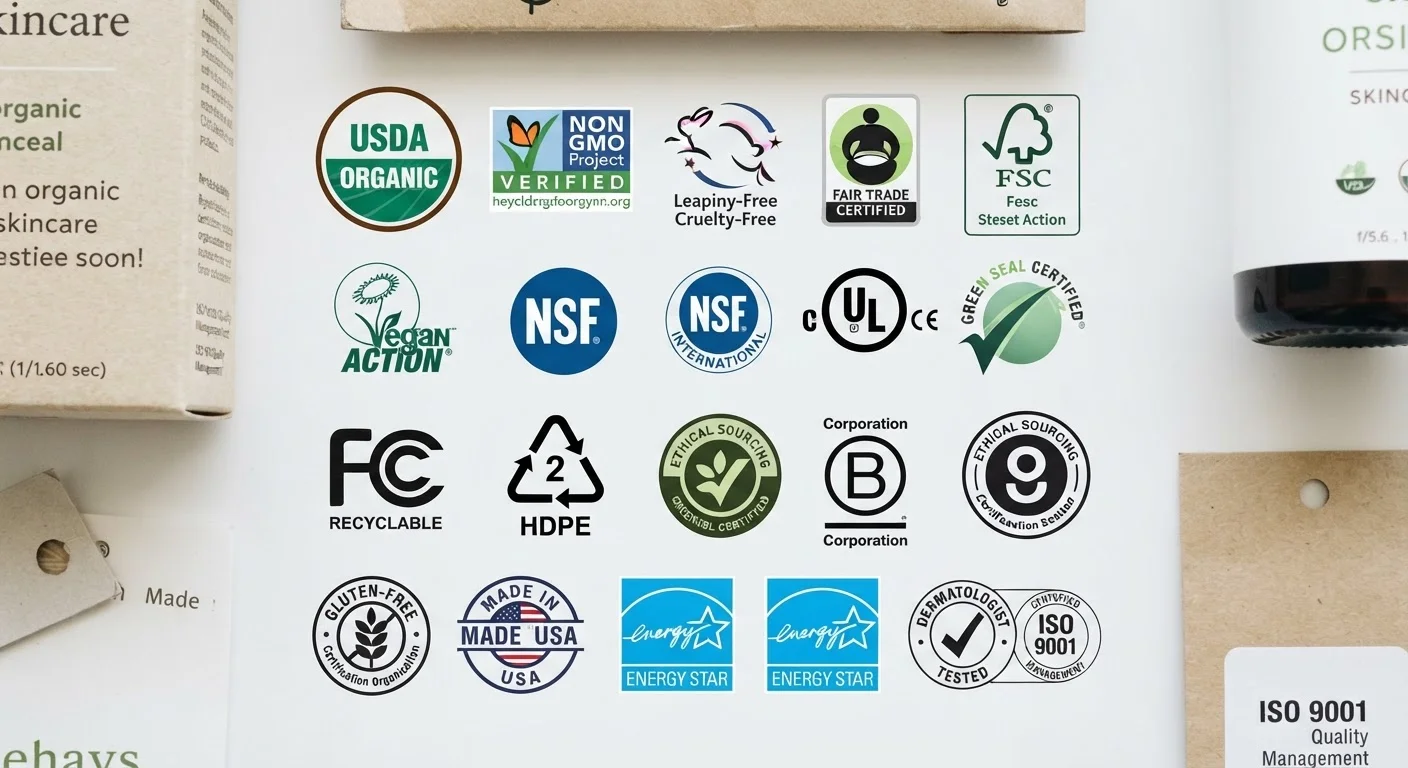
Photo: AnswersVista.com | Trustworthy Information Every Day editorial
Why Certification Labels Vary So Dramatically in Value
Walk through any store and you'll see products plastered with badges, seals, and icons claiming everything from "eco-friendly" to "clinically proven." The uncomfortable truth: anyone can print a logo on a box. What separates a meaningful certification from a marketing decoration is whether an independent third party tested the product against specific, documented standards - and whether that certifying body has any accountability if a product fails.
There are two broad categories to keep in mind. First-party claims are made by the manufacturer about their own product - phrases like "our formula is doctor-approved" or "all-natural ingredients." These carry no external verification. Third-party certifications involve an independent organization that tests products against published criteria and can revoke certification if standards aren't met. Only the second category provides meaningful assurance.
| First-party vs. third-party claims | Only third-party certifications involve independent verification |
| "Natural" food label regulation | No formal FDA definition exists for this term (U.S. Food and Drug Administration) |
| UL certification scope | Covers electrical, electronic, and fire safety products (Underwriters Laboratories) |
| ENERGY STAR administrator | U.S. Environmental Protection Agency (EPA) (EPA.gov) |
| USDA Organic enforcement | Misuse of the seal is a federal violation subject to penalties (USDA National Organic Program) |
| AAFCO role | Sets nutritional standards for pet food; individual states enforce (Association of American Feed Control Officials) |
Understanding this distinction is the fastest way to cut through label clutter, whether you're buying children's toys, electrical appliances, food, or outdoor gear. For a related perspective on how branding affects perceived quality, see our article on when brand labels reflect real quality differences.
Certifications That Carry Real Weight
The following are widely recognized, independently administered certifications in the U.S. consumer market. Each has a documented standard, published testing methodology, and enforcement mechanisms.
Third-party certification
Verification of a product's claims or safety by an independent organization not affiliated with the manufacturer. The certifying body tests against documented standards and can revoke the certification if violations occur.
First-party claim
A statement made by the manufacturer about their own product, with no external verification. Examples include phrases like "all-natural" or "doctor-recommended" without a named, verifiable endorsing body.
Accredited testing laboratory
A lab recognized by a standards organization or government agency as qualified to conduct specific tests. Accreditation requires demonstrated competence and is subject to ongoing review.
Nutritional adequacy statement
A label declaration on pet food indicating the product meets minimum nutritional profiles established by AAFCO for a specific life stage. It tells you whether the food is intended as a complete diet or a supplement.
Self-certification
A process in which a manufacturer tests or evaluates its own product and declares compliance without independent verification. Common in some product categories; provides weaker assurance than third-party testing.
Standards body
An organization that develops and publishes technical standards used to evaluate products, materials, or processes. Examples include ASTM International, NSF International, and UL. Standards bodies do not always enforce compliance - enforcement may fall to government agencies.
- UL (Underwriters Laboratories) - For electrical and electronic products, UL certification means a product has been tested against specific safety standards. The UL mark is one of the most recognized safety certifications in North America and is required by many building codes for certain products.
- ENERGY STAR - Administered by the U.S. Environmental Protection Agency, ENERGY STAR certification means a product meets federally established energy efficiency thresholds. The program requires product testing by EPA-recognized laboratories and ongoing verification.
- NSF International - NSF certifications apply across water filtration, food equipment, and dietary supplements. Products must meet specific contaminant-reduction or material-safety standards and are subject to ongoing audits.
- USDA Organic - For food and agricultural products, the USDA Organic seal requires third-party certification by a USDA-accredited agent and compliance with federal regulations governing production and handling. It has legal teeth: misuse of the seal is a federal violation.
- ASTM / CPSC compliance markings - Products for children and toys often reference ASTM International test standards (e.g., ASTM F963 for toy safety). While ASTM writes the standards, federal enforcement comes through the Consumer Product Safety Commission.
- AAFCO statements on pet food - The Association of American Feed Control Officials sets nutritional standards for pet food. An AAFCO nutritional adequacy statement on a label indicates the food meets defined minimum nutritional profiles. For more on decoding pet food labels, see what pet food label terms actually mean.
How to Verify a Certification Quickly
Labels That Often Mean Less Than They Look
Several common label types are either self-certified, loosely defined, or entirely unregulated. Recognizing them helps you avoid paying a premium for an empty claim.
- "Natural" on food and personal care products - The FDA has not established a formal definition for "natural" on food labels. For personal care products, there is no federal standard at all. This term is essentially marketing language.
- "Clinically tested" or "dermatologist approved" - These phrases do not describe a standardized process. A product can be "tested" in a study of any size, quality, or design. Ask: tested by whom, against what standard, with what results published where?
- Made-up seals and icons - Some manufacturers create their own badges ("XYZ Quality Seal") that reference no external body. If you can't identify the certifying organization with a quick search, treat it as a first-party claim.
- "Green" or sustainability badges without a named standard - Terms like "eco-friendly," "sustainable," or "earth-conscious" without reference to a specific standard (such as LEED, Rainforest Alliance, or FSC for wood products) are marketing descriptors, not certifications.
The practical test: look for the certifying organization's name, verify it exists independently, and check whether it publishes its testing criteria publicly. If any of those three elements are missing, lower your confidence in the claim.
The content provided on our blog site traverses numerous categories, offering readers valuable and practical information. Readers can use the editorial team’s research and data to gain more insights into their topics of interest. However, they are requested not to treat the articles as conclusive. The website team cannot be held responsible for differences in data or inaccuracies found across other platforms. Please also note that the site might also miss out on various schemes and offers available that the readers may find more beneficial than the ones we cover.