Pet Food Labels Explained: What Those Ingredients Actually Mean

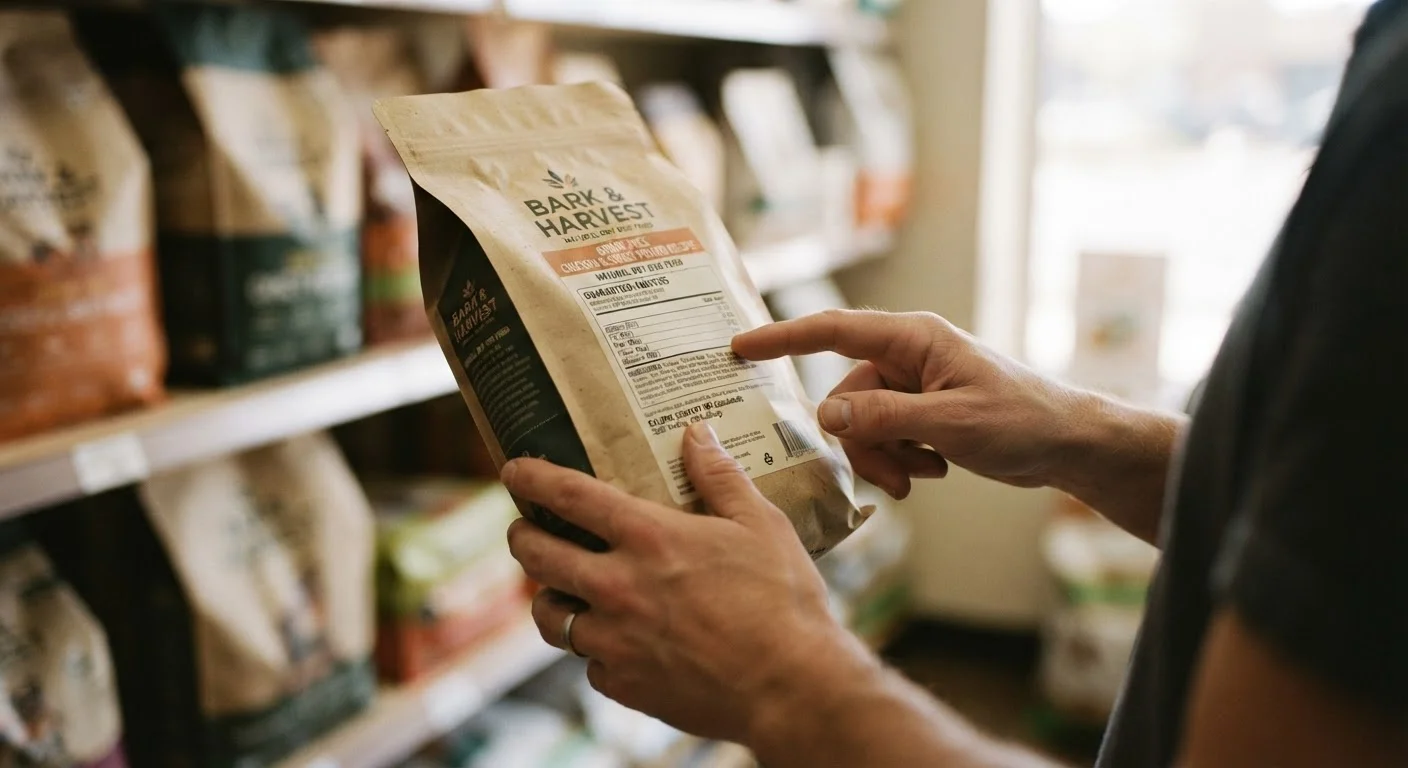
Photo: AnswersVista.com | Trustworthy Information Every Day editorial
Key Takeaways
- Ingredients are listed by weight before processing, so order alone doesn't tell the whole nutritional story.
- The guaranteed analysis shows minimum or maximum nutrient levels, not exact amounts.
- An AAFCO nutritional adequacy statement tells you whether a food is complete and balanced for your pet's life stage.
- Marketing terms like 'natural' and 'premium' have little regulatory meaning on pet food labels.
- Moisture content differences between wet and dry food make direct nutrient comparisons tricky without conversion.
The Ingredient List: What Order Really Means
The ingredient list on a pet food label is organized by pre-processing weight, from heaviest to lightest. This sounds straightforward, but it requires some interpretation. Raw chicken, for example, is roughly 70% water. Once cooked, its actual weight - and nutritional contribution - drops considerably. A dry ingredient like chicken meal (which is already rendered and moisture-removed) further down the list may actually deliver more protein per gram than the raw chicken listed first.
This is why scanning only the first few ingredients gives an incomplete picture. Look at the first five to ten ingredients together and consider the overall pattern. For a deeper dive into how processing affects nutritional value, see our guide to whole vs. processed foods.
Named ingredients are generally more transparent than generic ones. Salmon is more specific than fish; chicken fat is more traceable than animal fat. This matters for pets with food sensitivities, where identifying the protein source is essential.
Look Beyond the First Ingredient
Guaranteed Analysis: Floors and Ceilings, Not Exact Numbers
The guaranteed analysis panel lists four nutrients at minimum: crude protein (minimum), crude fat (minimum), crude fiber (maximum), and moisture (maximum). Note the language carefully - these are guarantees of at least or at most a given level, not precise measurements. A food guaranteeing 26% crude protein may actually contain more.
Crude refers to the chemical method used to measure the nutrient - it does not indicate quality. Crude protein, for instance, measures total nitrogen and doesn't distinguish between digestible and indigestible protein sources.
3%
Minimum ingredient required to use 'with' on a label
Under AAFCO model regulations, a product claiming 'with Chicken' must contain at least 3% of that ingredient, excluding water used in processing.
95%
Required for single-ingredient named product claims
Under the AAFCO '95% rule,' a pet food named after one ingredient (e.g., 'Beef for Dogs') must be composed of at least 95% of that ingredient, excluding water and condiments.
25%
Ingredient threshold for 'dinner,' 'entrée,' or 'formula' labels
When a descriptor like 'dinner' or 'formula' follows an ingredient name, AAFCO requires that ingredient to make up at least 25% of the product, excluding water.
Comparing guaranteed analysis numbers across wet and dry foods requires a dry-matter conversion because moisture levels differ dramatically. Our companion article on pet food nutrition facts walks through this calculation step by step.
AAFCO Statement: The Most Important Line on the Label
The nutritional adequacy statement - sometimes called the AAFCO statement - is arguably the single most important piece of information on a pet food label. It tells you whether the food is intended as a complete diet or a supplemental treat, and for which life stage it qualifies.
There are two ways a manufacturer can earn this statement:
- Formulation method: The recipe was formulated to meet AAFCO's published nutrient profiles for a specific life stage.
- Feeding trial method: The food was fed to actual animals in a structured trial that met AAFCO protocols, providing real-world validation beyond just nutrient math.
If a label reads "for supplemental or intermittent feeding only," the food is not nutritionally complete on its own. Feeding it as a sole diet long-term could lead to deficiencies. Always check this statement before choosing a food as your pet's primary nutrition source. For guidance on what to look for when comparing multiple products, visit our article on comparing pet food labels.
Marketing Language vs. Regulated Terms
Words like premium, gourmet, and holistic have no standardized legal definition in pet food labeling. They are marketing terms, not quality certifications. Similarly, natural does have a loose regulatory definition - it generally means no artificial flavors, colors, or preservatives - but it doesn't guarantee ingredient quality or nutritional superiority.
The "95% rule," "dinner rule," and "with" rule do carry regulated meaning for named ingredients. A food called Chicken for Cats must contain at least 95% chicken (excluding water). A product called Chicken Dinner needs only 25%. A label saying with Chicken requires just 3% chicken. These naming rules directly affect how much of that ingredient is actually present.
For a broader look at how certifications and labels hold up under scrutiny across product categories, our article on certifications and safety labels is a helpful reference. You can also find comprehensive pet health guidance in our Pet Health hub.
Grain-Free Labeling and Cardiac Research
Frequently Asked Questions
The content provided on our blog site traverses numerous categories, offering readers valuable and practical information. Readers can use the editorial team’s research and data to gain more insights into their topics of interest. However, they are requested not to treat the articles as conclusive. The website team cannot be held responsible for differences in data or inaccuracies found across other platforms. Please also note that the site might also miss out on various schemes and offers available that the readers may find more beneficial than the ones we cover.