
What to Look for When Comparing Pet Food Labels

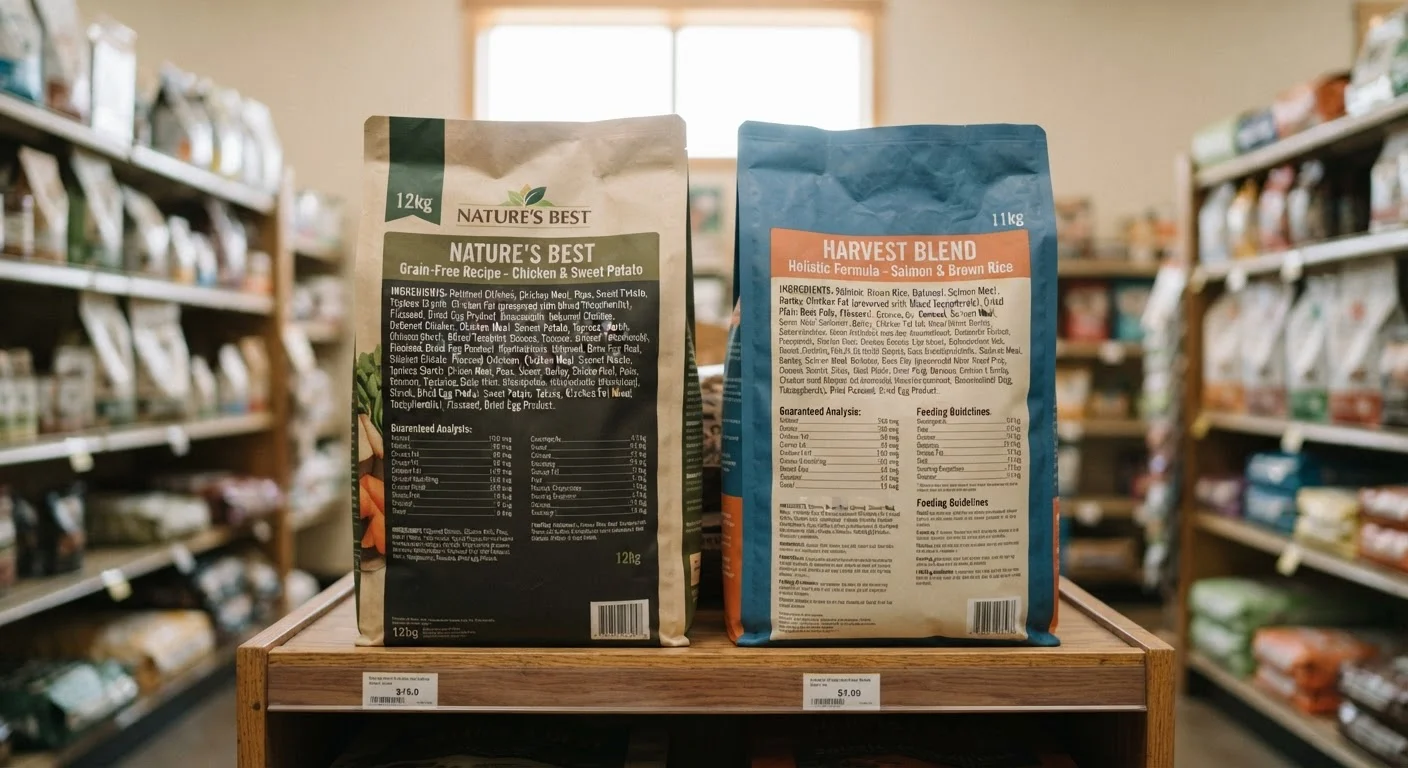
Photo: AnswersVista.com | Trustworthy Information Every Day editorial
Key Takeaways
- AAFCO nutritional adequacy statements confirm whether a food meets minimum standards for your pet's life stage.
- Ingredient lists are ordered by pre-cooking weight, which affects how you interpret protein sources.
- The guaranteed analysis panel shows minimums and maximums, not exact nutrient amounts.
- Marketing claims on the front of packaging are largely unregulated and require skepticism.
- Moisture content differences between wet and dry foods make direct nutrient comparisons misleading without a dry-matter calculation.
Why Pet Food Labels Deserve a Closer Read
Pet food packaging is designed to sell, not necessarily to inform. The front of a bag communicates lifestyle imagery and feel-good claims, while the actual nutritional content is disclosed on a separate panel that most shoppers skip. Understanding how to read that panel - and how to use it to compare two foods objectively - is one of the more practical skills a pet owner can develop.
The U.S. regulatory framework for pet food labeling is a shared responsibility between the AAFCO, which sets model standards, and individual states, which enforce them. This creates some variation, but it also means certain label elements carry real, defined meaning. Others - especially front-of-pack claims - do not. Our guide to what pet food ingredients actually mean goes deeper on individual terms; this checklist focuses on the structured comparison process.
For additional context on how to approach product comparisons generally, see our introduction to comparing products across categories.
Always Consult Your Veterinarian First
How to Use This Checklist
Work through each group in order when you have two or more candidate foods in front of you. Have a calculator ready for the dry-matter basis math, and take notes - memory is unreliable when you're juggling four ingredient lists at once. The checklist is organized from highest-stakes decisions (AAFCO compliance and ingredient quality) down to transparency signals that are useful but not decisive on their own.
Calculator (or smartphone)
Perform dry-matter basis calculations to compare nutrient percentages across wet and dry foods accurately.
Notebook or comparison spreadsheet
Record guaranteed analysis figures and ingredient rankings side by side for multiple foods.
Your veterinarian's guidance
Obtain your pet's specific life stage, health conditions, and any diagnosed dietary restrictions before evaluating labels.
AAFCO official resources
Reference AAFCO's publicly available model regulations to understand what label statements legally require.
If you're also comparing the nutritional labeling concepts between pet food and human food packaging, the plain-language walkthrough of Nutrition Facts labels is a useful parallel read. Note that pet food panels use different terminology and regulatory standards than human food labels.
Working Through the Label: Section by Section
Start with the AAFCO statement before reading anything else. If a food doesn't carry a complete and appropriate adequacy statement for your pet's life stage, the remaining label details matter less. A food labeled for adult maintenance is not formulated to meet the higher nutrient demands of a growing puppy or a pregnant animal.
Move next to the ingredient list. Ingredients are listed in descending order by pre-cooking weight, which means a protein source at position one may be less dominant post-processing than it appears. This is why the weight of named protein meals - which are already water-reduced - can sometimes represent a greater actual contribution than a raw meat listed above them.
AAFCO Statement Verification
Ingredient List Analysis
Guaranteed Analysis Panel
Front-of-Package Claims
Manufacturer Transparency
The guaranteed analysis panel is your most quantifiable data point, but it shows ranges rather than exact values. Minimum protein and fat, maximum fiber and moisture - these are floors and ceilings, not precise measurements. When you're comparing foods with substantially different moisture levels, the nutritional trade-offs between dry and wet food article explains the broader context behind those numbers.
Front-of-Pack Claims Are Largely Unregulated
Don't Compare Wet and Dry Foods Without Adjusting for Moisture
Finally, manufacturer transparency signals - listed contact information, specific country-of-origin disclosures, and voluntary testing certifications - can help you assess accountability. For a broader look at which certifications carry genuine independent weight, see which certifications actually mean something.
This article is for general informational and educational purposes only. It is not veterinary advice. Always consult a licensed veterinarian or veterinary nutritionist before making changes to your pet's diet, particularly for animals with health conditions, allergies, or special nutritional needs.
The content provided on our blog site traverses numerous categories, offering readers valuable and practical information. Readers can use the editorial team’s research and data to gain more insights into their topics of interest. However, they are requested not to treat the articles as conclusive. The website team cannot be held responsible for differences in data or inaccuracies found across other platforms. Please also note that the site might also miss out on various schemes and offers available that the readers may find more beneficial than the ones we cover.