
Feature Overload: Separating Useful Functions from Marketing Noise

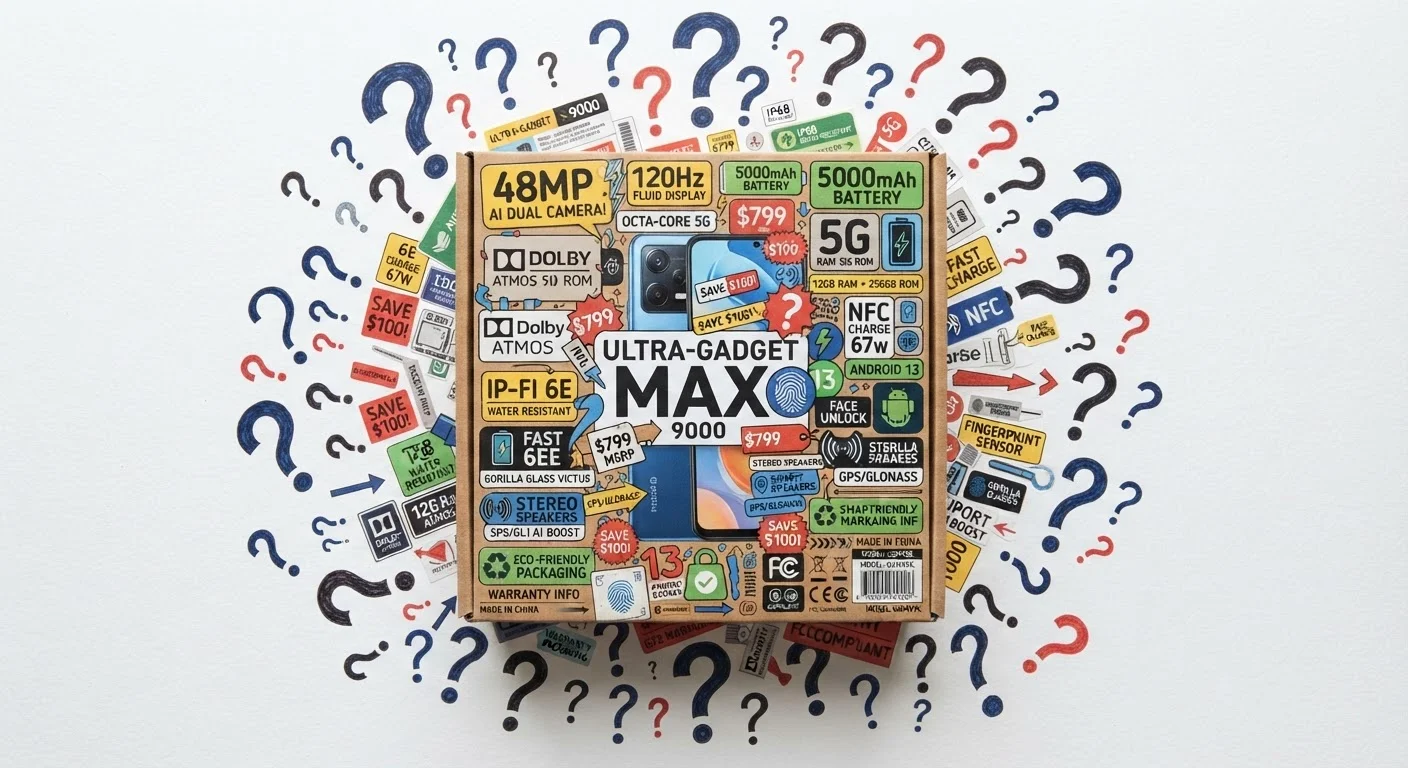
Photo: AnswersVista.com | Trustworthy Information Every Day editorial
Key Takeaways
- A higher feature count rarely correlates with better real-world performance or durability.
- Many listed specifications serve marketing purposes rather than meaningfully improving the user experience.
- Identifying which features align with your actual use case is the most reliable filter.
- Complexity can mask poor core quality - simpler products sometimes outperform feature-heavy alternatives.
- Independent user reviews and third-party testing expose which features deliver and which disappoint.
Why Feature Lists Exist (and Who They're Really For)
Product feature lists are built for retail shelf comparisons and online filter grids - environments where more checkboxes create a perception of superiority. This is not a conspiracy; it's a straightforward response to how purchasing decisions are made in competitive markets. Understanding that dynamic is your first defense.
When evaluating any product, mentally separate features into two categories: core functions (the primary reason you're buying the product) and ancillary features (everything else). Core functions deserve deep scrutiny. Ancillary features should be treated as bonuses - appreciated if they work, but not used to justify a purchase decision.
Myth
More features always mean a better product. If two items are similarly priced, the one with more capabilities is the smarter pick.
Fact
Feature count is a marketing metric, not a quality indicator. Additional features can dilute engineering focus and introduce failure points.
Manufacturers know that side-by-side spec comparisons on retail pages favor longer lists. Adding a feature costs relatively little at production scale, but it creates a strong visual impression of value. The result: products loaded with functions that few users ever engage, while core performance - the thing you bought the product to do - receives less engineering attention. A side-by-side comparison that counts features rather than weighing them will mislead you almost every time.
Myth
If a spec is listed on the box, it's a meaningful differentiator worth paying attention to.
Fact
Specs are selected by marketing teams, not engineers. Many listed values are technically true but practically irrelevant to everyday use.
Consider a blender rated at 1,500 watts. That wattage figure sounds impressive, but peak wattage drawn at stall - not continuous operating power - is what's typically measured. The number isn't false, but it tells you little about how the blender performs under normal use. Learning to read between the lines of product specification sheets is one of the most transferable shopping skills you can develop.
Myth
Features you don't use now are a bonus - it's good to have options for the future.
Fact
Unused features add complexity, potential failure points, and often price premium without providing real benefit to your situation.
Every additional function requires firmware, hardware, or mechanical support. Each layer adds something that can break, become outdated, or conflict with other systems. A product with ten features you won't use isn't a bargain - it's a maintenance liability. Focus your evaluation on features that directly address your actual use case. If you're uncertain which specs genuinely matter in a specific category, third-party testing sites and long-term owner reviews are far more informative than the manufacturer's feature list.
Myth
If a product has earned high ratings, its advertised features must all be working as promised.
Fact
High aggregate ratings often reflect satisfaction with core functions, not validation of every listed feature.
A product with an average rating of 4.4 stars may have received those ratings primarily because it performs its main job reliably. Secondary or novelty features are rarely tested thoroughly by average reviewers. Reading consumer reviews carefully - especially filtering for verified purchasers who mention specific features - will give you a clearer picture than the aggregate score alone.
Myth
Premium pricing guarantees that every included feature is high quality and fully realized.
Fact
Price reflects brand positioning, materials, and market strategy - not necessarily the quality of every feature in a product.
Premium-tier products do often reflect higher build quality in core components. But a high price point does not guarantee that every feature works as advertised or adds genuine value. Some features exist to justify a price increase rather than to serve the user. When evaluating a higher-priced item, isolate the features that matter to your use case and assess those specifically - don't assume the price umbrella covers all functions equally. For a structured approach, see how to compare products when specs look nearly identical.
A Practical Filter for Cutting Through the Noise
Before looking at any feature list, write down the two or three specific tasks you need the product to accomplish. Then, when you review specifications, ask one question for each listed feature: Does this directly improve my ability to do one of those tasks? If the answer is no, that feature is irrelevant to your decision.
~70%
Features on devices that go unused
Research by the Product Development and Management Association has consistently found that roughly 70% of product features go unused by the majority of customers.
3-5
Core functions most buyers actually use
Usability studies across multiple product categories suggest most users regularly rely on only three to five core functions, regardless of how many features a product includes.
This process also exposes when a product is weak in core areas but padded with novelty features - a common pattern. If a product's primary function scores poorly in independent testing but it offers extensive secondary capabilities, that's a red flag, not a selling point. You can dig further using real-world performance data rather than manufacturer-published numbers alone.
Complexity Can Hide Core Weaknesses
Also consider what tends to get overlooked entirely: compatibility, return windows, and long-term support. These factors often matter more than any feature on the box. A structured review of commonly skipped evaluation steps can prevent post-purchase regret.
The content provided on our blog site traverses numerous categories, offering readers valuable and practical information. Readers can use the editorial team’s research and data to gain more insights into their topics of interest. However, they are requested not to treat the articles as conclusive. The website team cannot be held responsible for differences in data or inaccuracies found across other platforms. Please also note that the site might also miss out on various schemes and offers available that the readers may find more beneficial than the ones we cover.