
Manufacturer Specs vs. Real-World Performance: Closing the Gap

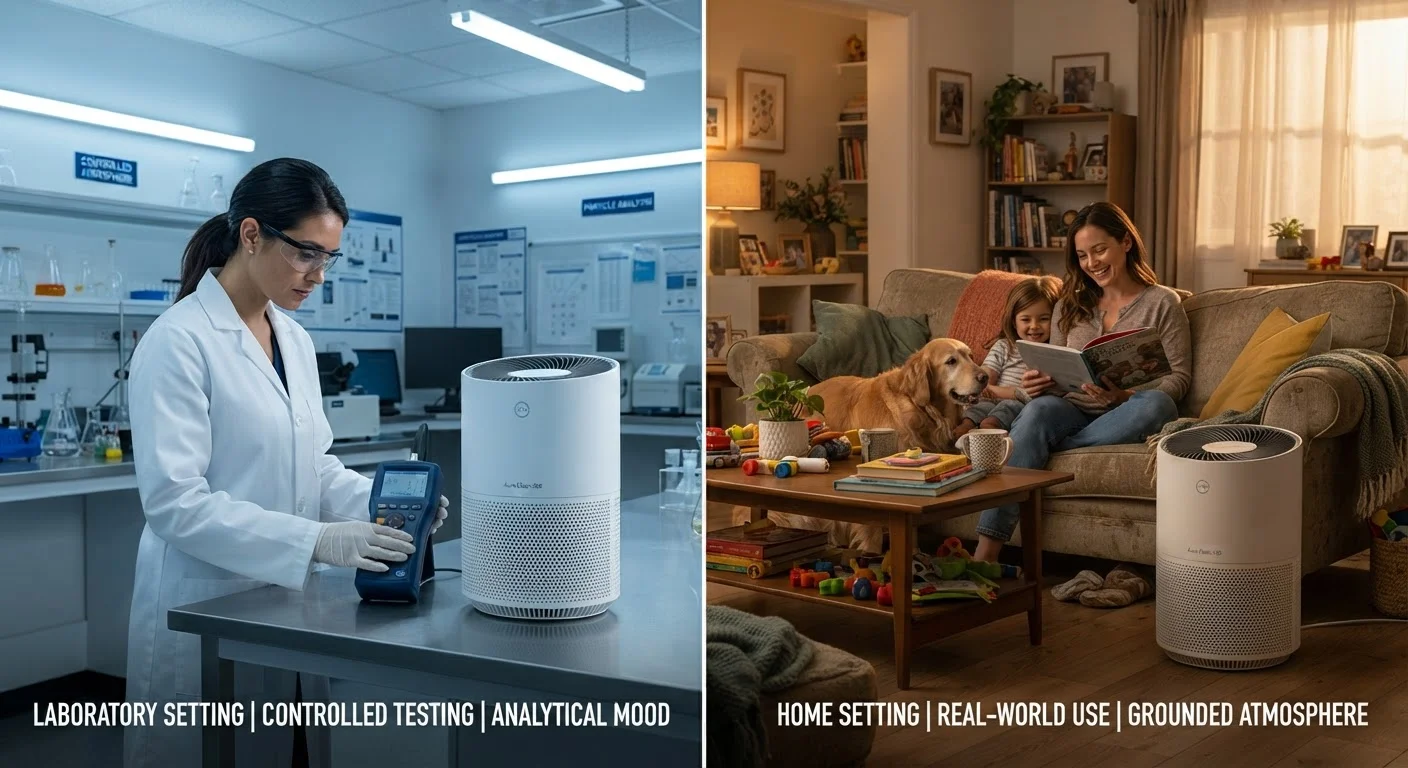
Photo: AnswersVista.com | Trustworthy Information Every Day editorial
Key Takeaways
- Manufacturer specs are measured under ideal, controlled conditions that rarely match typical household use.
- The gap between rated and actual performance is widest for battery life, fuel economy, and noise ratings.
- Independent test results and owner reviews together give a more complete performance picture than specs alone.
- Asking specific 'use-condition' questions before purchase can dramatically reduce post-buy disappointment.
- Understanding why specs diverge from reality helps you compare products more accurately.
Why the Gap Exists in the First Place
Manufacturer specs are produced under tightly controlled laboratory conditions designed to showcase peak performance. Temperature is regulated, loads are standardized, and variables that exist in real homes - dust, humidity, power fluctuations, usage patterns - are stripped away. The result is a number that's technically accurate but practically optimistic.
This isn't necessarily deceptive. Standardized testing allows consumers to make like-for-like comparisons across competing products. The problem arises when shoppers treat spec-sheet numbers as reliable predictions of everyday performance rather than upper-bound benchmarks.
The categories where this gap is most consequential include battery-powered devices, appliances with energy or noise ratings, and any product where environmental conditions affect output. Understanding this distinction is the foundation of smarter buying - and our guide to reading specification sheets explores the specific numbers manufacturers are most likely to present selectively.
| Criterion | Manufacturer Specs | Real-World Performance |
|---|---|---|
| Testing conditions | Controlled laboratory environment | Variable everyday conditions |
| Battery life accuracy | Peak estimate, low-load scenario | Typically 60-80% of rated figure |
| Noise/decibel ratings | Measured in acoustically treated space | Higher in hard-surface, real rooms |
| Fuel/energy efficiency | Standardized regulatory test cycle | Often 10-20% below rated estimate |
| Usefulness for comparison | Strong - enables apples-to-apples ranking | Stronger - predicts actual experience |
| Best data source | Manufacturer spec sheet | Independent tests and owner reviews |
Where the Divergence Hits Hardest
Battery life is one of the most consistent offenders. Manufacturers typically test devices at low screen brightness, minimal background activity, and stable room temperature. Consumers use devices differently: high brightness, constant connectivity, processor-intensive apps. The real-world result is frequently 60-80% of the advertised figure.
Appliance noise ratings follow a similar pattern. A vacuum cleaner tested in an acoustically treated room will post a lower decibel reading than the same unit running on a bare hardwood floor in your hallway. Vacuum specs explained in practical terms walks through exactly why suction and noise numbers require context before they're useful.
Fuel economy figures for vehicles are another well-known example. Regulatory testing cycles simulate a specific drive pattern that doesn't account for city stop-and-go traffic, highway speeds above the tested range, cargo weight, or climate control use. Real-world mileage commonly runs 10-20% below the posted estimate depending on driving habits.
10-20%
Typical fuel economy shortfall vs. rated estimate
U.S. EPA fuel economy data and independent driving analyses consistently show real-world mileage running below the posted window-sticker figure across most vehicle classes.
~30%
Common battery life gap in portable devices
Consumer electronics reviewers routinely measure laptop and smartphone battery endurance at 30% or more below manufacturer claims under typical mixed-use workloads.
The takeaway isn't to distrust specs - it's to apply a consistent discount factor by category, and to weight independent testing data heavily when it's available.
How to Close the Gap Before You Buy
The most reliable strategy is layering multiple information sources rather than relying on any single one. Start with manufacturer specs to create a shortlist, then cross-reference with independent test results from consumer-focused publications or certified testing organizations. Finally, scan verified owner reviews specifically for mentions of real-world use conditions similar to yours.
Ask targeted questions: Does battery life drop significantly in cold weather? Does noise increase on hard floors versus carpet? Does output degrade under continuous use rather than intermittent? These aren't hypothetical concerns - they're the conditions most products face daily. For a structured approach to spotting meaningful differences when specs look similar, see how to compare nearly identical products.
Also pay attention to build quality signals that affect long-term real-world performance - not just out-of-box numbers. What makes something actually last explains the construction details that determine whether day-one performance holds up over years of use.
Finally, be aware of the mental traps that skew comparisons before they start. Common comparison pitfalls covers anchoring bias and cherry-picked benchmarks that can make a weaker product appear competitive on paper.
The content provided on our blog site traverses numerous categories, offering readers valuable and practical information. Readers can use the editorial team’s research and data to gain more insights into their topics of interest. However, they are requested not to treat the articles as conclusive. The website team cannot be held responsible for differences in data or inaccuracies found across other platforms. Please also note that the site might also miss out on various schemes and offers available that the readers may find more beneficial than the ones we cover.