
Hawaii vs. the Caribbean: Choosing the Right Island Escape for Your Travel Style

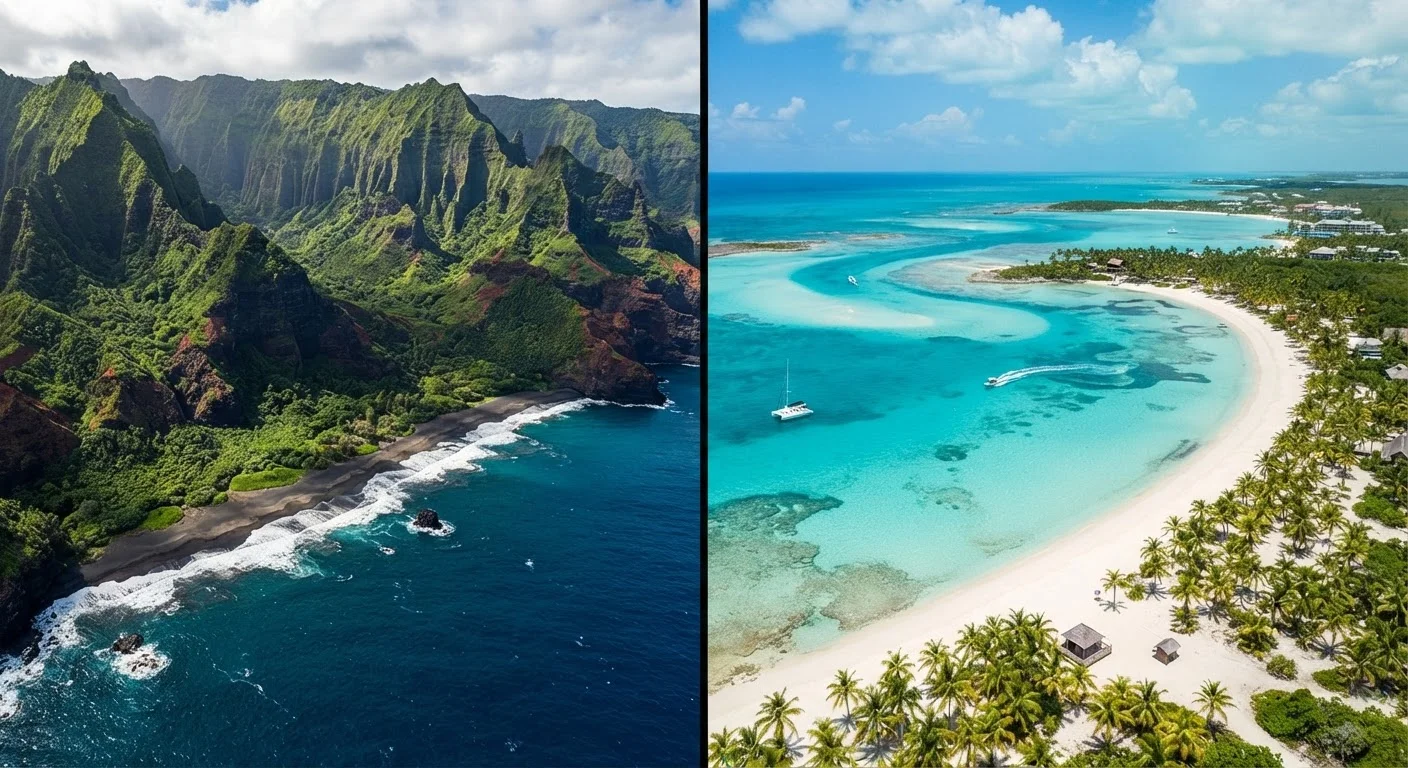
Photo: AnswersVista.com | Trustworthy Information Every Day editorial
Key Takeaways
- Hawaii requires no passport for U.S. citizens and uses the U.S. dollar, making logistics simpler.
- The Caribbean offers more price variation across islands — from budget-friendly to ultra-luxury.
- Hawaii excels in landscape diversity; the Caribbean wins on sheer variety of destinations.
- Flight costs and travel time differ significantly depending on where you're departing from in the U.S.
- Caribbean islands vary widely in language, currency, and entry requirements — research your specific island.
- Both destinations have distinct hurricane and storm seasons that should factor into your planning.
Getting There: Flights, Passports, and Logistics
For U.S. citizens, Hawaii is as logistically simple as island travel gets. No passport, no currency exchange, no customs on arrival — it's a domestic flight with tropical weather at the other end. That said, flight times from the East Coast typically run nine to eleven hours, and airfares can be substantial, particularly from cities without direct routes.
The Caribbean is far more fragmented. Dozens of islands fall under different national jurisdictions, meaning entry requirements, currencies, and even languages vary considerably. Americans need a valid passport for most Caribbean islands. However, the geographic advantage is real for East Coast travelers: direct flights from cities like New York, Miami, or Atlanta can reach popular Caribbean islands in three to five hours. If you're departing from the West Coast or Mountain time zones, Hawaii may actually be the shorter flight. See how to weigh travel time against total cost for a broader framework on this kind of trade-off.
Always verify current entry requirements for your specific Caribbean island through official government sources before booking — rules can change.
| Criterion | Hawaii | The Caribbean |
|---|---|---|
| Passport required | No (U.S. domestic) | Yes (most islands) |
| Currency | U.S. dollar | Varies by island |
| Flight time from East Coast | ~9–11 hours | ~3–5 hours |
| Flight time from West Coast | ~5–6 hours | ~8–10 hours |
| General cost level | High | Wide range (budget to luxury) |
| Landscape variety | Very high (per island) | Moderate (varies by island) |
| Destination variety | 6 main islands | Dozens of distinct islands |
| Hurricane/storm risk season | Nov–Mar (rain, not hurricanes) | June–November |
| Cultural identity | Unified Hawaiian culture | Diverse by island/nation |
Cost: What You Actually Pay
Hawaii has a reputation for being expensive, and it's largely earned. Accommodation, food, and activities on islands like Maui and Kauai tend to run higher than comparable Caribbean options. Oahu offers more budget flexibility than the neighbor islands, but costs are still elevated by mainland U.S. standards.
The Caribbean's strength is its range. You'll find ultra-luxury options in St. Barts and Turks and Caicos alongside genuinely affordable trips in the Dominican Republic or Jamaica — especially through all-inclusive resort formats, which can consolidate costs predictably. That said, some smaller or more remote Caribbean islands can rival Hawaii in price once you factor in inter-island flights and limited accommodation options.
It's worth being skeptical of deals that look dramatically cheap — common travel cost myths can lead to sticker shock once fees, transfers, and meals are added back in.
~$400–$700
Typical round-trip airfare to Hawaii from the U.S.
Fares vary widely by departure city, season, and how far in advance you book; West Coast departures tend to be cheaper.
7,000+ sq mi
Total land area of the main Hawaiian Islands
Hawaii's six main islands range from the densely developed Oahu to the remote and largely uninhabited Niihau.
~700
Number of islands in the Caribbean region
Of these, roughly 30 are considered significant travel destinations with established tourism infrastructure.
Experience and Culture: What You're Actually Going For
Hawaii offers something the Caribbean cannot replicate: a single, cohesive cultural identity rooted in native Hawaiian traditions, combined with extraordinary landscape variety. On a single island you can move from a volcanic crater to a rainforest waterfall to a world-class reef. The culture — hula, lei, the significance of the ocean in daily life — is present and alive, not just decorative.
The Caribbean is less a single destination than a collection of dozens of them. French Creole culture in Martinique, British colonial history in Barbados, Spanish-language vibrancy in Puerto Rico (itself a U.S. territory, requiring no passport), Rastafarian traditions in Jamaica — the variety is genuinely remarkable. This diversity is a strength if you want to explore multiple islands over several trips, but it also means a Caribbean vacation is only as good as the specific island you choose.
Think carefully about what you actually want from a trip before booking. Matching your vacation format to your energy level can help clarify whether you want adventure, relaxation, or cultural immersion — because Hawaii and the Caribbean can each deliver all three, just differently.
Practical Considerations Before You Book
Both destinations have weather patterns worth understanding. Hawaii's rainy season runs roughly November through March, though it varies by island side — the leeward coasts tend to stay drier. The Caribbean hurricane season officially runs June through November, with peak activity typically in August and September. Traveling outside peak hurricane months significantly reduces risk, but travel insurance that covers weather disruption is worth considering regardless of when you go.
Don't overlook the logistics that often catch travelers unprepared: inter-island transportation in Hawaii requires additional flights; in the Caribbean, getting between islands can involve small regional carriers or ferry services with limited schedules. Practical logistics that often get skipped — including ground transport, tipping norms, and time zone math — apply to both destinations and are worth reviewing before you finalize plans.
The bottom line: neither destination is universally better. Your departure city, budget, passport situation, and what you actually want to do on the ground should drive the decision more than any general ranking.
Puerto Rico: A Middle-Ground Option
The content provided on our blog site traverses numerous categories, offering readers valuable and practical information. Readers can use the editorial team’s research and data to gain more insights into their topics of interest. However, they are requested not to treat the articles as conclusive. The website team cannot be held responsible for differences in data or inaccuracies found across other platforms. Please also note that the site might also miss out on various schemes and offers available that the readers may find more beneficial than the ones we cover.