
First-Time Traveler's Introduction to Packing Smart

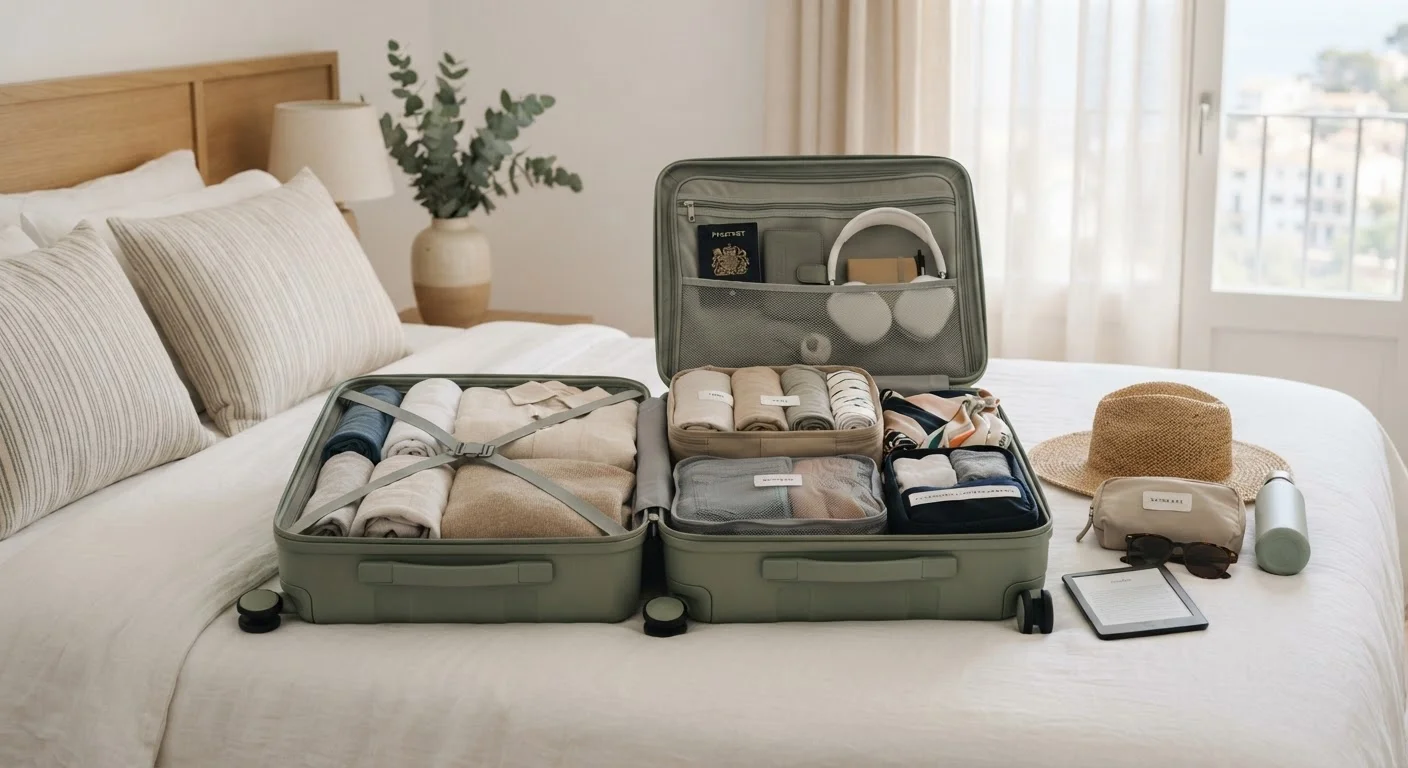
Photo: AnswersVista.com | Trustworthy Information Every Day editorial
Key Takeaways
- Matching your luggage type to your trip style prevents avoidable hassle at airports and hotels.
- Airline size and weight limits vary — always check your specific carrier before you pack.
- Packing cubes and rolling techniques significantly reduce wasted space and wrinkling.
- Most first-time travelers overpack by 30–50% — editing ruthlessly before you close the bag pays off.
- A written packing list, even a simple one, reduces forgotten essentials and impulse overpacking.
Choosing the Right Luggage for Your Trip
Before you pack a single item, you need a bag worth packing into. The main categories first-time travelers choose between are hardshell suitcases, softshell suitcases, duffel bags, and backpacks. Each suits different trip types.
- Hardshell suitcases protect fragile or valuable items and resist damage from airline handling, but offer less flexibility when squeezing into tight storage spaces.
- Softshell suitcases are lighter and expand slightly if needed, though they offer less protection.
- Rolling duffels work well for road trips and destinations where you're moving luggage by hand rather than rolling it across terminal floors.
- Backpacks — particularly 40–50L travel packs — are ideal for trips involving multiple cities, public transit, or irregular terrain.
For most first-time flyers, a 21–22 inch carry-on paired with a personal item (a daypack or tote) handles trips up to seven days without checked baggage fees. When trips stretch beyond that, a mid-size checked bag in the 25–27 inch range is a practical step up. For a more in-depth look at gear selection across different trip styles, see our complete packing guide.
Carry-on bag
A piece of luggage small enough to fit in an airplane's overhead bin or under the seat in front of you, allowing you to bring it aboard without checking it.
Checked baggage
Luggage that you hand over to the airline at check-in to be stored in the cargo hold — typically subject to size, weight limits, and fees.
Packing cubes
Lightweight zippered fabric organizers used inside a suitcase or bag to group and compress clothing and accessories by category.
TSA liquids rule
A U.S. Transportation Security Administration regulation limiting carry-on liquids to containers of 3.4 oz (100ml) or less, all placed in a single quart-sized clear bag.
Capsule wardrobe
A small, coordinated set of clothing items that mix and match with one another, allowing you to create many different outfits from few pieces.
Understanding Airline Carry-On and Baggage Rules
One of the most expensive mistakes first-time travelers make is assuming all airlines follow the same rules. They don't. Carry-on dimensions, personal item policies, and checked bag fees differ significantly by carrier — and budget airlines often charge for bags that full-service carriers include in the ticket price.
Airline Rules Vary More Than You Think
As a starting baseline for U.S. flights: most major carriers allow a carry-on up to 22 x 14 x 9 inches and a personal item that fits under the seat. Checked bags are typically limited to 50 lbs (23kg) before overweight fees apply. Confirm the specific policy for your airline directly on their website before you finalize what you're bringing. For a departure-ready checklist that accounts for all of this, see our domestic flight packing checklist.
Packing Systems That Actually Work
Random piling leads to wrinkled clothes, wasted space, and the frustrating experience of unpacking everything to find one item. Two approaches consistently outperform the rest:
- Packing cubes: Assign one cube per clothing category — tops, bottoms, underwear/socks. Cubes compress contents, keep your bag organized throughout the trip, and make repacking at checkout fast. They also make security screenings easier when your bag needs to be opened.
- Rolling instead of folding: Rolling t-shirts, jeans, and casual fabrics tightly reduces wrinkles and fits more into tight spaces. Structured items like blazers or dress shirts are better folded flat or packed in a dry-cleaning bag to reduce friction creases.
Combine both: roll clothes, load them into cubes, then arrange cubes vertically in your bag like file folders rather than stacking them. This lets you see and access everything without disturbing what's underneath.
Pack Your Bag the Night Before
What to Leave at Home
Overpacking is the universal first-timer mistake — and it's almost always driven by the same instinct: what if I need it? A useful rule of thumb: if you can't imagine a specific scenario where you'll use something on this trip, it stays home.
Common items that add weight without earning their place:
- Multiple pairs of shoes beyond one walking pair and one versatile dressy option
- Full-size toiletries (use travel sizes or buy on arrival)
- "Just in case" clothing that duplicates what you're already bringing
- Bulky books — a phone or e-reader handles reading on the road
- Excessive electronics and their accompanying cables and chargers
Also reconsider anything you're bringing out of habit rather than planning. Travelers who audit their bags the night before and ask "when will I actually use this?" consistently arrive lighter. For a reality check on common packing myths driving these decisions, see what's actually worth bringing vs. skipping.
Going International? There's More to Consider
Building Your First Packing List
A written packing list is the single most effective tool against both overpacking and forgetting essentials. Build yours by category rather than trying to remember items one at a time:
- Documents: ID or passport, booking confirmations, insurance cards, emergency contacts
- Clothing: planned outfits plus one extra day's worth, sleepwear, and a versatile layer for temperature changes
- Toiletries: travel-sized within TSA rules, plus any prescription medications with documentation
- Electronics: phone, charger, portable power bank, headphones
- Comfort/health: basic first-aid items, any motion sickness or sleep aids you rely on at home
Review the list against your actual itinerary — not a generic checklist — and remove anything that doesn't match a real activity you have planned. For a full pre-departure walkthrough that goes beyond the bag, use the trip planning checklist every traveler needs before departure alongside this guide. The domestic flight packing checklist is also a practical companion for your first flight.
TSA Traveler Information
The official U.S. Transportation Security Administration site details current carry-on liquid limits, prohibited items, and what to expect at security checkpoints — essential reading before any U.S. departure.
Pre-Trip Packing Checklist for Domestic Flights
A ready-to-use checklist covering clothing, documents, electronics, and carry-on essentials to review before any domestic flight.
Trip Planning Hub
Practical strategies for organizing itineraries, budgets, and all the logistics that go alongside packing decisions.
Frequently Asked Questions
The content provided on our blog site traverses numerous categories, offering readers valuable and practical information. Readers can use the editorial team’s research and data to gain more insights into their topics of interest. However, they are requested not to treat the articles as conclusive. The website team cannot be held responsible for differences in data or inaccuracies found across other platforms. Please also note that the site might also miss out on various schemes and offers available that the readers may find more beneficial than the ones we cover.