
Everything in Its Place: A Complete Guide to Packing for Every Type of Trip

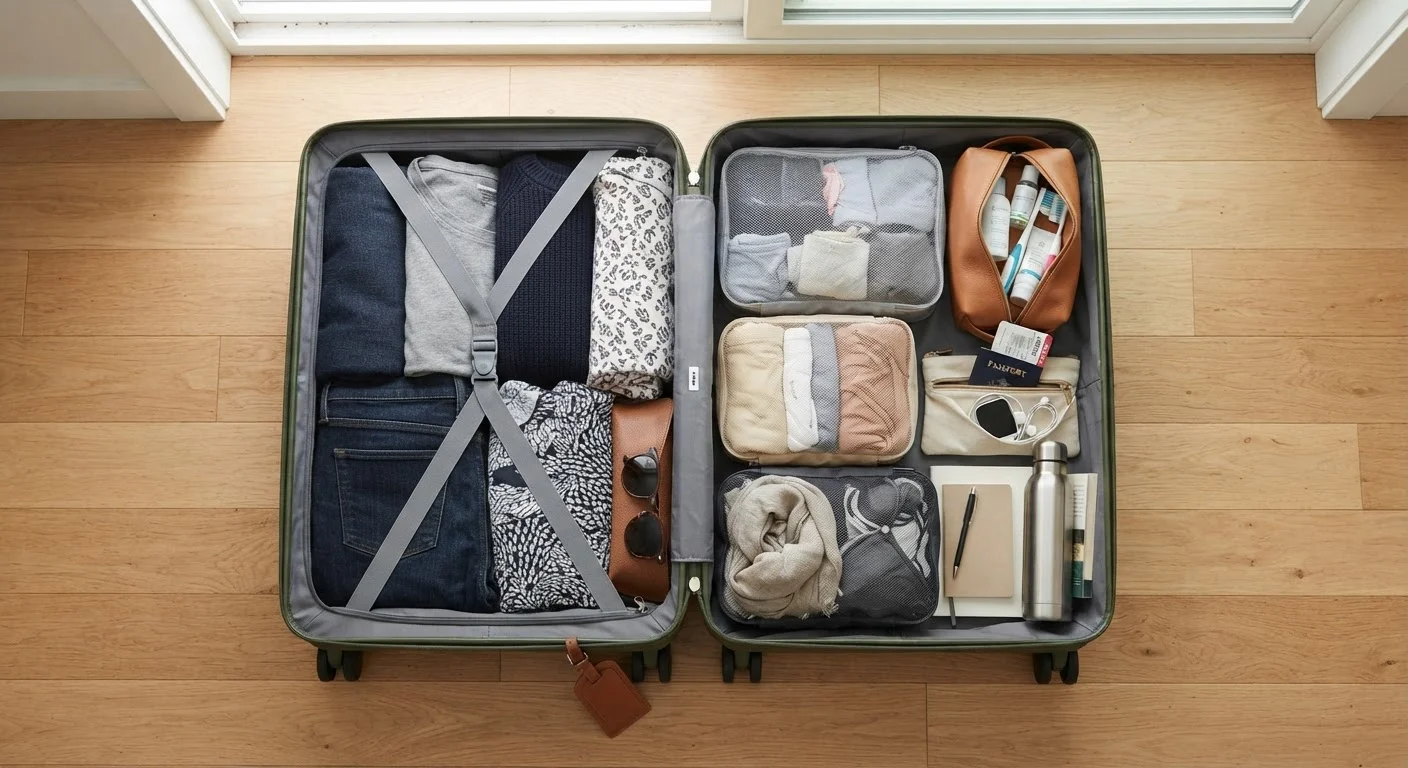
Photo: AnswersVista.com | Trustworthy Information Every Day editorial
Key Takeaways
- Match your luggage type and size to the specific demands of each trip before building your list.
- A capsule wardrobe of mix-and-match pieces dramatically reduces how much clothing you actually need.
- Packing cubes and consistent placement habits eliminate in-bag chaos at every hotel room.
- Overpacking is almost always caused by deciding what to bring before deciding what you'll do.
- A post-trip debrief — noting what you never used — sharpens your packing list for the next trip.
Start With the Trip Type, Not the Bag
Most packing mistakes happen before anything touches a suitcase. Travelers open a bag and start filling it rather than first asking what the trip actually demands. A long weekend city break, a two-week beach vacation, and a month-long backpacking route through multiple climates each require a completely different packing logic.
Start by answering four questions: How many days? How many climate zones or activity types? Will you check luggage or carry on only? Will you do laundry mid-trip? Your answers will define the upper limit of what you need — not the other way around. If you're unsure which trip format fits your style, this guide to matching vacation format to your energy level can help you decide before you start thinking about bags.
For trips with mid-stay laundry access, you can halve your clothing count immediately. For multi-climate trips, layering systems outperform packing separate outfits for each condition. Establishing the trip profile is the single highest-leverage step in packing efficiently.
Define your trip activities in writing before you open the suitcase. If an item doesn't serve at least two activities on that list, leave it behind.
Pack your bag the night before — then close it and reopen it in the morning. Anything you don't immediately recognize as essential is a candidate to cut.
Choosing the Right Luggage
Luggage choice shapes every other packing decision. The main categories — rolling carry-on, checked hardshell, soft duffel, and travel backpack — each suit different trip types and traveler personalities.
- Carry-on rolling bags (typically 21–22 inches): The most versatile option for trips up to about ten days when you pack lean. Eliminates baggage fees and wait times.
- Checked hardshell suitcases: Better for longer trips, beach destinations where sand and moisture are factors, or travelers who need to bring specialty gear.
- Travel backpacks (40–50L): Ideal for active, multi-stop trips where you'll be moving frequently. Can function as a carry-on on most carriers.
- Soft duffels: Flexible for overflow or as a personal item; also easier to squeeze into overhead bins.
If you're genuinely committed to minimizing what you bring, packing a full week into a personal item bag is more achievable than most travelers expect. If this is your first time thinking seriously about luggage types, the beginner's guide to packing smart covers the fundamentals clearly.
Building a Versatile Packing List
A good packing list isn't a static document — it's a living template refined with every trip. The core principle is the capsule wardrobe: a small set of pieces in compatible colors and styles that can be mixed and matched across multiple outfits.
For clothing, a practical framework for a 7-day trip might include: 3–4 tops, 2 bottoms, 1 versatile outer layer, 5–6 sets of underwear and socks, 1 pair of walking shoes, and 1 pair of sandals or dressier shoes depending on the itinerary. Adjust the formula for trip length and laundry access.
~50%
Items packed that go unused
Travel industry surveys consistently find that roughly half of what travelers pack never gets used on a typical trip.
20–30%
Volume reduction with compression cubes
Compression packing cubes can reduce the packed volume of clothing by 20–30% depending on fabric type and fill.
7 days
Max trip length for a single carry-on
Most experienced light packers report a carry-on is viable for trips up to one week when a capsule wardrobe approach is used.
Beyond clothing, organize your list into categories: documents and money, electronics and cables, toiletries and medications, and comfort or activity-specific gear. Keep a master digital list in a notes app and check off items as you pack — it also makes unpacking faster and reduces the chance of leaving something behind at a hotel.
For a broader pre-trip framework, the pre-departure checklist covers documents, bookings, and logistics alongside packing, so nothing slips through.
Organization Systems That Actually Work
The goal of an in-bag organization system is to find anything in under ten seconds without unpacking. Two approaches dominate among experienced travelers: packing cubes and rolling.
Packing cubes are fabric organizers that compress and categorize clothing by type (tops in one, bottoms in another, underwear in a third). They let you lift an entire category out of the bag at once and keep the suitcase orderly across multiple hotel stays. Compression cubes can reduce clothing volume by 20–30%, though the actual figure depends on fabric weight.
Rolling clothing rather than folding it reduces wrinkles and often uses space more efficiently, especially for t-shirts, pants, and casual fabrics. Structured items like blazers and dress shirts pack better flat.
Assign consistent locations: toiletry bag always in one outer pocket, chargers and cables in a small pouch in another, shoes in a dust bag at the bottom of the main compartment. Consistency means you stop rummaging. The same organizational thinking that works for your home — covered in depth in this room-by-room home organization guide — applies directly to keeping a bag functional across a long trip.
Common Packing Mistakes and How to Avoid Them
Even experienced travelers fall into familiar traps. Here are the most common ones and the fixes that actually stick.
Don't Pack Medications Checked — Ever
- Packing for worst-case scenarios
- Bringing every possible item for situations that statistically won't occur. Fix: pack for the most likely 80% of your trip; buy or borrow the rare edge-case item if needed.
- Ignoring weight distribution
- Heavier items at the bottom (near wheels on a roller, against your back on a backpack) make bags far easier to handle. Ignoring this leads to bags that tip, strain, or throw off your gait.
- Leaving toiletries to the last minute
- A pre-packed travel toiletry bag that lives ready between trips eliminates last-minute scrambling and the risk of forgetting medications or adapters.
- Over-relying on "I'll figure it out there"
- Some items are genuinely hard or expensive to source at a destination (specific medications, specialty gear). Know the difference between what you can buy abroad and what you cannot.
For a complete roadmap of trip preparation that puts packing in context, trip planning from start to finish walks through every stage from destination choice to return.
Unpacking and Resetting for Next Time
Unpacking is where most travelers abandon their system — and where the next trip's preparation actually begins. A disciplined post-trip routine takes under 20 minutes and pays dividends every time you travel again.
As you unpack, set aside anything you brought but never used. After three trips in a row without using an item, remove it from your list permanently. Note anything you ran out of or wished you'd brought. Update your master packing list before you close the bag.
Restock your travel toiletry kit immediately, rather than waiting until the night before your next departure. Store all travel-specific items together — adapters, luggage locks, packing cubes — so assembling your bag next time starts from a clean baseline rather than a search session. Treating your packed supplies like a system, not just a pile of stuff, is what separates travelers who feel prepared from those who always feel like they're forgetting something.
Prices, availability, and airline policies mentioned in any packing context can change; always verify current airline carry-on size and weight limits directly with your carrier before travel.
The content provided on our blog site traverses numerous categories, offering readers valuable and practical information. Readers can use the editorial team’s research and data to gain more insights into their topics of interest. However, they are requested not to treat the articles as conclusive. The website team cannot be held responsible for differences in data or inaccuracies found across other platforms. Please also note that the site might also miss out on various schemes and offers available that the readers may find more beneficial than the ones we cover.