
TSA Liquid Rules, Airline Size Limits, and Other Carry-On Facts Worth Knowing

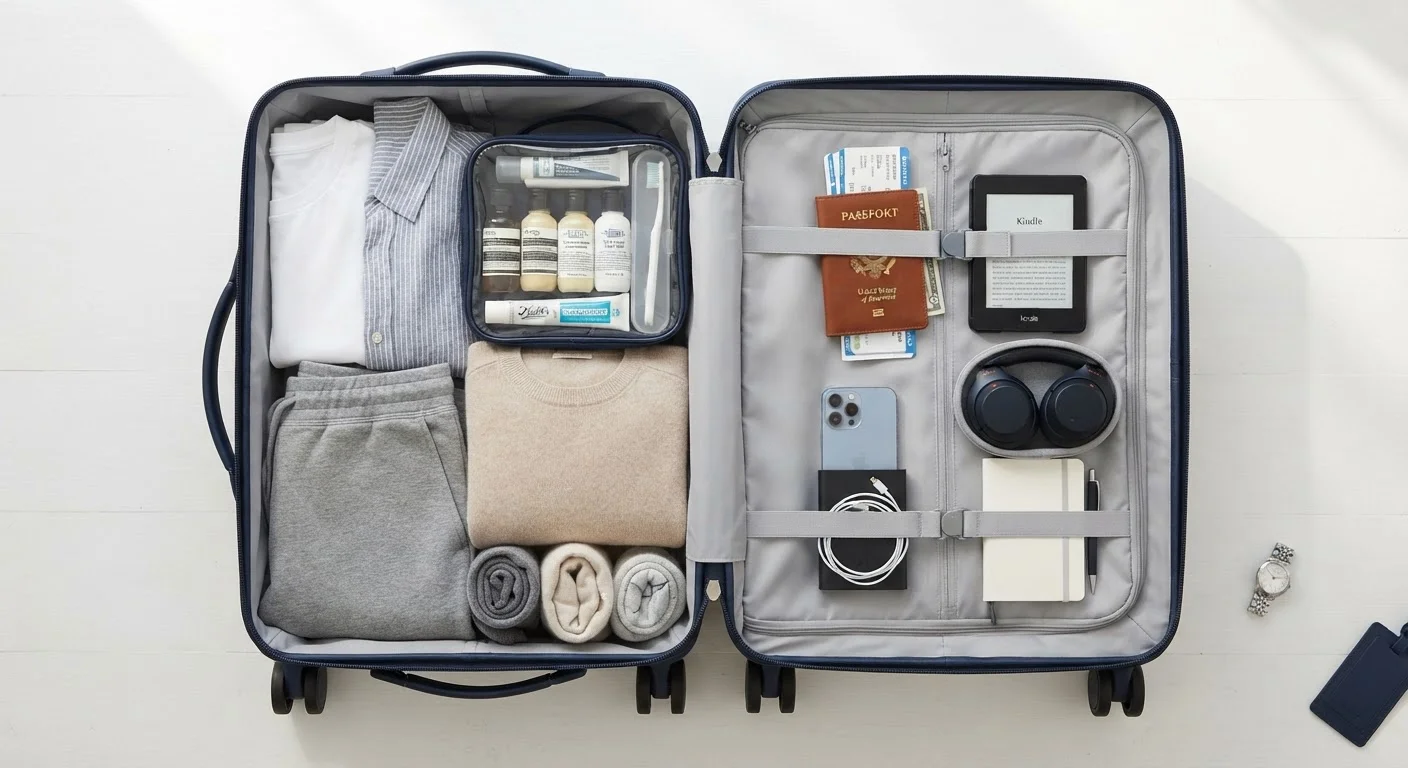
Photo: AnswersVista.com | Trustworthy Information Every Day editorial
TSA Liquid Rules: The 3-1-1 Guideline Explained
The TSA's 3-1-1 rule governs how liquids, gels, aerosols, creams, and pastes may be packed in carry-on bags on flights departing from U.S. airports. Here's how it breaks down:
- 3.4 oz (100 ml) or less per container — individual containers must not exceed this volume regardless of how full they are.
- 1 quart-sized, clear zip-top bag — all liquid containers must fit inside a single bag of this size.
- 1 bag per passenger — each traveler is allowed one such bag, which must be removed from the carry-on and placed in the screening bin.
Items like toothpaste, shampoo, conditioner, lotion, liquid foundation, and even peanut butter fall under this rule. Solid alternatives — bar soap, solid shampoo, and stick deodorant — are not subject to the liquid limit and can simplify packing considerably.
Exceptions apply to medications, baby formula, and breast milk, which are permitted in quantities exceeding 3.4 oz. Travelers carrying these items should declare them at the checkpoint and be prepared for additional screening.
Medications and Special Items: Know Before You Go
For a broader look at how carry-on strategy fits into your overall packing approach, see Packing Light vs. Checking Bags for a full trade-off breakdown.
Standard U.S. Airline Carry-On Size Limits
Carry-on size limits are set by individual airlines, not the TSA — so dimensions can vary. That said, most major U.S. carriers cluster around a common range. Always verify with your specific airline before travel, since policies can change and enforcement varies by aircraft and route.
| Max liquid container size (carry-on) | 3.4 oz (100 ml) (TSA 3-1-1 rule) |
| Liquid bags allowed per passenger | 1 quart-sized clear zip bag (TSA 3-1-1 rule) |
| Typical U.S. carry-on size limit | 22" x 14" x 9" (varies by airline) (Common U.S. major carrier standard) |
| Typical personal item size limit | Approx. 18" x 14" x 8" (varies by airline) (Common U.S. major carrier standard) |
| Spare lithium batteries: carry-on or checked? | Carry-on only (TSA and FAA regulations) |
| Firearms in carry-on? | Not permitted; checked baggage only (unloaded, locked hard case) (TSA guidelines) |
A few things worth noting about size limits in practice:
- Overhead bin space is first-come, first-served. Boarding later in your group often means your bag ends up gate-checked.
- Soft-sided bags have flex advantage. A bag that's slightly oversized may still fit if it compresses; hard-sided shells have zero give.
- Personal items go under the seat. Most airlines allow a personal item (purse, backpack, laptop bag) in addition to a standard carry-on. Size limits for personal items are typically around 18" x 14" x 8", but again, check your carrier.
If you're deciding between carry-on only and a checked bag for your next trip, Carry-On vs. Checked Bag: Picking the Right Strategy walks through the key considerations by trip type.
What's Not Allowed in Carry-Ons
Beyond liquids over 3.4 oz, a range of items are restricted or outright prohibited in carry-on bags. The TSA maintains a full list on its website (the TSA's "What Can I Bring?" tool is searchable by item), but the most commonly misunderstood categories include:
- Sharp objects: Box cutters, straight razors, and knives with blades longer than 4 inches are prohibited. Disposable razors and safety razors (blade removed) are allowed.
- Firearms and ammunition: These must be transported unloaded in a hard-sided, locked container in checked baggage only, with proper airline notification.
- Lithium batteries: Spare lithium-ion batteries and power banks must travel in carry-on bags — not checked luggage — due to fire risk. Devices with installed batteries may go either way.
- Tools over 7 inches: Wrenches, pliers, and similar tools exceeding 7 inches in length are prohibited in carry-ons.
- Flammable liquids and gels: Lighter fluid, spray paint, and similar items are not permitted in either carry-on or checked bags.
When in doubt, the TSA's online tool gives real-time guidance. International flights may carry additional restrictions layered on by the destination country's regulations — always verify entry requirements through official government sources before departure.
Use Your Pre-Trip Packing Checklist for Domestic Flights to make sure nothing gets left behind — or accidentally packed in the wrong bag.
Quick Reference: Carry-On Rules at a Glance
Packing smart starts with knowing the rules cold. The most common airport security delays stem from liquid violations and prohibited items that could have been left at home or transferred to checked luggage. A few habits that help:
- Pack your quart-sized liquid bag at the top of your carry-on for easy retrieval at security.
- Keep electronics (laptops, tablets) accessible — they typically need to be removed and screened separately.
- If you're traveling internationally, review the destination country's customs rules in addition to TSA guidelines. International Travel Packing: Documents, Adapters, and Forgotten Essentials covers the items most travelers overlook.
- Challenge your packing assumptions — Travel Gear Myths That Keep Travelers Overpacking debunks several common beliefs that lead to overstuffed bags.
3-1-1 Rule
The TSA's carry-on liquid policy requiring containers of 3.4 oz or less, packed in a single quart-sized clear zip bag, with one bag allowed per passenger.
Personal Item
A smaller bag (purse, laptop bag, or small backpack) permitted in addition to a standard carry-on, typically required to fit under the seat in front of you.
Gate Check
When a carry-on bag is checked at the boarding gate — usually due to full overhead bins — and loaded into the cargo hold. Returned at the jet bridge upon arrival.
Lithium-Ion Battery
A common rechargeable battery type used in phones, laptops, and power banks. Spare units must travel in carry-on baggage due to fire hazard rules in checked luggage.
Quart-Sized Bag
A clear, resealable plastic bag approximately 7" x 8" used to consolidate all carry-on liquids for TSA screening. One is permitted per passenger.
TSA rules are subject to update. Always verify current guidelines at tsa.gov and with your airline before your travel date.
The content provided on our blog site traverses numerous categories, offering readers valuable and practical information. Readers can use the editorial team’s research and data to gain more insights into their topics of interest. However, they are requested not to treat the articles as conclusive. The website team cannot be held responsible for differences in data or inaccuracies found across other platforms. Please also note that the site might also miss out on various schemes and offers available that the readers may find more beneficial than the ones we cover.