
International Travel Packing: Documents, Adapters, and the Items Most People Forget

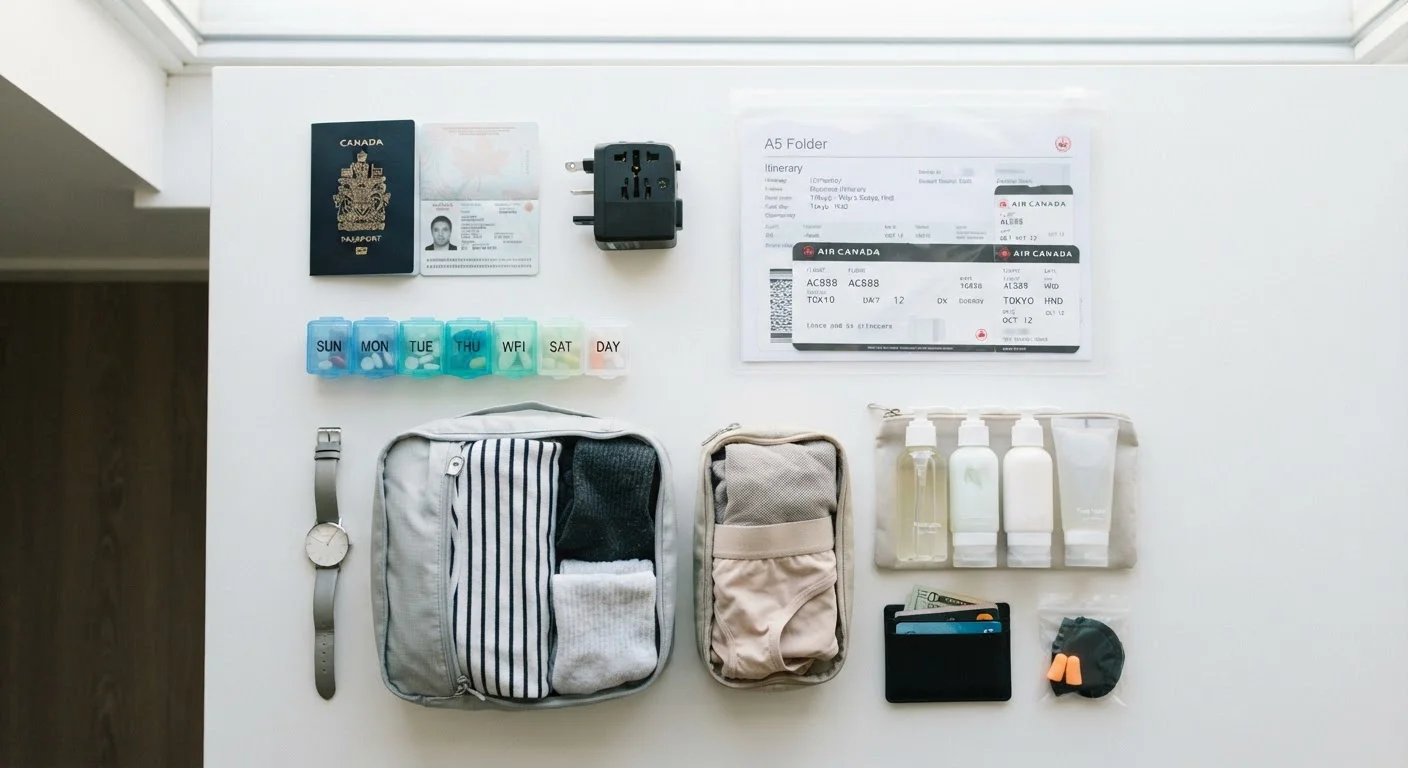
Photo: AnswersVista.com | Trustworthy Information Every Day editorial
Key Takeaways
- Passport validity requirements vary by country — many require six months beyond your travel dates.
- Universal travel adapters are not the same as voltage converters; knowing the difference protects your devices.
- Printed backup copies of critical documents can save hours when phones die or networks fail abroad.
- Small items like a pill organizer, a money belt, and a local SIM plan prevent the most common travel headaches.
- Packing by category — documents, electronics, health, comfort — reduces the chance of last-minute omissions.
Why International Packing Requires a Different Mindset
Packing for a domestic trip is relatively forgiving — if you forget something, you can usually find it at a nearby store. International travel raises the stakes. Voltage incompatibilities can fry electronics. Expired or invalid documents can result in denied boarding. And familiar drugstore items may not exist in the form you expect once you land.
This list is organized by category so you can work through it systematically rather than relying on memory the night before departure. For a broader pre-departure workflow, see the trip planning checklist every traveler needs before departure. If you're newer to travel in general, the beginner's guide to packing smart is a solid foundation to start from.
Passport validity and entry documentation
Your passport needs to be valid — but for international travel, that typically means valid for at least six months beyond your return date. Many countries enforce this rule strictly and airlines are required to check it at departure. Review your passport expiration before booking, not the week before you leave.
Beyond the passport itself, gather any required visas, entry authorizations (such as electronic travel authorizations), and printed copies of your hotel reservation or host contact. Some border officials request proof of onward travel as well. Keep originals in a secure document organizer and carry photocopies separately in your checked bag.
Many countries require your passport to be valid six months past your return date — not just your travel dates.
Universal travel adapter (and understanding voltage)
Plug adapters change the shape of the plug to fit a foreign outlet — they do not change the voltage. Most modern laptops, phones, and camera chargers are dual-voltage (typically labeled 100–240V) and only need an adapter. Older devices like hair dryers or electric shavers may require a voltage converter, or you risk burning out the motor entirely.
Check the voltage label on every device you plan to bring before you pack it. A multi-port USB adapter with the correct plug type for your destination countries is often more practical than carrying multiple single-socket adapters.
A plug adapter changes the socket shape — it does not protect non-dual-voltage devices from electrical damage.
Printed document backups stored separately from originals
If your phone dies, gets stolen, or simply can't connect abroad, a printed copy of your passport photo page, travel insurance policy number, emergency contacts, accommodation addresses, and flight confirmations becomes invaluable. Store these in your checked luggage, separate from your carry-on originals.
Scanning documents to a cloud storage service you can access offline (downloaded in advance) adds another layer. This two-backup approach — physical and digital — is standard practice among frequent international travelers and costs almost nothing to implement.
Storing printed document copies in your checked bag gives you a backup when your phone or carry-on isn't accessible.
International SIM plan or portable Wi-Fi solution
Relying on airport Wi-Fi for navigation, translation, and communication is a gamble. Before departing, decide on your connectivity plan: an international add-on from your existing carrier, a local SIM purchased at your destination airport, or a travel-specific eSIM activated in advance. Each has trade-offs in cost and convenience.
If you go the local SIM route, confirm your phone is unlocked before you leave — not at the foreign airport counter. A locked phone can't accept a foreign SIM regardless of how affordable one looks at the kiosk.
Confirm your phone is carrier-unlocked before departure if you plan to use a local SIM abroad.
A well-stocked, organized medication and health kit
Prescription medications should travel in their original labeled containers. Carry enough for the full trip plus a buffer for delays, and pack them in your carry-on — not checked luggage — in case a bag is lost. If a medication is controlled or restricted in your destination country, check official government guidance before traveling; some common medications are prohibited in certain countries.
Beyond prescriptions, a basic over-the-counter health kit saves disproportionate time and stress abroad: pain reliever, antidiarrheal medication, antihistamine, motion sickness tablets, bandages, and blister treatment are the core. Familiar brands may not be available, and pharmacy interactions are harder when you don't share a language.
Pack prescription medications in your carry-on with original labels — a lost checked bag can derail your entire trip.
A money belt or hidden-pocket travel wallet
Pickpocketing is more common in high-traffic tourist areas of many international destinations than it is in most American cities. A flat money belt worn under clothing — holding your passport, backup credit card, and emergency cash — adds a meaningful layer of security without much inconvenience once you're used to it.
Carry a small secondary wallet in your pocket with only the cash and cards you need for that day. Losing that wallet is inconvenient; losing everything at once is a trip-ending event. This system limits your exposure without requiring you to be paranoid.
Splitting your cash and cards between a hidden belt and a daily wallet limits damage if you're pickpocketed.
The small items most travelers forget until they need them
These are the items that don't make most generic lists but show up repeatedly in traveler regret stories:
- A portable power bank — long transit days drain phones faster than airport outlets can recharge them.
- Reusable packing cubes — they compress clothing and make living out of a suitcase far more organized.
- A TSA-approved luggage lock — required in checked bags passing through U.S. customs on return.
- Earplugs and an eye mask — overnight flights and thin hotel walls make these worth their minimal weight.
- A small, packable day bag — for excursions where you don't want to carry your main luggage.
- Laundry detergent sheets — lightweight, TSA-compliant, and invaluable on longer trips where you wash clothes in a sink.
None of these items are expensive or heavy. Forgetting even one often means paying a premium for it at an airport shop or going without for the duration of the trip.
A portable power bank, TSA luggage lock, and packable day bag are consistently among travelers' most-forgotten items.
Build Your Packing System Around These Categories
The travelers who pack most efficiently don't just have a better list — they have a repeatable system. Packing cubes sorted by category (documents, clothing, electronics, health) mean you're not digging through your bag at customs or hunting for a charger at 2 a.m. Once you've packed using this list as a guide, compare it against the domestic flight packing checklist to identify what's additional for international trips specifically.
Do a Full Bag Walkthrough 48 Hours Out
For destination-specific considerations — entry requirements, local customs, safety norms — the pre-trip checklist for international travel from the United States covers those angles in depth. And once you're on the ground, the habits outlined in staying safe as an American traveling abroad will help you navigate confidently.
Travel requirements including visa rules, entry conditions, and vaccination requirements change regularly. Always verify current information with official government sources and your destination country's embassy before traveling.
The content provided on our blog site traverses numerous categories, offering readers valuable and practical information. Readers can use the editorial team’s research and data to gain more insights into their topics of interest. However, they are requested not to treat the articles as conclusive. The website team cannot be held responsible for differences in data or inaccuracies found across other platforms. Please also note that the site might also miss out on various schemes and offers available that the readers may find more beneficial than the ones we cover.