
Car Battery Myths That Keep Drivers Stranded

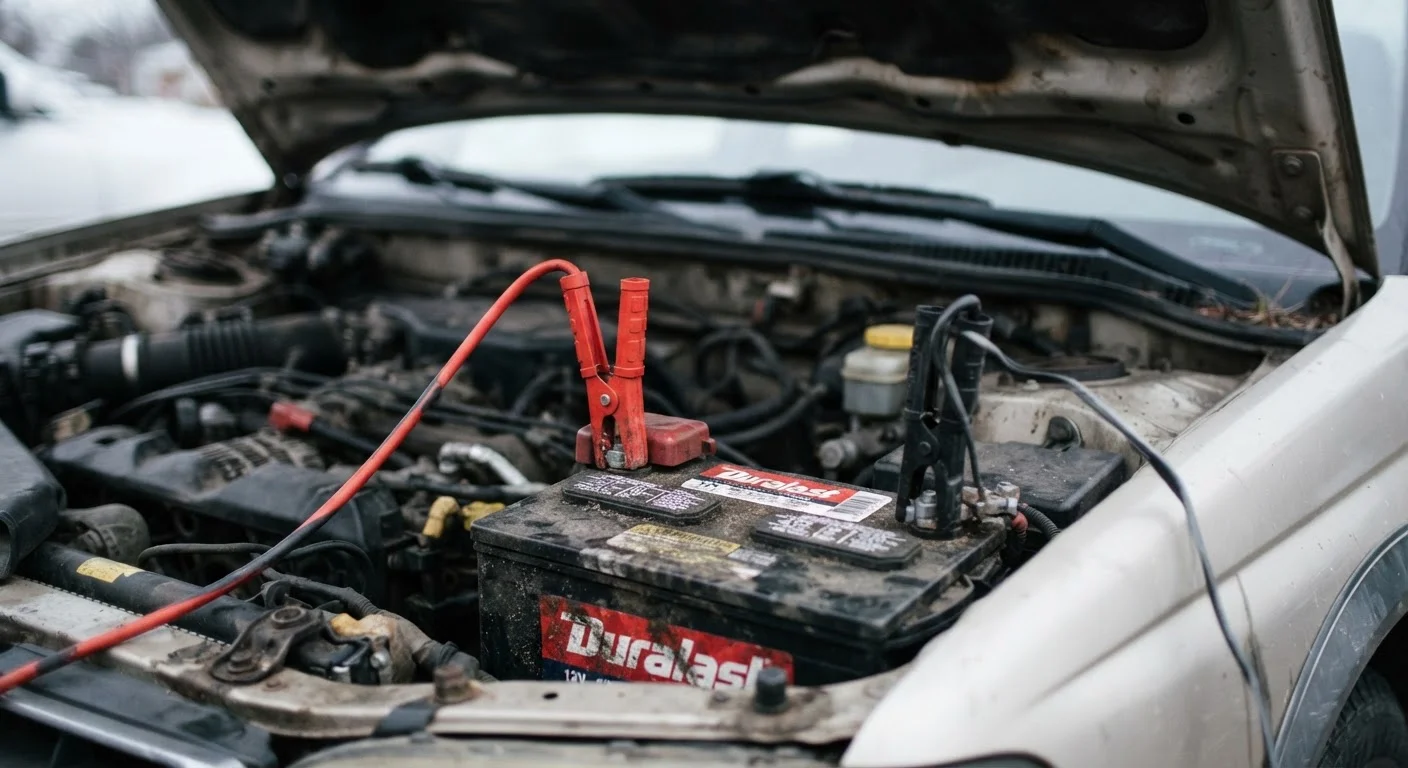
Photo: AnswersVista.com | Trustworthy Information Every Day editorial
Key Takeaways
- Most car batteries last 3-5 years, regardless of how well you think you're treating them.
- Short daily trips can drain a battery faster than leaving a car parked for weeks.
- Jump-starting a modern car incorrectly can damage sensitive electronics - order matters.
- Extreme heat degrades battery life more than cold weather does.
- A battery that starts your car fine can still be critically weak and near failure.
Why Battery Myths Are Surprisingly Costly
A dead battery is one of the most common reasons drivers call for roadside assistance - and one of the most preventable. The problem isn't that batteries are complicated; it's that a handful of persistent myths lead drivers to skip testing, misread warning signs, and mishandle jump-starts in ways that damage vehicles or leave them stranded again within weeks.
Understanding what your battery actually needs - and what doesn't matter as much as you think - is a core part of responsible vehicle ownership. For a broader foundation on specs and replacement timing, see our car battery basics guide. This article tackles the myths directly.
Myth
If my car starts, the battery is fine.
Fact
A battery can start your car while already being critically weakened - one cold morning or one extra electrical load away from failure.
Starting the engine requires a brief, intense burst of power. A degraded battery can still deliver that burst under mild conditions, masking its true state. Battery testers used by mechanics measure cold cranking amps (CCA) and internal resistance - two values that reveal how much capacity remains. A battery at 40% health may start your car reliably in summer and fail completely on a cold January morning. Annual load testing after age three is the only reliable way to catch this before it strands you.
Myth
Cold weather is what kills car batteries.
Fact
Heat is actually the primary cause of battery degradation; cold weather reveals damage that hot summers already caused.
High temperatures accelerate the chemical reactions inside a lead-acid battery, causing internal corrosion and water loss from the electrolyte. This is what shortens the battery's usable life. Cold weather then exposes the damage because a depleted battery has far less cranking power available when temperatures drop and engine oil thickens. Drivers in hot climates often see battery failures sooner than those in cold climates for exactly this reason. Parking in shade and ensuring the battery is properly secured - so vibration doesn't worsen internal plate damage - both help extend life in warm regions.
Myth
Jump-starting is safe to do in any order.
Fact
Incorrect jump-start cable sequence can damage a vehicle's electronics or cause a dangerous spark near the battery.
Modern vehicles have sensitive onboard electronics that are vulnerable to voltage spikes. The correct sequence - positive to dead battery first, then positive to good battery, then negative to good battery, then negative ground on the engine block of the dead vehicle (not the dead battery terminal) - is designed to minimize spark risk near the battery and protect both vehicles' systems. Reversing polarity even briefly can damage alternators, fuse boxes, and engine control modules. Always confirm the correct procedure in your owner's manual, and consider a portable jump starter as a safer alternative for solo situations.
Myth
Driving around for 20 minutes after a jump-start fully recharges the battery.
Fact
A significantly depleted battery can take several hours of driving - or a dedicated battery charger - to reach a full charge.
The alternator replenishes the battery while the engine runs, but it does so at a rate calibrated for maintenance charging, not emergency recovery. If a battery has been deeply discharged - sitting dead for hours or days - a short drive will restore only a fraction of its capacity. Repeatedly deep-discharging and partially recharging a battery accelerates sulfation, a process where lead sulfate crystals build up on the battery plates and permanently reduce capacity. If a battery needed a jump-start, have it tested and properly recharged with a dedicated charger before relying on it again.
Myth
A new battery needs no attention for years.
Fact
Even a new battery can fail prematurely if underlying issues like parasitic drain or a faulty alternator go unaddressed.
Replacing a battery without diagnosing why the previous one failed is a common and expensive mistake. A malfunctioning alternator that overcharges or undercharges the battery, an aftermarket accessory drawing power overnight, or frequent short-trip driving can kill a brand-new battery within a year. Before assuming a replacement is all that's needed, a mechanic should test both the charging system output and check for parasitic draw. A new battery paired with an undiagnosed problem is money wasted.
What Actually Shortens Battery Life
Several real-world driving habits have a measurable impact on how long a battery lasts - and most of them aren't what drivers expect.
3-5 years
Typical car battery lifespan
The Battery Council International cites 3-5 years as the general replacement window, though actual life varies by climate and usage patterns.
#1
Leading cause of roadside assistance calls
Battery-related failures consistently rank as the top reason drivers contact roadside assistance services across the United States.
50%+
Capacity loss that still starts an engine
Industry testing shows many batteries retain enough cranking power to start a warm engine even after losing more than half their rated capacity.
Short trips are among the biggest culprits. Every time you start your engine, the battery discharges. The alternator is supposed to recharge it during driving, but if your commute is only five or ten minutes, it may not fully recover before the next start. Do this repeatedly over months, and your battery slowly degrades through repeated partial discharges.
Parasitic drain - small electrical loads that persist after the car is switched off - is another underappreciated threat. Aftermarket accessories, a malfunctioning module, or even a glove box light that doesn't shut off properly can slowly deplete a battery over days. If a vehicle sits unused for more than a week or two, a maintenance charger (sometimes called a trickle charger) can help preserve charge without overcharging.
Don't Skip the Negative-to-Ground Step
Good battery habits fit naturally into the broader goal of keeping any vehicle reliable long-term. Our guide on keeping a high-mileage car reliable covers how battery care fits into a complete maintenance picture.
The takeaway: monitor your battery proactively, have it tested at least once a year after it turns three, and don't wait for a no-start event to act. A functioning battery that tests as weakened is far cheaper to address than an emergency tow.
The content provided on our blog site traverses numerous categories, offering readers valuable and practical information. Readers can use the editorial team’s research and data to gain more insights into their topics of interest. However, they are requested not to treat the articles as conclusive. The website team cannot be held responsible for differences in data or inaccuracies found across other platforms. Please also note that the site might also miss out on various schemes and offers available that the readers may find more beneficial than the ones we cover.