
Car Battery Basics: Voltage, Cold Cranking Amps, and When Replacement Is Due

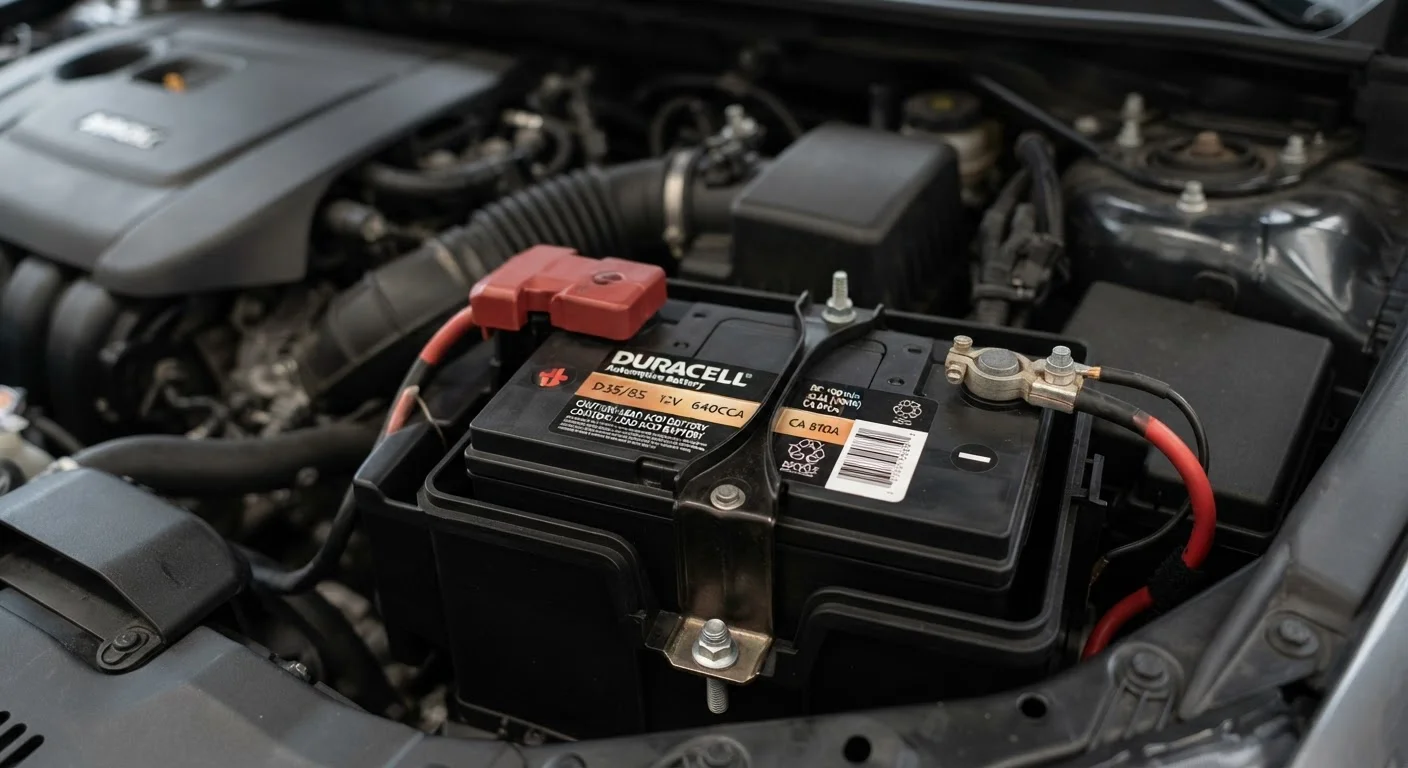
Photo: AnswersVista.com | Trustworthy Information Every Day editorial
Key Takeaways
- A fully charged 12V battery reads approximately 12.6 volts; below 12.0 volts signals a weak or discharged battery.
- Cold cranking amps (CCA) measure starting power in cold temperatures - always match or exceed your vehicle's CCA requirement.
- Most car batteries last three to five years, though heat, short trips, and electrical loads can shorten that window.
- Slow engine cranking, dim headlights, and frequent jump-starts are reliable warning signs of a failing battery.
- A simple load test at an auto shop or tire center can confirm whether a battery needs replacement.
What the Numbers on Your Battery Label Actually Mean
Pop the hood on most passenger vehicles and you'll find a rectangular box with two labels - one showing brand information and another listing specs that look like a foreign language. The two most important figures are voltage and cold cranking amps (CCA).
Voltage tells you the battery's nominal electrical output. Nearly every gas-powered passenger vehicle uses a 12-volt battery. What matters in practice is the resting voltage - the charge level when the engine isn't running. A healthy, fully charged battery measures approximately 12.6 volts. Drop to 12.2 volts and you're at about half charge. Fall below 12.0 volts and the battery may not reliably start the engine.
Cold cranking amps (CCA) measure how much starting power a battery can deliver in freezing conditions - specifically, the number of amps it can sustain for 30 seconds at 0°F while staying above 7.2 volts. Your vehicle's owner's manual or a sticker under the hood will specify the minimum CCA required. Choosing a replacement with a higher CCA than the minimum is acceptable; going lower is not.
3-5 years
Typical car battery lifespan
Industry guidance from battery manufacturers and automotive trade groups consistently cites this range under normal operating conditions.
~40%
Battery capacity lost at 0°F
Battery Council International research indicates a 12V lead-acid battery may retain only around 40% of its rated capacity at 0°F compared to room temperature.
12.6V
Resting voltage of a fully charged battery
A standard benchmark cited by automotive engineers and used by technicians when performing electrical system diagnostics.
Why Batteries Weaken Over Time
Car batteries don't fail all at once - they degrade gradually through a process called sulfation, where lead sulfate crystals build up on the internal plates and reduce the battery's ability to hold a charge. Every charge-discharge cycle, every extreme temperature swing, and every deep discharge accelerates this process.
Several conditions shorten battery life faster than normal:
- Heat: Paradoxically, summer heat - not winter cold - is the leading cause of battery death. High temperatures speed up internal chemical reactions and accelerate plate corrosion.
- Short trips: If most of your driving is under 15-20 minutes, the alternator may never fully recharge the battery after each start, causing a slow chronic discharge.
- Parasitic drain: Accessories left on - interior lights, phone chargers, aftermarket electronics - can pull enough current overnight to deplete a battery.
- Age: Even a well-maintained battery has a finite lifespan, typically three to five years.
For drivers managing an older vehicle, the guide to keeping a high-mileage car reliable covers how battery maintenance fits into a broader strategy for vehicle longevity.
Check Your Battery Before Winter Hits
Warning Signs Your Battery Is Failing
A weakening battery usually gives warning before it leaves you stranded. Learning to recognize these signals gives you time to replace it on your schedule, not a parking lot's.
- Slow or labored cranking: If the engine sounds sluggish when starting - a drawn-out "rrrr" instead of a quick snap - the battery isn't delivering full power.
- Dim headlights at idle: Lights that brighten when you rev the engine suggest the battery can't sustain adequate voltage without the alternator's help.
- Frequent need for jump-starts: Needing a jump more than once in a short period isn't a charging system quirk - it's a battery telling you it's done.
- Check engine or battery warning light: Some vehicles will illuminate a warning light when the charging system detects voltage outside the normal range.
- Swollen or corroded battery case: Visible bloating or heavy white or blue corrosion around terminals indicates physical damage or prolonged overcharging.
If you're uncertain whether symptoms point to the battery or the alternator, a load test performed at a shop will isolate the cause. Many routine maintenance intervals are a natural checkpoint to have battery health assessed.
How to Confirm Replacement Is Due
Visual inspection and symptom-checking are starting points, but a load test is the definitive way to assess battery health. Unlike a simple voltage reading - which only tells you current charge level - a load test applies a simulated starting load and measures how well the battery sustains voltage under stress. A battery can show 12.6 volts at rest and still fail a load test, meaning it can't deliver power when it counts.
Many tire shops, auto parts retailers, and dealerships offer free battery testing. If a battery fails a load test and is more than three years old, replacement is generally the practical choice.
When selecting a replacement, match the group size specified in your owner's manual (a standardized dimension code like Group 35 or Group 65) and meet or exceed the vehicle's CCA requirement. For vehicles equipped with start-stop systems, verify whether an AGM battery is required - installing a conventional flooded battery in those applications can cause premature failure.
For a broader look at common misconceptions around battery maintenance, see car battery myths that keep drivers stranded.
Frequently Asked Questions
The content provided on our blog site traverses numerous categories, offering readers valuable and practical information. Readers can use the editorial team’s research and data to gain more insights into their topics of interest. However, they are requested not to treat the articles as conclusive. The website team cannot be held responsible for differences in data or inaccuracies found across other platforms. Please also note that the site might also miss out on various schemes and offers available that the readers may find more beneficial than the ones we cover.