
Your Car's Maintenance Schedule, Explained

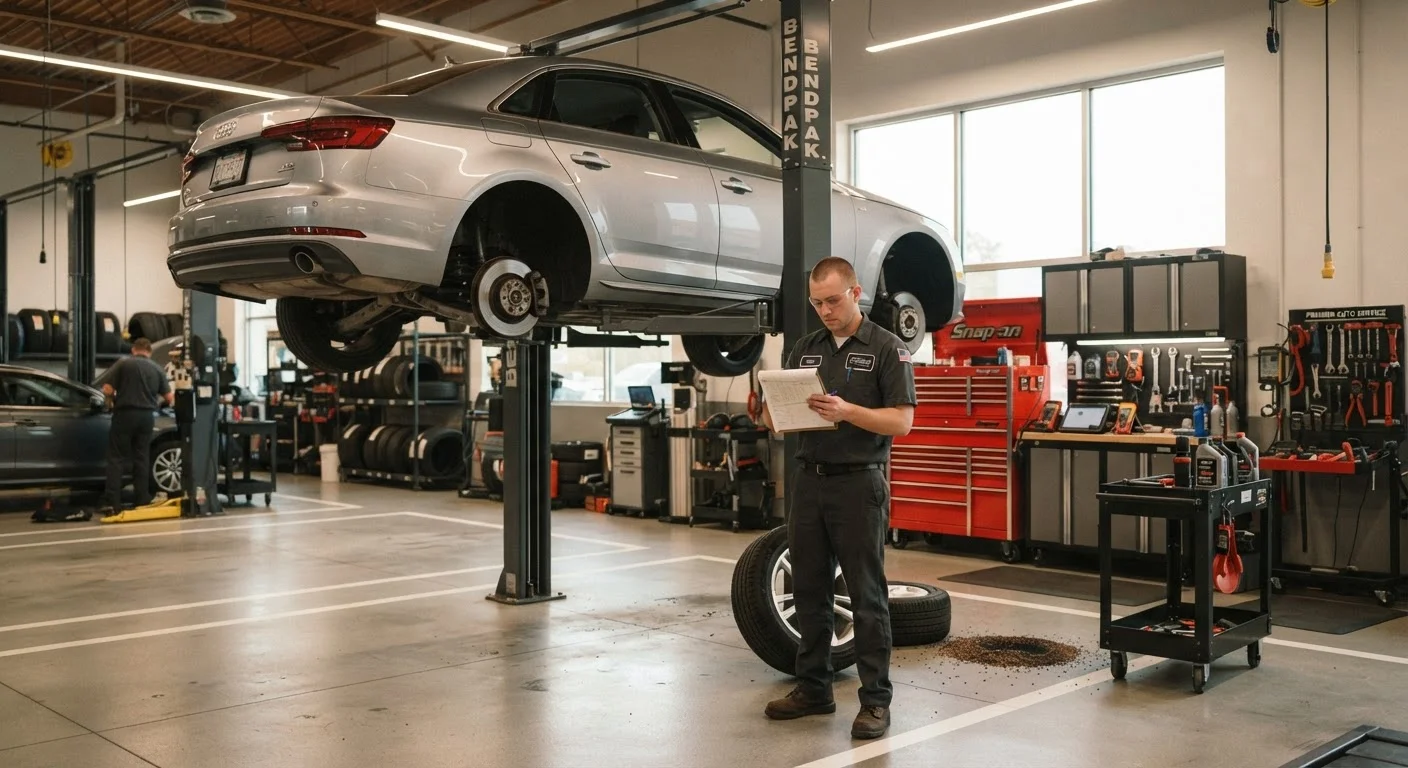
Photo: AnswersVista.com | Trustworthy Information Every Day editorial
Key Takeaways
- Your owner's manual contains the definitive maintenance schedule for your specific vehicle - not generic shop recommendations.
- Intervals are triggered by mileage, time, or both - whichever comes first.
- Skipping routine services can void warranties and lead to significantly costlier repairs.
- Driving conditions like stop-and-go traffic or extreme temperatures may require more frequent service than the standard schedule.
- Most modern vehicles use an onboard maintenance minder to alert drivers when service is due.
- Keeping service records protects resale value and helps mechanics spot patterns over time.
Why Your Maintenance Schedule Exists
Every vehicle rolls off the factory line with engineers' knowledge of how its components will wear under normal use. That knowledge is codified into a maintenance schedule: a structured timeline designed to catch issues before they escalate. Think of it less as a to-do list and more as a warranty on your investment.
The schedule isn't guesswork. It reflects thousands of hours of engineering testing on oil degradation rates, rubber compound fatigue, brake pad wear, and fluid contamination. When you follow it, you're working with that engineering - when you ignore it, you're working against it.
For a broader look at how maintenance fits into the full arc of car ownership, see the complete owner's roadmap that covers every major upkeep milestone.
35%
Of vehicles found to need immediate service
According to the Car Care Council's Vehicle Health Index, approximately one in three vehicles inspected in their awareness campaigns showed at least one maintenance item requiring immediate attention.
$1,200+
Average annual vehicle maintenance and repair cost
AAA's annual 'Your Driving Costs' study has consistently found that maintenance and repair costs represent a significant portion of total vehicle ownership expense for the average American driver.
5x
Cost multiplier: repair vs. prevention
Industry technicians and automotive organizations broadly cite that neglected maintenance routinely results in repair costs several times higher than the services that would have prevented the failure.
How Intervals Are Structured
Maintenance intervals are triggered by mileage, elapsed time, or both - and the rule is whichever comes first. A vehicle might call for an oil change every 7,500 miles or every 12 months. A driver who commutes only 4,000 miles a year still needs that annual oil change because oil degrades chemically even when a car sits.
Schedules are generally layered into tiers:
- Minor service (e.g., every 5,000-7,500 miles): oil and filter change, tire rotation, fluid top-offs, basic inspection
- Intermediate service (e.g., every 15,000-30,000 miles): air filter, cabin filter, brake inspection, battery check
- Major service (e.g., every 60,000-100,000 miles): spark plugs, timing belt or chain inspection, transmission fluid, coolant flush, belts and hoses
Understanding these tiers helps you budget for the year ahead. A minor service is relatively inexpensive; a major service at 60,000 miles can cost several hundred dollars - but far less than the repairs it prevents.
Key Services and What They Actually Do
Oil and filter change: Engine oil lubricates moving metal parts and carries heat away from the engine. As it ages, it breaks down chemically and picks up combustion byproducts. Degraded oil causes accelerated wear. This is the single most important routine service.
Tire rotation: Front and rear tires wear at different rates depending on drivetrain and braking patterns. Rotating them on schedule evens out wear and extends tire life - potentially saving you from a premature full set replacement.
Brake inspection: Brake pads have a finite thickness. Catching them before they're fully worn prevents damage to the rotors - a significantly more expensive fix. Brake fluid also absorbs moisture over time and should be flushed periodically.
Coolant flush: Coolant prevents your engine from overheating and the cooling system from corroding internally. Old coolant becomes acidic and can eat through hoses and the radiator.
Transmission fluid: Often overlooked, transmission fluid lubricates and cools the transmission. Neglecting it is one of the more common causes of expensive drivetrain failure in higher-mileage vehicles.
If your vehicle is accumulating mileage, see our guidance on keeping a high-mileage car reliable for interval considerations specific to aging vehicles.
Start With Your Owner's Manual
Severe vs. Normal Driving Conditions
Most owner's manuals contain two schedules: one for normal conditions and one for severe conditions. Severe doesn't mean off-roading through the desert - it includes everyday urban driving patterns that put extra strain on vehicle systems.
You may qualify for the severe schedule if you regularly experience:
- Frequent short trips under five miles, especially in cold weather
- Stop-and-go city traffic for extended periods
- Towing, hauling heavy loads, or driving on hilly terrain
- Dusty, muddy, or salted road environments
- Extreme heat or cold temperatures
Under severe conditions, oil and filters can degrade faster, and brake and transmission components face greater stress. Checking both schedules in your manual - and honestly assessing your driving patterns - ensures you're protecting your vehicle appropriately.
For a deeper look at how skipped services compound into real financial damage, read about the hidden financial cost of skipping routine maintenance.
Keeping Records and Staying on Track
A maintenance schedule is only useful if you follow through - and following through is easier when you track what's been done. Keep dated receipts or work orders for every service, whether performed at a shop or at home. This documentation serves three purposes: it helps your mechanic understand your vehicle's history, it can support warranty claims, and it adds documented value when you sell.
Most modern vehicles display a maintenance minder or oil life monitor on the dashboard. These systems use driving data - not just mileage - to estimate when service is due. They're a helpful reminder, but they don't replace the full schedule in your owner's manual, which covers services the onboard system may not flag.
If a dashboard light appears between scheduled services, don't wait until your next interval to investigate. See what your dashboard warning lights are actually telling you for guidance on what those alerts mean and when to act immediately.
Maintaining your vehicle on a budget is also achievable without cutting safety corners - car maintenance on a tight budget outlines practical approaches for cost-conscious drivers.
Frequently Asked Questions
The content provided on our blog site traverses numerous categories, offering readers valuable and practical information. Readers can use the editorial team’s research and data to gain more insights into their topics of interest. However, they are requested not to treat the articles as conclusive. The website team cannot be held responsible for differences in data or inaccuracies found across other platforms. Please also note that the site might also miss out on various schemes and offers available that the readers may find more beneficial than the ones we cover.