
Synthetic vs. Conventional Oil: What Actually Happens Inside Your Engine

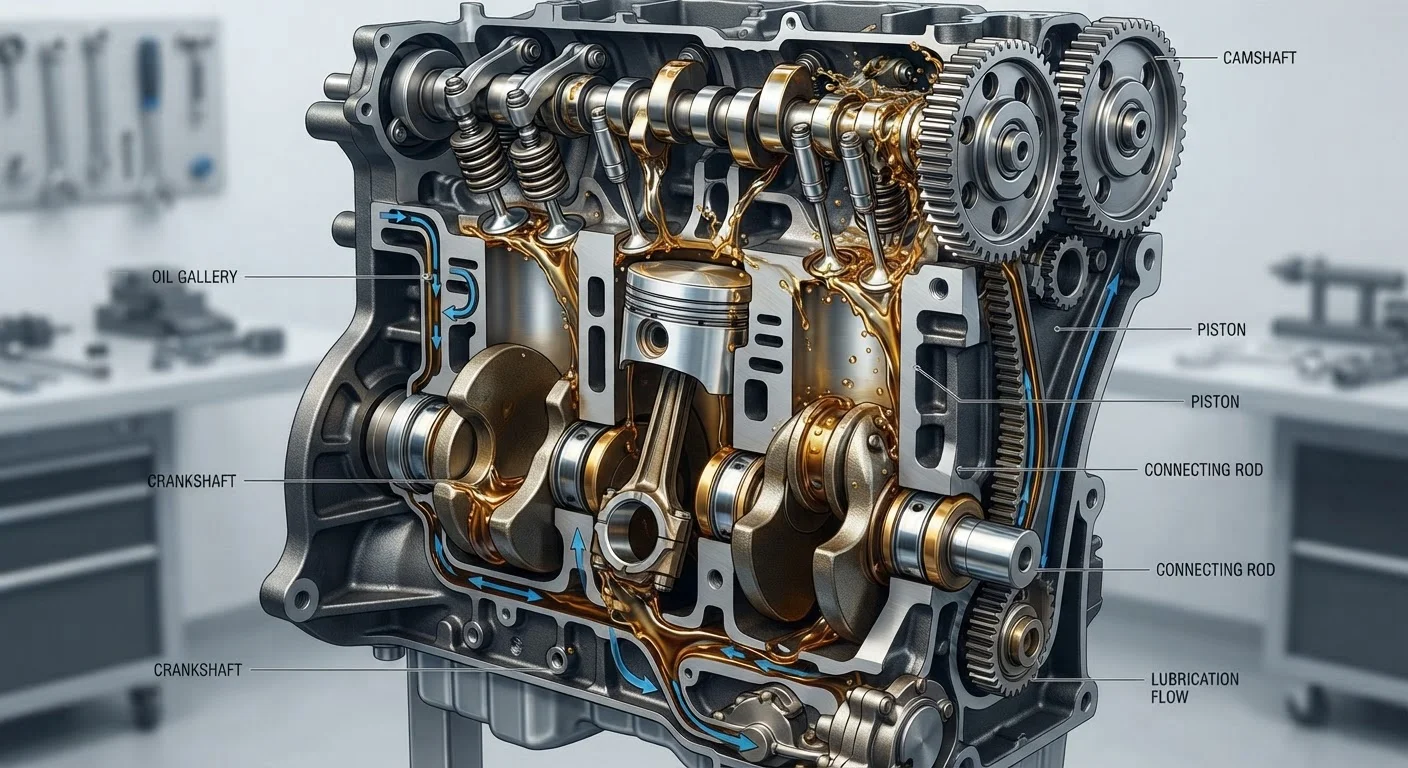
Photo: AnswersVista.com | Trustworthy Information Every Day editorial
Key Takeaways
- Synthetic oil is chemically engineered for uniform molecules, while conventional oil is refined from crude petroleum.
- Synthetics maintain viscosity more consistently across temperature extremes than conventional oil.
- Conventional oil typically costs less per quart but often requires more frequent changes.
- Most modern engines - especially turbocharged ones - are designed around synthetic oil specifications.
- Always follow your vehicle manufacturer's oil specification, not just price or marketing claims.
Where Each Oil Comes From
Understanding what sets these two oils apart starts at the molecular level. Conventional motor oil is derived from crude petroleum, which is extracted, refined, and blended with additive packages. Because crude is a natural mixture, the resulting oil contains molecules of varying sizes and structures - a built-in inconsistency that affects how it behaves under stress.
Synthetic motor oil, by contrast, is either fully synthesized from chemical compounds or built from a highly refined petroleum base that is then chemically restructured. The result is a lubricant with far more uniform molecules - engineered to a specification rather than extracted from a variable natural source. For a deeper look at how viscosity grades and oil chemistry interact, see our guide to engine oil viscosity grades.
| Criterion | Synthetic Motor Oil | Conventional Motor Oil |
|---|---|---|
| Origin | Chemically engineered or highly refined | Refined from crude petroleum |
| Molecular consistency | Uniform, purpose-built structure | Variable natural molecules |
| Temperature performance | Stable in extreme heat and cold | More susceptible to thinning or thickening |
| Typical change interval | 7,500-10,000+ miles (per manufacturer) | 3,000-5,000 miles typically |
| Cost per quart | Higher upfront | Lower upfront |
| Turbo engine suitability | Strongly recommended | Generally not recommended |
| Deposit resistance | Superior resistance to sludge and coking | More prone to deposit formation under stress |
What Happens Inside Your Engine
Your engine's moving parts - pistons, crankshaft, camshafts, valve train - operate under enormous friction and heat. Motor oil's job is to form a thin, continuous film between those metal surfaces, preventing direct contact. When that film breaks down, even briefly, microscopic metal particles shear off and accelerate wear.
This is where molecular uniformity matters. Conventional oil's variable molecular structure means it can begin to break down - losing viscosity and film strength - more quickly under sustained heat and pressure. Synthetic oil's consistent structure resists that degradation longer, maintaining a more reliable protective film across a broader range of operating conditions.
Turbocharged engines face an especially harsh environment. Turbochargers spin at up to 150,000 rpm and generate intense localized heat. When you shut off the engine, oil circulation stops but residual heat remains - a condition called heat soak. Conventional oil is more susceptible to oxidizing and forming deposits (sometimes called coking) in turbocharger oil passages under these conditions. Synthetics are specifically engineered to resist this.
150,000 rpm
Typical turbocharger operating speed
Turbochargers operate at extreme rotational speeds, creating localized heat that places exceptional demands on motor oil film strength.
3,000-5,000 mi
Conventional oil change interval
Standard guidance for conventional oil under normal driving conditions, though manufacturers' specifications vary by vehicle.
7,500-10,000+ mi
Synthetic oil change interval
Many full-synthetic formulations are rated for extended intervals; always defer to your vehicle owner's manual for the authoritative specification.
Cost, Change Intervals, and the Long View
Conventional oil typically costs less per quart than synthetic, which makes the upfront price of an oil change lower. However, conventional oil generally requires changes more frequently - commonly every 3,000 to 5,000 miles under standard driving conditions - while many synthetics are formulated for 7,500 to 10,000 miles or more, depending on the vehicle manufacturer's guidance.
When you account for the frequency of changes, the total annual cost difference between the two often narrows considerably. Factor in the potential for reduced engine wear over time, and the economic picture becomes more nuanced. Ownership costs extend well beyond individual service visits - for a broader breakdown, the Car Ownership Costs hub puts routine maintenance expenses in full context.
One important clarification: switching from conventional to synthetic in a high-mileage engine with existing seal wear can occasionally surface pre-existing leak points. This isn't the synthetic causing damage - it's revealing wear that was already present. A qualified mechanic can assess whether a high-mileage formulation is more appropriate for your specific situation.
Always Follow Your Owner's Manual
Whether you plan to handle oil changes yourself or use a service center, understanding which oil your engine actually needs is the prerequisite. See DIY oil changes vs. taking it to a shop for a clear breakdown of both approaches.
The content provided on our blog site traverses numerous categories, offering readers valuable and practical information. Readers can use the editorial team’s research and data to gain more insights into their topics of interest. However, they are requested not to treat the articles as conclusive. The website team cannot be held responsible for differences in data or inaccuracies found across other platforms. Please also note that the site might also miss out on various schemes and offers available that the readers may find more beneficial than the ones we cover.