
DIY Oil Changes vs. Taking It to a Shop

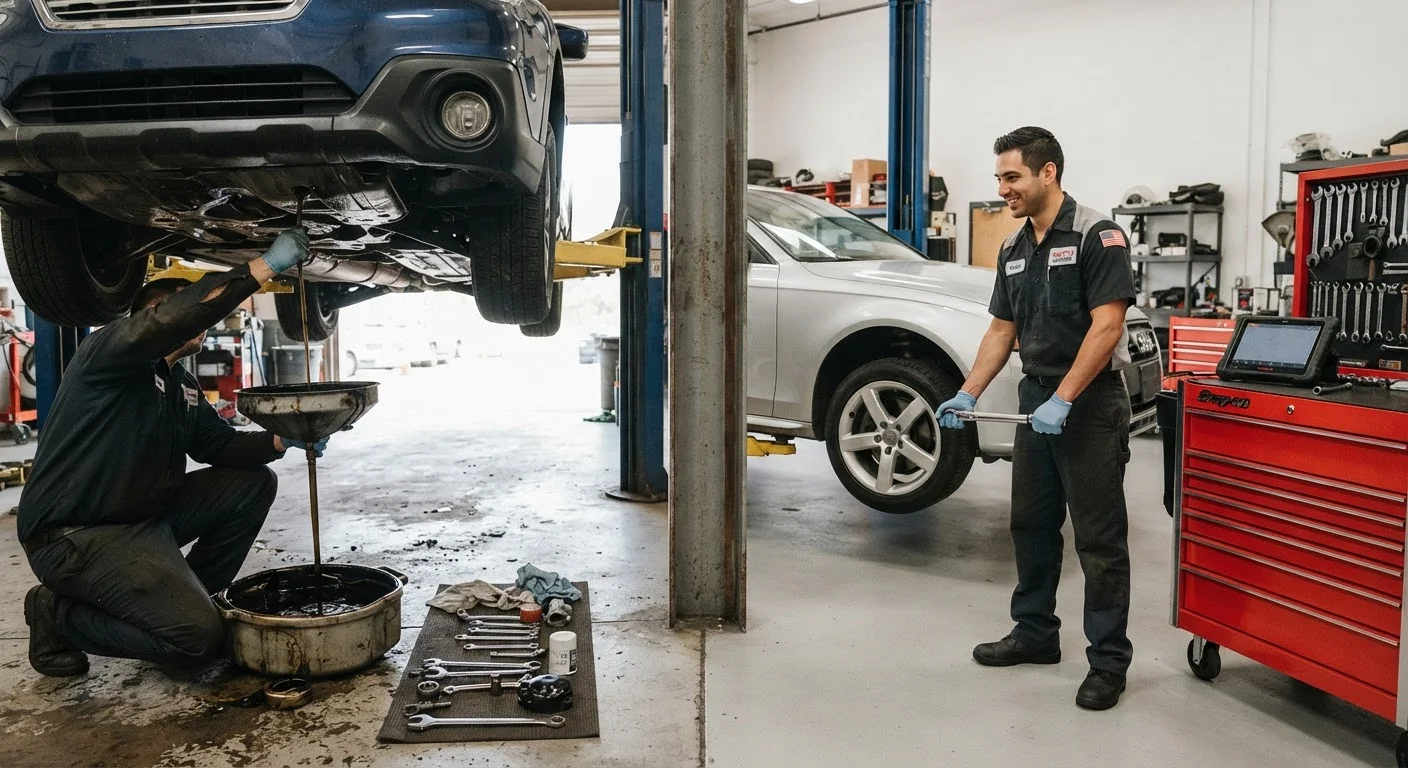
Photo: AnswersVista.com | Trustworthy Information Every Day editorial
Key Takeaways
- DIY oil changes typically cost less in parts but require tools, time, and proper disposal of used oil.
- Professional shops offer convenience, multipoint inspections, and liability coverage if something goes wrong.
- Modern vehicles may have specific oil requirements that complicate DIY work for less experienced drivers.
- Either approach can maintain your warranty if you keep detailed service records.
- The best choice depends on your mechanical confidence, schedule, and access to proper equipment.
What Each Approach Actually Involves
An oil change sounds simple - drain the old oil, swap the filter, refill with fresh oil - but the execution differs significantly between your driveway and a service bay. Understanding what each path entails helps you make a realistic assessment before committing.
DIY: You'll need a floor jack and jack stands (or ramps), a drain pan, an oil filter wrench, the correct oil and filter for your specific vehicle, and a means of disposing of used oil legally. Many auto parts retailers accept used oil at no charge. The job itself takes most beginners 45-90 minutes and experienced hands around 30. You'll also need to consult your owner's manual to confirm oil type, viscosity, and capacity - errors here can cause real engine damage.
Professional shop: You drop off the vehicle (or wait), a technician drains and refills the oil, replaces the filter, and usually performs a complimentary multipoint inspection covering fluid levels, tire pressure, and visible wear items. The whole process commonly takes 30-45 minutes. You leave with a dated sticker and a record on file. For a broader look at routine upkeep decisions, see the complete owner's roadmap covering every major maintenance milestone.
Cost Comparison: Parts, Tools, and Hidden Expenses
Cost is the most cited reason drivers consider doing it themselves, but the full picture is more nuanced than the price of a quart of oil.
| DIY Oil Change | Professional Shop | |
|---|---|---|
| Typical ongoing cost (synthetic oil) | $30-$60 in materials | $60-$120 including labor |
| Time required | 45-90 min (beginners) | 30-45 min (drop-off or wait) |
| Upfront equipment needed | $80-$150+ in tools | None |
| Multipoint inspection included | No (self-directed only) | Usually yes |
| Liability if something goes wrong | Driver's responsibility | Shop's responsibility |
| Skill level required | Basic mechanical aptitude | None required |
| Used oil disposal | Driver must arrange | Handled by shop |
First-time DIYers must factor in equipment. A quality floor jack, jack stands, and filter wrench can run $80-$150 combined - costs that amortize over many future oil changes but represent a real upfront investment. Ongoing DIY costs depend heavily on the oil type your vehicle requires. Synthetic oil, which many modern engines mandate, costs considerably more per quart than conventional. For guidance on which oil type applies to your engine, see how synthetic and conventional oils differ and what that means for engine longevity.
Shop pricing varies by region, service tier, and oil type, but includes labor, filter, and often a basic inspection. Skipping changes to save money in either scenario carries real financial risk - the hidden cost of deferred maintenance can dwarf any short-term savings.
Skill, Safety, and Common Mistakes
Oil changes are among the more accessible DIY maintenance tasks, but they carry real risks when done incorrectly. Over-tightening or cross-threading the drain plug can strip the oil pan - a repair that costs far more than any oil change. Using the wrong oil specification, forgetting to reinstall the drain plug before refilling, or failing to check for leaks afterward are documented beginner errors with serious consequences.
Always Double-Check Before You Start
Shops assume liability for their work. If a technician forgets to tighten the drain plug and you lose oil pressure on the highway, the shop is responsible. With DIY, that responsibility is entirely yours. This doesn't mean DIY is inadvisable - it means it demands careful, methodical work every single time. If you're newer to vehicle maintenance and evaluating which tasks to tackle yourself, the framework in deciding when to DIY versus hire a professional applies broadly to hands-on work of all kinds.
For drivers managing costs carefully, car maintenance on a tight budget outlines how to prioritize without compromising safety.
Warranty, Records, and the Long View
A widespread concern is that DIY oil changes void a vehicle's warranty. Under the Magnuson-Moss Warranty Act, manufacturers generally cannot require consumers to use dealer service for routine maintenance as a condition of warranty coverage - provided you use the correct fluids and keep documentation. That means dated receipts for oil and filters, along with a personal service log, are essential if you go the DIY route.
Professional shops automatically generate timestamped service records, which can be valuable when selling a vehicle or making a warranty claim. Neither approach disadvantages you legally, but sloppy record-keeping with DIY can create unnecessary disputes. Whichever method you choose, consistency matters most: following the manufacturer's recommended interval - typically every 5,000-7,500 miles for synthetic oil, though your owner's manual is the definitive source - protects your engine far more than the location where the work is done.
The content provided on our blog site traverses numerous categories, offering readers valuable and practical information. Readers can use the editorial team’s research and data to gain more insights into their topics of interest. However, they are requested not to treat the articles as conclusive. The website team cannot be held responsible for differences in data or inaccuracies found across other platforms. Please also note that the site might also miss out on various schemes and offers available that the readers may find more beneficial than the ones we cover.