
Engine Oil Explained: Viscosity Grades, Change Intervals, and Why It Matters

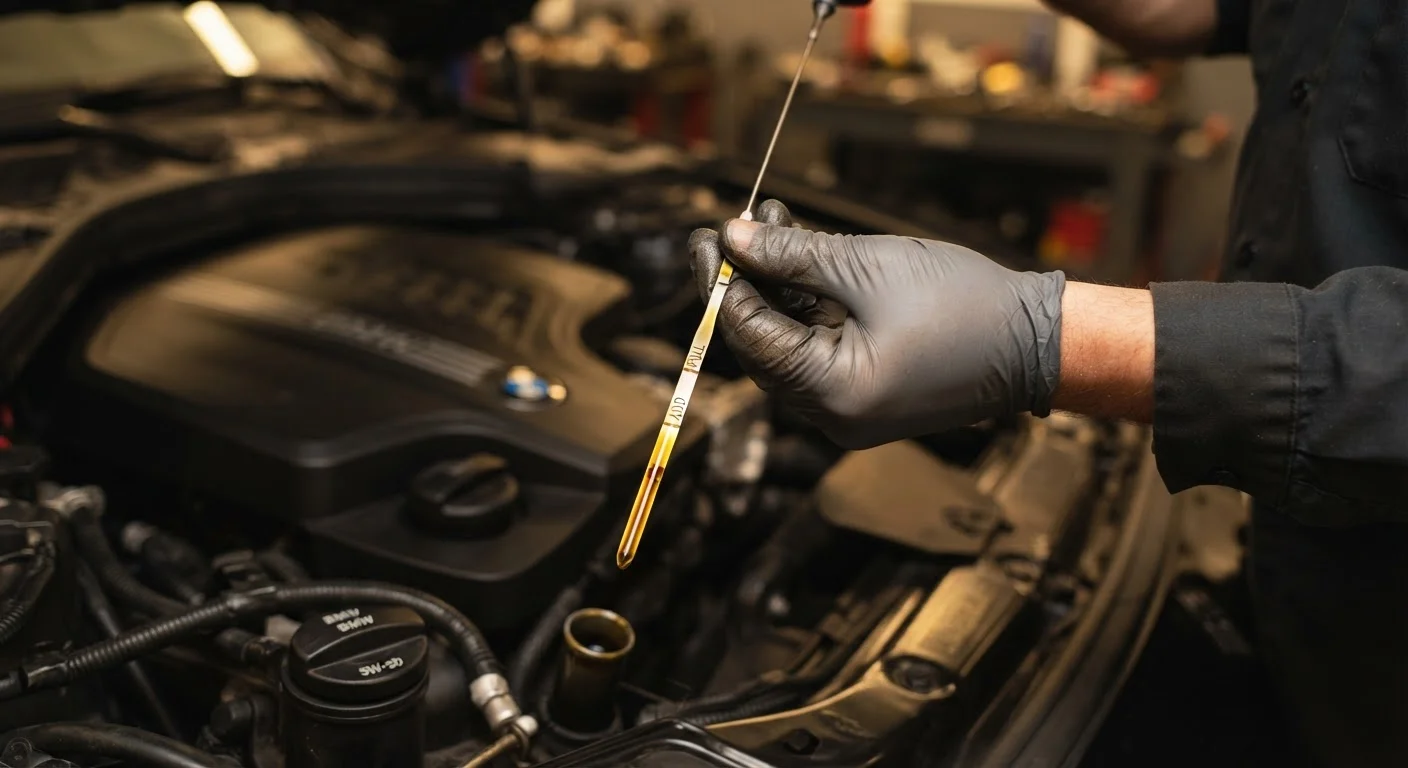
Photo: AnswersVista.com | Trustworthy Information Every Day editorial
Key Takeaways
- Viscosity grades like 5W-30 describe how oil flows in both cold and hot conditions.
- Your owner's manual specifies the exact viscosity grade your engine requires - follow it.
- Most modern vehicles with synthetic oil can go 7,500-10,000 miles between changes, not 3,000.
- Skipping oil changes causes sludge buildup that can permanently damage engine components.
- Oil also degrades over time, so a time-based interval (typically every 12 months) applies alongside mileage.
What the Numbers on Your Oil Actually Mean
Pick up any bottle of motor oil and you'll see a label like 5W-30 or 0W-20. These aren't arbitrary codes - they're a standardized grading system developed by the Society of Automotive Engineers (SAE) that describes exactly how the oil behaves under heat and cold.
The number before the 'W' (which stands for Winter) rates the oil's ability to flow in cold temperatures. A lower number - like 0W or 5W - means the oil stays thin enough to circulate quickly during a cold start, which is when the majority of engine wear actually occurs. The number after the W rates the oil's viscosity at full operating temperature, typically around 212°F. A higher number, like 40 or 50, means thicker oil at heat - useful for high-stress or high-temperature applications.
Most passenger vehicles today call for a low-viscosity oil such as 0W-20 or 5W-30. Thinner oils flow faster, reduce friction, and support fuel efficiency in modern, tightly toleranced engines. Heavier grades like 10W-40 are more common in older vehicles or those with higher mileage where some engine wear has already occurred.
Always Check Your Owner's Manual First
The single most important rule: use whatever viscosity grade your owner's manual specifies. Engine tolerances are designed around that grade, and substituting a different one - even slightly - can affect oil pressure and protection.
How Often Does Engine Oil Actually Need to Be Changed?
The old 3,000-mile oil change rule has outlived its usefulness for most drivers. It originated when conventional motor oils and older engine designs degraded more quickly. Modern full synthetic oils, combined with tighter manufacturing tolerances, have pushed recommended intervals considerably further.
7,500-10,000 mi
Typical synthetic oil change interval
Most major automakers specify this range for full synthetic oil under normal driving conditions - far beyond the outdated 3,000-mile benchmark.
~40%
Engine wear occurring at cold start
Industry engineering estimates suggest a significant proportion of engine wear happens in the first seconds after startup, before oil fully circulates.
12 months
Maximum time between oil changes
Regardless of mileage, most manufacturers recommend annual oil changes to account for oxidation and moisture absorption in stored or lightly driven vehicles.
For vehicles running full synthetic oil, manufacturer intervals of 7,500 to 10,000 miles - or even up to 15,000 miles on some newer models - are now common. Conventional oil typically calls for changes every 5,000 to 7,500 miles. But mileage is only part of the equation.
Time matters too. Oil oxidizes and absorbs moisture even in a car that barely moves. Most manufacturers recommend changing oil at least once every 12 months regardless of mileage. A vehicle that sits in a garage for months still needs fresh oil before extended driving.
Driving conditions also shift the math. Frequent short trips (under 5 miles), towing, extreme heat or cold, and dusty environments all qualify as 'severe' duty in most owner's manuals - meaning shorter intervals apply. Your owner's manual will outline both a normal and a severe service schedule. Understanding those intervals helps you stay ahead of maintenance without overspending on unnecessary service visits.
What Happens When You Skip Oil Changes Too Long
Engine oil doesn't just lubricate - it cleans. Additives in fresh oil suspend contaminants like carbon particles, combustion byproducts, and metal shavings, holding them in suspension until the oil is drained. Over time, those additives deplete and the oil thickens, darkens, and loses its ability to protect.
The most serious consequence of neglected oil changes is engine sludge - a tar-like buildup that forms when degraded oil oxidizes under heat. Sludge blocks narrow oil passages, starving bearings, camshafts, and other moving parts of lubrication. Once sludge is severe, cleaning it out can require engine disassembly - a repair that often costs more than the vehicle is worth.
Short of sludge, worn-out oil accelerates wear on cylinder walls, piston rings, and valve train components. These are gradual changes that don't trigger a warning light right away, but show up as oil consumption, reduced compression, or engine noise over time.
The good news: consistent oil changes are among the least expensive forms of preventive maintenance available. For a deeper look at how oil type affects engine longevity, see how synthetic and conventional oils differ inside an engine. And if you're weighing whether to handle oil changes yourself, the trade-offs between DIY and professional service are worth reviewing before you decide.
Frequently Asked Questions
The content provided on our blog site traverses numerous categories, offering readers valuable and practical information. Readers can use the editorial team’s research and data to gain more insights into their topics of interest. However, they are requested not to treat the articles as conclusive. The website team cannot be held responsible for differences in data or inaccuracies found across other platforms. Please also note that the site might also miss out on various schemes and offers available that the readers may find more beneficial than the ones we cover.