
Brake Pads, Rotors, and Calipers: How Your Stopping System Works Together

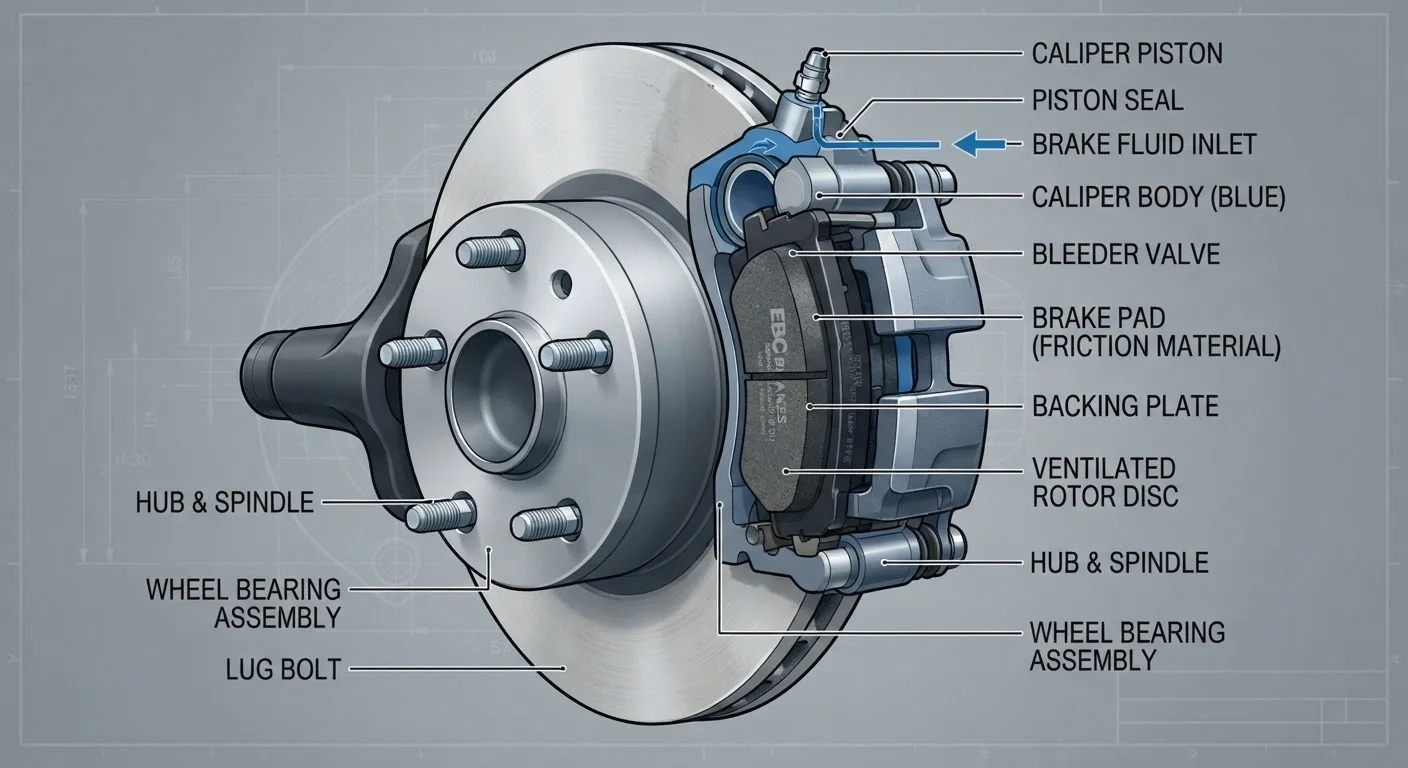
Photo: AnswersVista.com | Trustworthy Information Every Day editorial
Key Takeaways
- Brake pads, rotors, and calipers each play a distinct role - failure in any one affects the whole system.
- Squealing, grinding, pulsating, or pulling during braking are all signals that deserve prompt attention.
- Brake pads wear fastest and are typically the first component to need replacement.
- Ignoring early warning signs almost always results in more expensive repairs down the road.
- A qualified mechanic should inspect your brakes at least once a year or whenever you notice changes in stopping behavior.
The Three-Part Team Behind Every Stop
Every time you press the brake pedal, a hydraulic system translates that pressure into physical friction - and three components do that work together. Understanding each one gives you a much clearer picture of what your mechanic is describing and what your car is trying to tell you when something feels off.
Brake pads are blocks of friction material - typically a composite of metallic particles, resins, and fillers - mounted inside the caliper. When you brake, they press against the rotor surface and convert kinetic energy into heat, slowing the wheel.
Rotors (also called brake discs) are the flat, spinning metal discs bolted to the wheel hub. They provide the surface area the pads clamp against. Rotors must stay flat, smooth, and within a minimum thickness to work safely.
Calipers are the hydraulic clamps that hold the pads and do the squeezing. When brake fluid pressure arrives from your pedal, pistons inside the caliper push the pads inward against both sides of the spinning rotor simultaneously.
25K-65K
Typical brake pad lifespan in miles
Pad longevity varies significantly based on driving style, vehicle weight, and pad compound - city drivers typically fall toward the lower end of this range.
300°F+
Rotor temperature during hard braking
Industry data indicates disc brake rotors commonly exceed 300°F in aggressive stopping scenarios, with racing applications reaching multiples of that figure.
~2 years
Recommended brake fluid replacement interval
Many manufacturers and mechanics suggest replacing brake fluid every two years regardless of mileage, as moisture absorption degrades performance over time.
Warning Signs for Each Component
Each component tends to fail in its own distinctive way - and your vehicle usually signals the problem before it becomes dangerous. Knowing which symptom points to which part helps you communicate clearly with a mechanic and judge urgency accurately.
Brake Pad Warnings
- High-pitched squealing: Most pads contain a small metal wear indicator that deliberately squeals when pads thin to their replacement threshold.
- Grinding or metal-on-metal sound: If squealing goes ignored, the pad backing plate contacts the rotor directly. This typically means rotor damage has already begun.
- Longer stopping distances: As friction material wears away, braking efficiency drops noticeably.
Rotor Warnings
- Pulsating or vibrating pedal: A warped rotor creates an uneven surface, and the pedal pulses with each rotation of the disc.
- Visible grooves or scoring: Deep grooves on the rotor face indicate significant wear - often from pads that were ignored too long.
- Steering wheel shimmy while braking: Especially on front rotors, warping can transmit vibration through the steering column.
Caliper Warnings
- Vehicle pulling to one side during braking: A sticking caliper applies unequal pressure across the axle, dragging the car in one direction.
- Uneven pad wear: If one pad wears significantly faster than its partner, a caliper piston may not be retracting properly.
- Burning smell after driving: A seized caliper that doesn't release fully keeps the pad pressed against the rotor continuously, generating excessive heat.
Delaying brake service almost always converts a pad replacement into a rotor replacement - or worse.
How Heat and Driving Habits Affect Wear
Friction means heat, and heat is the primary enemy of brake components. Under normal driving conditions, rotors can reach temperatures well above 300°F during a hard stop. Repeated aggressive braking without allowing components to cool - common in mountain descents or heavy city traffic - accelerates wear and increases the risk of rotor warping.
Certain driving habits speed up brake wear more than most drivers realize. Riding the brake pedal on downhill grades, braking late and hard rather than gradually, and carrying heavy loads all force the system to work harder and dissipate more heat per mile.
Use Engine Braking on Long Descents
Brake fluid also plays a role. Hydraulic fluid absorbs moisture over time, which lowers its boiling point - a condition that can lead to brake fade under heavy use. Checking your brake fluid is a simple but often overlooked part of routine maintenance.
If your dashboard illuminates a brake warning light, treat it as urgent rather than optional. Our guide on warning lights every driver should recognize explains what each indicator means and how quickly it demands a response.
When to Seek a Professional Inspection
A qualified mechanic should inspect brake components at least once a year - or sooner if any of the warning signs above appear. During an inspection, a technician will measure pad thickness, check rotor thickness against manufacturer specifications, test caliper operation, and inspect brake fluid condition.
You don't need to be a mechanic to be an informed car owner. Recognizing a squeal, a shimmy, or a pull during braking - and acting on it promptly - is one of the most effective ways to keep repair costs manageable and your vehicle safe. The brake system is not an area where delay pays off.
This article is for general informational purposes only. Always consult a qualified automotive technician for diagnosis, service, and safety decisions specific to your vehicle.
Frequently Asked Questions
The content provided on our blog site traverses numerous categories, offering readers valuable and practical information. Readers can use the editorial team’s research and data to gain more insights into their topics of interest. However, they are requested not to treat the articles as conclusive. The website team cannot be held responsible for differences in data or inaccuracies found across other platforms. Please also note that the site might also miss out on various schemes and offers available that the readers may find more beneficial than the ones we cover.