
Organizing a Small Kitchen Without Losing Counter Space

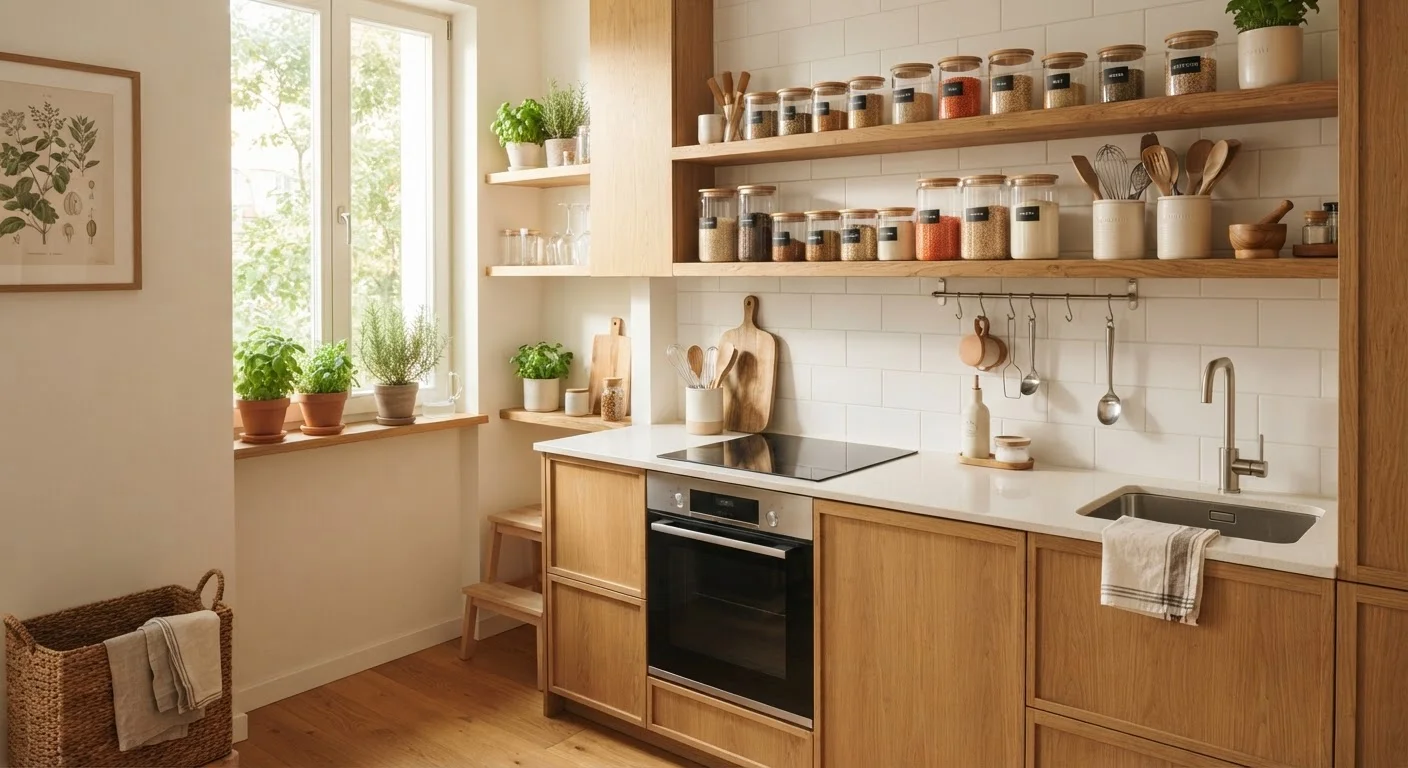
Photo: AnswersVista.com | Trustworthy Information Every Day editorial
Key Takeaways
- Clearing counters starts with relocating items that are rarely used during daily cooking.
- Vertical wall space and cabinet doors are two of the most underused storage areas in small kitchens.
- Grouping items by task rather than category reduces clutter and speeds up meal prep.
- Drawer dividers and stackable cabinet inserts double usable storage without any renovation.
- Decluttering duplicates and unused gadgets is the single highest-return step in kitchen organization.
Why Counter Space Is Your Most Valuable Kitchen Asset
In a small kitchen, counter space functions as your prep zone, landing area, and workflow hub all at once. When it fills up with appliances, mail, or rarely used gadgets, cooking becomes harder and cleanup takes longer. The goal of organizing a small kitchen isn't to own less - it's to give every item a home that isn't your countertop.
Most counter clutter stems from two habits: storing things where they were last used rather than where they belong, and keeping items on the counter because cabinet space feels full. Both problems are solvable with a systematic approach. For a broader look at tackling every room with this mindset, the room-by-room home organization checklist is a useful companion resource.
What you will need
What You'll Need Before You Start
Gather a few simple supplies before beginning. Having everything ready prevents mid-project shopping trips that stall momentum.
Drawer dividers
Separate utensils, gadgets, and small tools so drawers stay organized and items are easy to find.
Stackable shelf inserts
Create a second layer of storage inside cabinets, effectively doubling shelf capacity for dishes or pantry items.
Adhesive wall hooks or rails
Mount on walls or cabinet interiors to hold utensils, lids, or lightweight tools without drilling.
Clear bins or baskets
Group similar pantry items together so you can pull out a whole category at once rather than searching the back of a shelf.
Lazy Susan turntable
Fits into corner cabinets or deep shelves to make items at the back accessible without unpacking the front.
Step-by-Step: Organizing Your Small Kitchen
Work through these steps in order. Each one builds on the last, so skipping ahead tends to create backtracking.
Empty and audit every cabinet and drawer
Pull everything out of one zone at a time - cabinets, drawers, the pantry - and lay items on a table. This gives you a complete picture of what you own before deciding where anything lives. Sort into three groups: keep, donate or discard, and relocate (items that belong in another room entirely).
Clear the countertops completely
Remove everything from the counter surface, including the coffee maker, knife block, and paper towel holder. A blank counter lets you see the actual square footage you're working with. From this cleared baseline, only return items that meet two criteria: used daily and impractical to store elsewhere.
Organize cabinets by task zone
Rather than grouping by item type (all pots together, all baking supplies together), arrange by cooking task. Place everything needed to make coffee in one cabinet near the coffee maker, everything for baking in one zone near the oven. This reduces the number of cabinets you open during any single task and makes restocking intuitive.
Install vertical storage inside cabinets
Add stackable shelf inserts to create a second tier inside cabinets - particularly useful for dishes, canned goods, and mugs. Use drawer dividers to prevent utensils from becoming a jumbled pile. Stand baking sheets and cutting boards vertically using a wire file organizer; this prevents the unstable stacking that makes them hard to retrieve.
Mount wall storage in key areas
Identify blank wall space between cabinets, beside the refrigerator, or above the stove. A mounted magnetic knife strip, a small rail with hooks, or a floating shelf placed deliberately can absorb items that were previously taking up counter real estate. Measure carefully before mounting anything, and use appropriate wall anchors for the surface type.
Label and do a final walkthrough
Label shelves, bins, and containers - even temporarily with masking tape - until the new system becomes habit. Then do a final walkthrough: stand at each workstation and simulate cooking a meal. If you're reaching across the kitchen for something you use constantly, adjust its home before calling the project done.
Think in Zones, Not Categories
Making the Most of Overlooked Storage Areas
Once your core organization is in place, look for storage opportunities that most people walk past every day.
- Cabinet doors: Tension rods, slim racks, or adhesive-mounted organizers on the inside of cabinet doors hold lids, foil boxes, cutting boards, or cleaning supplies - items that otherwise pile up on shelves.
- The toe-kick space: The shallow area beneath base cabinets can hold flat baking sheets or shallow trays when fitted with pull-out drawers - a project worth considering if you're comfortable with basic carpentry.
- Wall strips and rails: A mounted rail above or beside the stove keeps frequently used utensils and small tools within reach without occupying a single inch of counter.
- The refrigerator top: While not ideal for heavy items, a small tray on top of the refrigerator corrals infrequently used items like extra napkins or a rarely reached appliance.
For more ideas on turning dead zones into functional storage throughout your home, see our guide on hidden storage solutions. If you're weighing whether to add open shelving, our piece on open shelving trade-offs walks through the practical pros and cons honestly.
Avoid Over-Buying Storage Products
The content provided on our blog site traverses numerous categories, offering readers valuable and practical information. Readers can use the editorial team’s research and data to gain more insights into their topics of interest. However, they are requested not to treat the articles as conclusive. The website team cannot be held responsible for differences in data or inaccuracies found across other platforms. Please also note that the site might also miss out on various schemes and offers available that the readers may find more beneficial than the ones we cover.