
Open Shelving in the Home: Weighing the Appeal Against the Upkeep

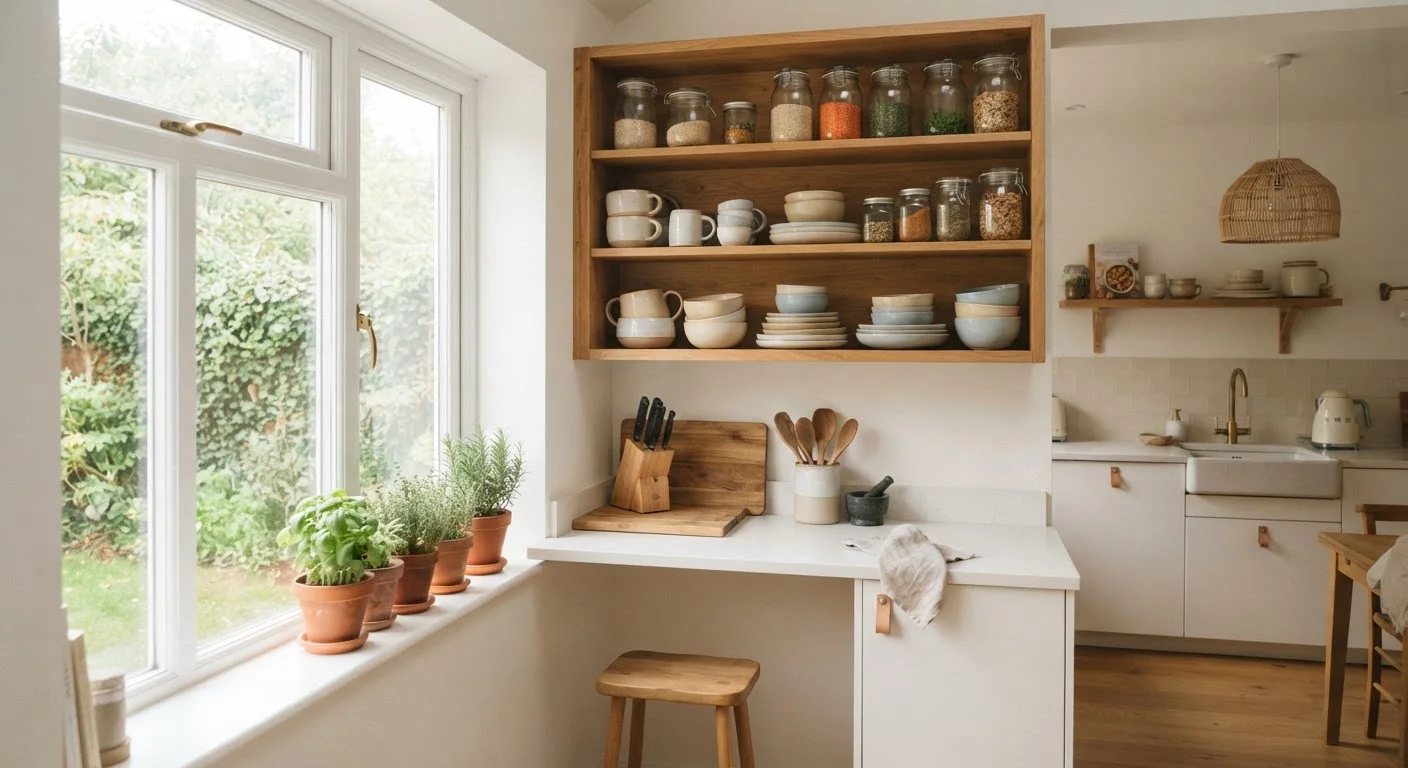
Photo: AnswersVista.com | Trustworthy Information Every Day editorial
Key Takeaways
- Open shelving creates visual openness and makes items easier to access at a glance.
- Dust, grease, and clutter accumulate quickly on exposed shelves, especially in kitchens.
- This style rewards people who enjoy curating and maintaining a tidy, intentional display.
- Closed cabinetry hides imperfection better and suits households with less time for upkeep.
- A hybrid approach - mixing open and closed storage - often balances aesthetics with practicality.
Makes rooms feel more open and spacious
Removing cabinet doors eliminates visual bulk, which can make kitchens and living areas feel larger - a meaningful benefit in compact or narrow spaces.
Items are easy to access and locate quickly
Visible storage eliminates the need to open multiple doors to find what you need, making frequently used items faster and more intuitive to reach.
Lower installation cost than full cabinetry
Floating shelves generally require fewer materials and less labor than custom cabinetry, making them a more budget-friendly option for a storage refresh.
Doubles as decorative display space
Open shelves let you integrate décor - ceramics, plants, artwork - directly into your storage, turning functional areas into a reflection of your personal style.
Encourages intentional, curated ownership
Because everything is visible, open shelving naturally prompts you to keep only what you use and love, which can support broader decluttering habits.
Dust and grease accumulate constantly
Exposed items collect airborne particles and, in kitchens, cooking grease - meaning shelves and stored objects require more frequent cleaning than closed storage.
Clutter is always visible and unforgiving
Unlike closed cabinets, open shelving hides nothing. A single disorganized section can disrupt the aesthetic of an entire room.
Requires ongoing curation and editing
To maintain a cohesive look, you'll need to regularly assess what's on the shelves and remove items that no longer fit - which takes time and deliberate effort.
Items may fade or degrade faster when exposed
Prolonged exposure to light and air can cause some materials - such as wood, paper, and certain fabrics - to fade or dry out more quickly than in enclosed storage.
Not ideal for households with young children or pets
Accessible shelving within reach of curious children or pets can create safety hazards and makes it harder to keep breakable or hazardous items secure.
Why Open Shelving Has Such Strong Appeal
Open shelving has become a fixture in home design inspiration - and for good reason. Removing cabinet doors instantly makes a room feel more spacious and less boxed-in, which is especially valuable in smaller kitchens or living areas. When items are visible, there's no hunting through closed doors: your everyday dishes, cookbooks, or decorative objects are right in front of you.
There's also a personalization angle that closed cabinetry simply can't offer. Open shelves invite you to treat your storage as part of your décor - displaying objects that reflect your style, whether that's a row of matching mason jars, a stack of worn cookbooks, or a collection of handmade pottery. For people who enjoy curating their space, this kind of intentional display is genuinely satisfying.
Installation costs are often lower too. Standard floating shelves require fewer materials and less labor than full cabinetry, making them an accessible option for homeowners looking to refresh a space without a full renovation. See our guide to open-concept renovation trade-offs if you're considering broader layout changes alongside new shelving.
Makes rooms feel more open and spacious
Removing cabinet doors eliminates visual bulk, which can make kitchens and living areas feel larger - a meaningful benefit in compact or narrow spaces.
Items are easy to access and locate quickly
Visible storage eliminates the need to open multiple doors to find what you need, making frequently used items faster and more intuitive to reach.
Lower installation cost than full cabinetry
Floating shelves generally require fewer materials and less labor than custom cabinetry, making them a more budget-friendly option for a storage refresh.
Doubles as decorative display space
Open shelves let you integrate décor - ceramics, plants, artwork - directly into your storage, turning functional areas into a reflection of your personal style.
Encourages intentional, curated ownership
Because everything is visible, open shelving naturally prompts you to keep only what you use and love, which can support broader decluttering habits.
The Real Maintenance Demands You Should Expect
The appeal of open shelving comes with an honest trade-off: everything on those shelves is always on display, which means dust, grease, and general disorder are too. In a kitchen particularly, open shelves collect cooking residue over time - a film of airborne grease can settle on dishes and glassware even when they're used regularly.
Maintaining the look requires more frequent wiping down of both the shelves themselves and every item stored on them. This isn't a once-a-month task; in active kitchens, it may be needed weekly. Homeowners who already find themselves stretched for time often report that open shelves quietly become a source of stress rather than satisfaction.
Clutter is the other persistent challenge. Closed cabinets have a natural advantage: they hide visual noise. Open shelves demand that every item earns its place - meaning impulse purchases, mismatched containers, or half-used products can undermine the entire look. If curating and editing your belongings regularly isn't something you enjoy, the upkeep can feel like a burden. For contrast, hidden storage solutions offer a lower-maintenance alternative that keeps clutter out of sight entirely.
Dust and grease accumulate constantly
Exposed items collect airborne particles and, in kitchens, cooking grease - meaning shelves and stored objects require more frequent cleaning than closed storage.
Clutter is always visible and unforgiving
Unlike closed cabinets, open shelving hides nothing. A single disorganized section can disrupt the aesthetic of an entire room.
Requires ongoing curation and editing
To maintain a cohesive look, you'll need to regularly assess what's on the shelves and remove items that no longer fit - which takes time and deliberate effort.
Items may fade or degrade faster when exposed
Prolonged exposure to light and air can cause some materials - such as wood, paper, and certain fabrics - to fade or dry out more quickly than in enclosed storage.
Not ideal for households with young children or pets
Accessible shelving within reach of curious children or pets can create safety hazards and makes it harder to keep breakable or hazardous items secure.
Practical Considerations Before You Commit
Before removing cabinet doors or installing open shelves, it's worth thinking honestly about a few things. First, consider your household's actual habits - not your aspirational ones. Open shelving rewards consistency. If dishes tend to pile up, if surfaces collect random items, or if organized arrangements rarely stay that way, closed storage will serve you better day-to-day.
Second, think about what you'd actually be displaying. Open shelves work best when the items stored are visually cohesive - uniform containers, a consistent color palette, or objects you genuinely want to showcase. If your pantry or kitchen cabinets currently hold a mix of mismatched containers and half-used products, a style edit would need to happen before (and continue after) installation.
Consider Your Kitchen's Cooking Habits
Location matters significantly as well. Open shelves in a low-humidity living room or home office are far easier to maintain than those directly adjacent to a stove or sink. If you're drawn to the look but want it in a high-activity kitchen zone, strategies for organizing a small kitchen can help you plan a layout that integrates open elements thoughtfully. A hybrid model - open shelves for display, closed cabinets for everyday clutter - gives you the visual payoff with less pressure to keep every item picture-perfect.
~30%
Cost savings vs. full upper cabinetry
Home renovation professionals generally estimate that open shelving installations cost roughly 25-35% less than equivalent upper cabinet runs, depending on materials and labor.
2x
More frequent cleaning vs. closed cabinets
Interior design and home organization experts commonly note that open shelves in active kitchens need wiping down at least twice as often as closed storage to stay presentable.
The content provided on our blog site traverses numerous categories, offering readers valuable and practical information. Readers can use the editorial team’s research and data to gain more insights into their topics of interest. However, they are requested not to treat the articles as conclusive. The website team cannot be held responsible for differences in data or inaccuracies found across other platforms. Please also note that the site might also miss out on various schemes and offers available that the readers may find more beneficial than the ones we cover.