
Fertilizer Numbers Decoded: What N-P-K Means for Your Yard

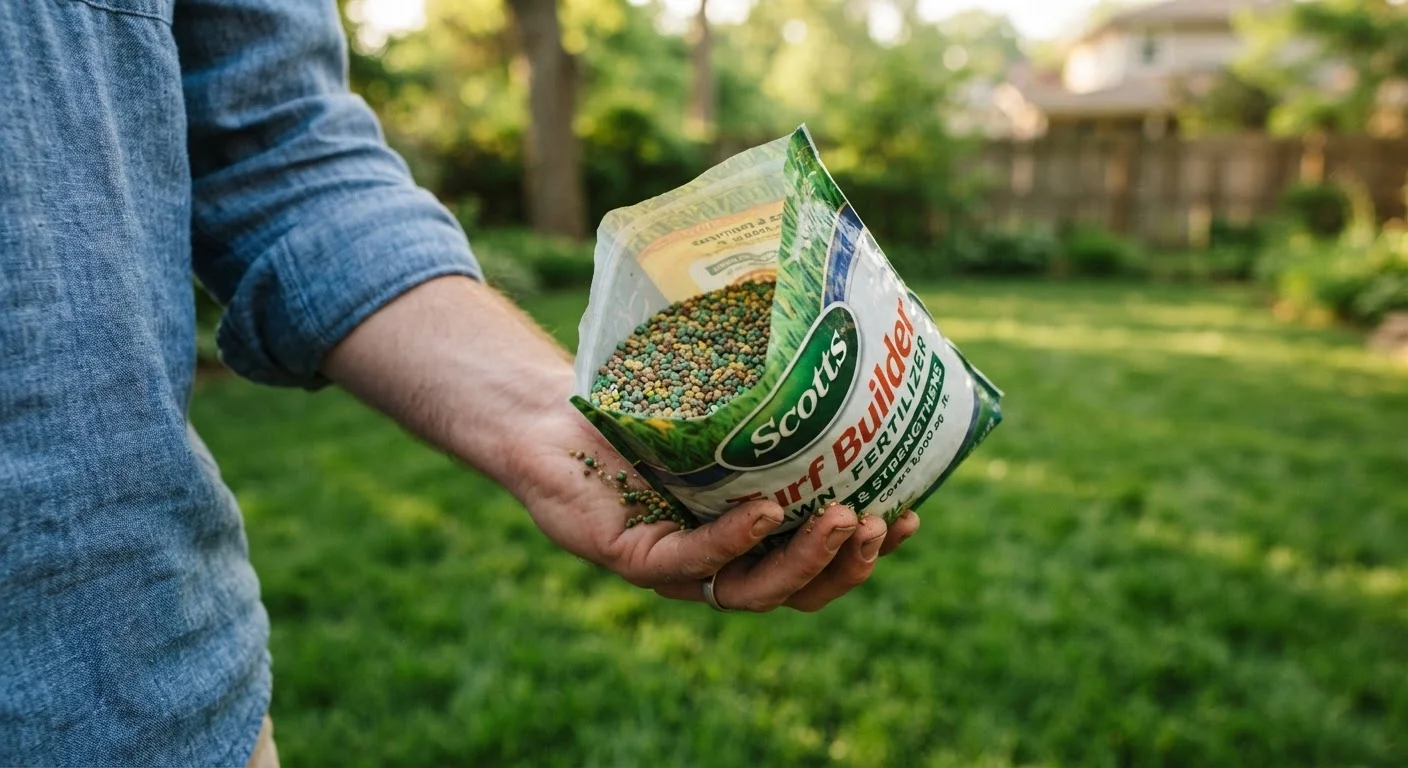
Photo: AnswersVista.com | Trustworthy Information Every Day editorial
What Those Three Numbers Actually Mean
Every bag of fertilizer sold in the U.S. displays three bold numbers on the label - something like 10-10-10 or 29-0-4. These numbers represent the percentage by weight of the three primary plant nutrients: nitrogen (N), phosphorus (P), and potassium (K), always listed in that order. This is called the N-P-K ratio.
| What N-P-K stands for | Nitrogen, Phosphorus, Potassium |
| Order on every label | Always N first, P second, K third |
| What the numbers represent | Percentage by weight of each nutrient |
| Filler content in a bag | Remaining weight after N-P-K (often sand or limestone) |
| Primary role of nitrogen | Leaf and shoot growth, green color |
| Primary role of phosphorus | Root development, germination, flowering |
| Primary role of potassium | Stress tolerance, disease resistance, water regulation |
| Recommended first step | Soil test to identify existing nutrient levels |
For example, a 40-pound bag labeled 20-5-10 contains 20% nitrogen (8 lbs), 5% phosphorus (2 lbs), and 10% potassium (4 lbs). The remaining weight is filler material - typically sand or limestone - that helps with even distribution. Understanding how to read these ratios lets you pick the right product for what your lawn or garden actually needs, rather than guessing at the garden center.
Just as you might learn to decode a Nutrition Facts label to understand what you're eating, reading a fertilizer label is about knowing what each nutrient does before deciding how much your plants need.
What Each Nutrient Does
Nitrogen (N) - The Growth Driver
Nitrogen is responsible for the lush, dark-green color and vigorous leafy growth most homeowners associate with a healthy lawn. It fuels chlorophyll production, which powers photosynthesis. Lawns and leafy vegetables are typically heavy nitrogen users. A deficiency shows up as yellowing leaves, especially older growth, and slow, sparse shoot production.
Phosphorus (P) - The Root Builder
Phosphorus supports strong root development, seed germination, and flowering. It's especially important for newly seeded lawns and transplanted shrubs trying to establish themselves. Mature, established lawns in decent soil often need very little added phosphorus - and in many U.S. states, phosphorus-containing fertilizers are restricted for general lawn use to protect local waterways from runoff.
Potassium (K) - The Stress Shield
Potassium helps plants regulate water, resist drought, tolerate cold temperatures, and fight off disease. Think of it as the immune system of your lawn. It doesn't produce dramatic visible growth, but it quietly keeps the plant functioning well under stress. Potassium deficiency often appears as brown leaf edges, particularly in summer heat or after heavy rain.
N-P-K ratio
The three-number code on every fertilizer label representing the percentage by weight of nitrogen, phosphorus, and potassium, always listed in that order.
Nitrogen (N)
A primary plant nutrient that drives leafy, green growth and chlorophyll production. It is the nutrient most responsible for the lush, dark color of a healthy lawn.
Phosphorus (P)
A primary plant nutrient essential for root establishment, seed germination, and flower development. It is often restricted in lawn fertilizers near waterways due to runoff concerns.
Potassium (K)
A primary plant nutrient that regulates water movement within plant cells and helps plants tolerate drought, cold, and disease stress.
Slow-release fertilizer
A fertilizer formulated to break down gradually over weeks or months, delivering nutrients steadily and reducing the risk of plant burn or nutrient runoff.
Starter fertilizer
A fertilizer with a higher phosphorus ratio, designed to support root establishment in newly seeded lawns, sod, or recently transplanted plants.
Choosing the Right Ratio for Your Situation
There's no universal fertilizer ratio that works for every yard. The right choice depends on your soil's existing nutrient levels, the type of plants you're growing, and the time of year. This is why a soil test is the most practical first step - it tells you exactly what your soil is already providing so you're not adding nutrients that aren't needed.
- Established lawns in spring: A higher-nitrogen formula (e.g., 30-0-4) encourages green-up after winter dormancy.
- New seeding or sod: A starter fertilizer with more phosphorus (e.g., 10-18-10) supports root establishment.
- Fall lawn prep: Lower nitrogen, higher potassium (e.g., 5-5-20) helps grass harden off before cold weather.
- Vegetable gardens: Balanced ratios (e.g., 10-10-10) work well as a general-purpose amendment worked into beds before planting.
- Flowering plants: Boosting phosphorus mid-season can encourage more blooms.
Always follow label application rates. Over-applying fertilizer - especially nitrogen - can burn grass, leach into groundwater, or produce excess leafy growth at the expense of roots and flowers.
Slow-Release vs. Fast-Release Formulas
Beyond the N-P-K numbers, fertilizer labels also indicate how quickly nutrients are delivered. Fast-release (water-soluble) fertilizers act within days and produce rapid green-up, but they require more frequent applications and carry a higher risk of burning plants if over-applied. Slow-release formulas - including coated granules and organic-based products - break down gradually over weeks or months, feeding plants more consistently and reducing runoff risk.
For most home lawns, a slow-release granular product applied two to four times per year is a practical approach. Organic fertilizers (such as those derived from composted poultry manure or feather meal) typically have lower N-P-K numbers but improve soil structure over time in ways synthetic products don't.
This article is for general informational and educational purposes. Always read and follow product label instructions, and check local regulations before applying phosphorus-containing fertilizers near waterways.
The content provided on our blog site traverses numerous categories, offering readers valuable and practical information. Readers can use the editorial team’s research and data to gain more insights into their topics of interest. However, they are requested not to treat the articles as conclusive. The website team cannot be held responsible for differences in data or inaccuracies found across other platforms. Please also note that the site might also miss out on various schemes and offers available that the readers may find more beneficial than the ones we cover.