
Soil pH and Why Your Plants Keep Struggling

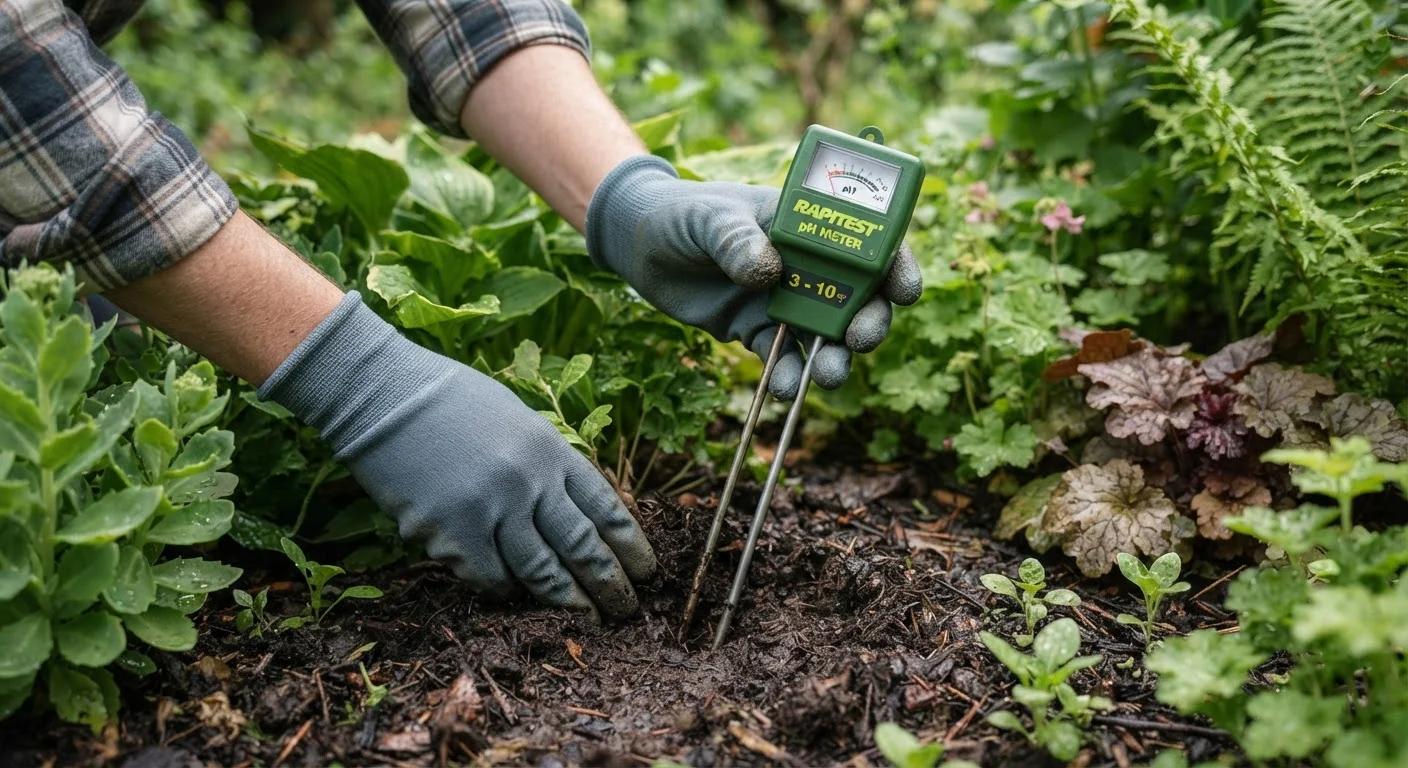
Photo: AnswersVista.com | Trustworthy Information Every Day editorial
Key Takeaways
- Soil pH controls nutrient availability - not just soil composition or watering habits.
- Most vegetables, lawns, and ornamentals prefer a slightly acidic pH between 6.0 and 7.0.
- An inexpensive soil test reveals pH and guides any corrective action before you waste money on fertilizer.
- Lime raises pH in acidic soil; sulfur or peat moss lowers it in alkaline soil.
- pH shifts take weeks to months - patience is required after any amendment.
What Soil pH Actually Controls
When plants look pale, patchy, or stunted despite regular watering and feeding, the problem is often invisible - it's in the soil chemistry, not the care routine. Soil pH governs a process called nutrient availability: the degree to which roots can physically absorb minerals from the surrounding soil. Even a well-fertilized bed can leave plants starved if the pH is off.
Here's why: essential nutrients like nitrogen, phosphorus, iron, and manganese exist in different chemical forms at different pH levels. In acidic soil (low pH), iron and manganese become highly soluble - sometimes to toxic levels. In alkaline soil (high pH), those same nutrients bind tightly to soil particles and become locked away from roots entirely. Fertilizer, in that scenario, is largely wasted. Understanding pH is a prerequisite to understanding what fertilizer labels actually mean for your yard.
6.0-7.0
Ideal pH range for most garden plants
University extension services broadly agree that the majority of vegetables, lawn grasses, and ornamentals perform best within this slightly acidic window.
10x
Change in acidity per pH unit
Because the pH scale is logarithmic, a soil at pH 5 is ten times more acidic than one at pH 6 - small numerical differences represent large chemical changes.
4.5-5.5
pH preferred by acid-loving plants
Blueberries, azaleas, rhododendrons, and camellias thrive in this range, which is significantly more acidic than average garden soil.
Recognizing a pH Problem in Your Yard
Plants signal pH stress in predictable ways, though the symptoms can mimic other issues like overwatering or disease. A few patterns worth recognizing:
- Interveinal chlorosis - leaves turn yellow between the veins while veins stay green - often points to iron or manganese deficiency caused by high (alkaline) pH.
- Stunted root development in otherwise well-watered beds can indicate phosphorus lockout in highly acidic soil.
- Moss or algae encroaching on lawn areas is a common indicator of low pH and thinning turf.
- Blueberries that won't fruit, azaleas with pale leaves, or hydrangeas blooming the wrong color are all classic signs of mismatched pH.
If you've ruled out overwatering as the culprit, soil pH deserves serious attention before you invest further in amendments or replanting.
How to Test and Adjust Your Soil
Testing is straightforward and inexpensive. Garden center kits provide quick readings, while your state's cooperative extension service - often affiliated with a land-grant university - offers laboratory analysis that includes nutrient levels alongside pH. Extension tests are especially useful for vegetable gardens or lawns showing persistent problems.
Once you have a result, correction follows a simple logic:
- Too acidic (below 6.0)? Add ground limestone (calcitic or dolomitic lime). Dolomitic lime also supplies magnesium, which is helpful in many eastern U.S. soils. Apply in fall when possible so winter moisture helps it incorporate.
- Too alkaline (above 7.5)? Elemental sulfur is the most common corrective amendment. Acidic organic matter like peat moss or pine needle mulch can help over time but work more slowly.
Amendment rates depend on your current pH, your target pH, and your soil type - clay soils require more material than sandy soils to achieve the same shift. Always follow the guidance on your soil test report rather than guessing. If you're building a new bed, testing before planting is a core step covered in starting a vegetable garden from the ground up.
Test Soil in Multiple Spots
pH and Soil Health: The Bigger Picture
Soil pH doesn't exist in isolation. It interacts with other aspects of soil structure and biology. Compact, poorly drained soil limits root reach and makes pH problems harder to correct because amendments can't move freely through the profile. If your yard has compaction issues, lawn aeration can help amendments penetrate more effectively before or after pH correction.
Healthy soil biology - earthworms, beneficial fungi, and bacteria - also functions within a pH window. Extremely acidic or alkaline conditions suppress microbial activity, which slows organic matter breakdown and further reduces natural nutrient cycling. Keeping pH in range supports the whole ecosystem that plants depend on, not just the chemistry on paper.
The practical lesson: before spending money on fertilizers, pest treatments, or plant replacements, run a soil test. It's one of the most cost-effective steps in yard care, and it removes the guesswork from nearly every decision that follows.
Frequently Asked Questions
The content provided on our blog site traverses numerous categories, offering readers valuable and practical information. Readers can use the editorial team’s research and data to gain more insights into their topics of interest. However, they are requested not to treat the articles as conclusive. The website team cannot be held responsible for differences in data or inaccuracies found across other platforms. Please also note that the site might also miss out on various schemes and offers available that the readers may find more beneficial than the ones we cover.