
Lawn Aeration: What It Actually Does and When It Matters

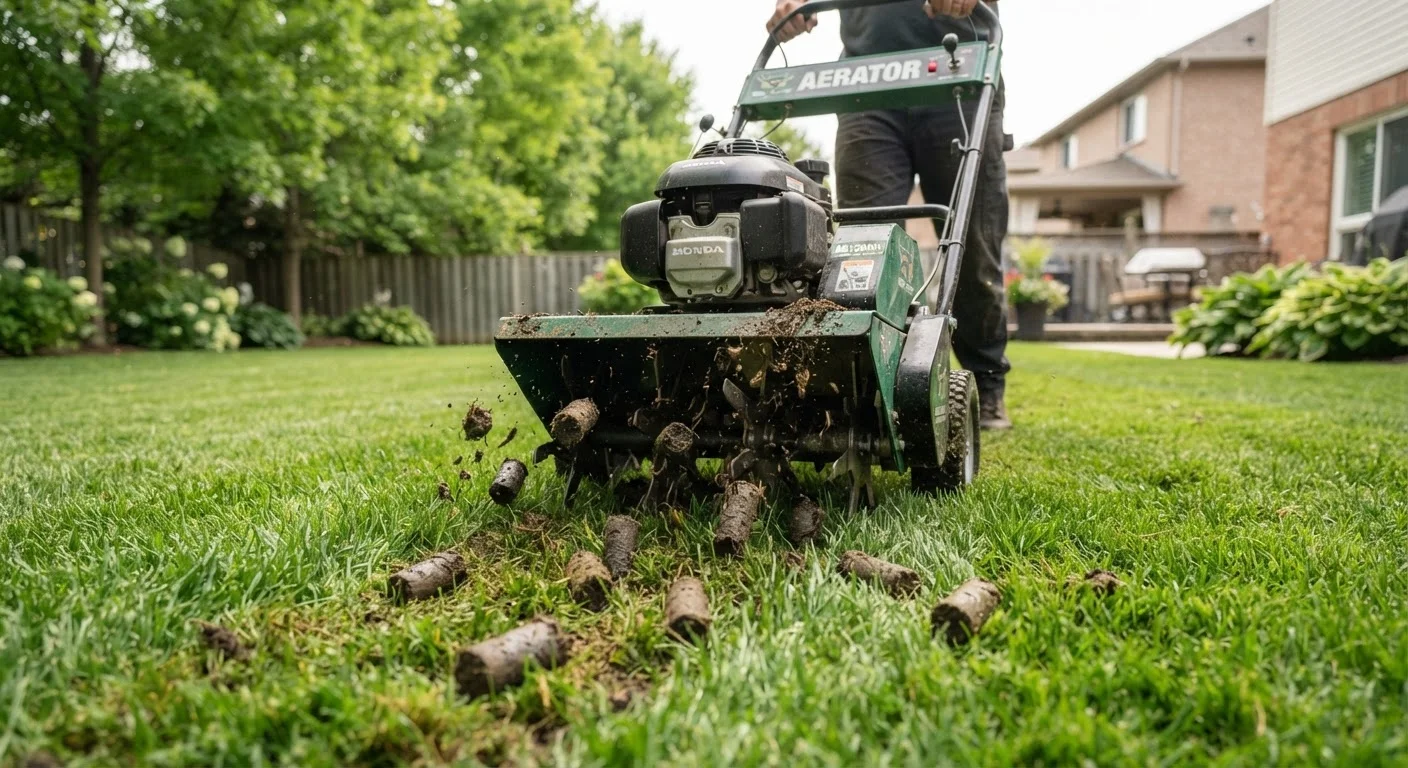
Photo: AnswersVista.com | Trustworthy Information Every Day editorial
Key Takeaways
- Core aeration relieves soil compaction by physically removing small plugs of earth from the lawn.
- Most lawns benefit from aeration once a year; heavily used or clay-heavy lawns may need it twice.
- The best time to aerate is during your grass type's active growing season - fall for cool-season grasses, late spring for warm-season types.
- Aeration works best when paired with overseeding or fertilizing immediately after.
- Not every lawn needs annual aeration - low-traffic, sandy-soil yards may need it only every two to three years.
What Compacted Soil Does to Your Lawn
Grass roots need three things to thrive: water, nutrients, and oxygen. When soil becomes compacted - packed so tightly that its particles leave little room between them - all three become harder to deliver. Rain runs off instead of soaking in. Fertilizer sits near the surface. Roots stay shallow because the soil resists penetration.
Compaction is especially common in high-traffic areas (paths kids regularly run across, spots near driveways) and in lawns with heavy clay soil, which compresses more easily than sandy or loamy ground. New construction sites are also frequent culprits, since heavy equipment often compresses subsoil before the lawn is ever laid.
The result is grass that looks perpetually stressed: thin growth, patchy color, and water that pools instead of absorbing. Many homeowners respond by watering more - which rarely helps and can introduce other problems. See our article on why watering more doesn't mean a healthier garden to understand why.
Thatch vs. Compaction: Different Problems
How Core Aeration Actually Works
A core aerator - also called a plug aerator - uses hollow tines to penetrate the soil and extract small cylinders of earth, typically about half an inch in diameter and two to three inches deep. These plugs are deposited on the lawn surface, leaving behind channels that immediately open the soil structure.
Those channels do several things at once:
- Allow oxygen to reach root zones, supporting microbial activity that breaks down thatch and releases nutrients.
- Improve water infiltration, so rain and irrigation soak in rather than run off.
- Give roots a path to grow deeper, building drought resilience over time.
- Create direct contact points for seed and fertilizer, making post-aeration treatments significantly more effective.
For homeowners planning to overseed thin areas, aeration is often the step that makes the difference between seed that germinates and seed that doesn't. Our guide on overseeding a patchy lawn explains how to pair both tasks effectively.
Aerate When Soil Is Moist, Not Dry
When Your Lawn Genuinely Needs It - and When It Doesn't
Aeration is a solution to a specific problem, not a ritual every lawn requires on the same schedule. Here's how to determine whether your yard genuinely needs it:
Signs your lawn likely needs aeration:
- Water pools on the surface after rain or irrigation
- The lawn feels hard underfoot, even after watering
- Thatch - the layer of dead grass and roots between living grass and soil - exceeds half an inch
- Grass growth is thin or pale despite adequate fertilization
- The lawn gets heavy foot traffic from people, pets, or equipment
Situations where aeration may not be necessary:
- Lawns in sandy soil, which compacts less and drains naturally
- Recently established lawns (less than one year old)
- Lawns that receive minimal traffic and are already growing well
Most established lawns in average conditions benefit from aeration once a year. Clay-heavy or high-traffic lawns may need it twice - once in each appropriate season. Lawns in good shape with light use may only need it every two to three years.
Aeration is also one step in a broader seasonal care routine. It fits naturally into spring lawn prep for warm-season grasses, and into early fall preparation for cool-season varieties.
½ inch
Thatch thickness that signals aeration is needed
Lawn care extension programs at universities consistently cite thatch exceeding half an inch as a trigger point for aeration consideration.
2-3 inches
Typical depth of core aeration tines
Most professional-grade core aerators penetrate two to three inches into the soil, reaching the primary root zone of most turf grass species.
1-2 weeks
Time for soil plugs to naturally break down
Soil cores left on the lawn surface decompose within one to two weeks, returning beneficial microorganisms to the turf.
Timing, Tools, and What to Do Right After
Timing aeration to your grass type's active growing period is essential. Aerating during dormancy stresses the lawn without allowing recovery.
- Cool-season grasses (Kentucky bluegrass, tall fescue, ryegrass): Aerate in early fall, ideally late August through October.
- Warm-season grasses (Bermuda, zoysia, St. Augustine): Aerate in late spring to early summer, once the grass is actively growing.
For equipment, a gas-powered core aerator rented from a home improvement center is the most effective option for typical residential lawns. Walk the lawn in two passes at perpendicular angles for thorough coverage. Mow the lawn and water it thoroughly the day before aeration to soften the soil - dry, hard ground limits how deep the tines can penetrate.
After aerating, take advantage of the open soil channels immediately:
- Overseed if growth is thin - seed dropped into the channels has direct soil contact and dramatically better germination odds.
- Fertilize to push nutrients directly to root level.
- Top-dress with compost (a thin quarter-inch layer) to improve soil biology over time.
Understanding your soil's underlying chemistry can further improve results. If your grass has struggled despite good care, consider a soil pH test before fertilizing - our article on soil pH and plant health explains how pH affects nutrient availability.
Frequently Asked Questions
The content provided on our blog site traverses numerous categories, offering readers valuable and practical information. Readers can use the editorial team’s research and data to gain more insights into their topics of interest. However, they are requested not to treat the articles as conclusive. The website team cannot be held responsible for differences in data or inaccuracies found across other platforms. Please also note that the site might also miss out on various schemes and offers available that the readers may find more beneficial than the ones we cover.