
Overseeding a Patchy Lawn Without Killing What's Already There

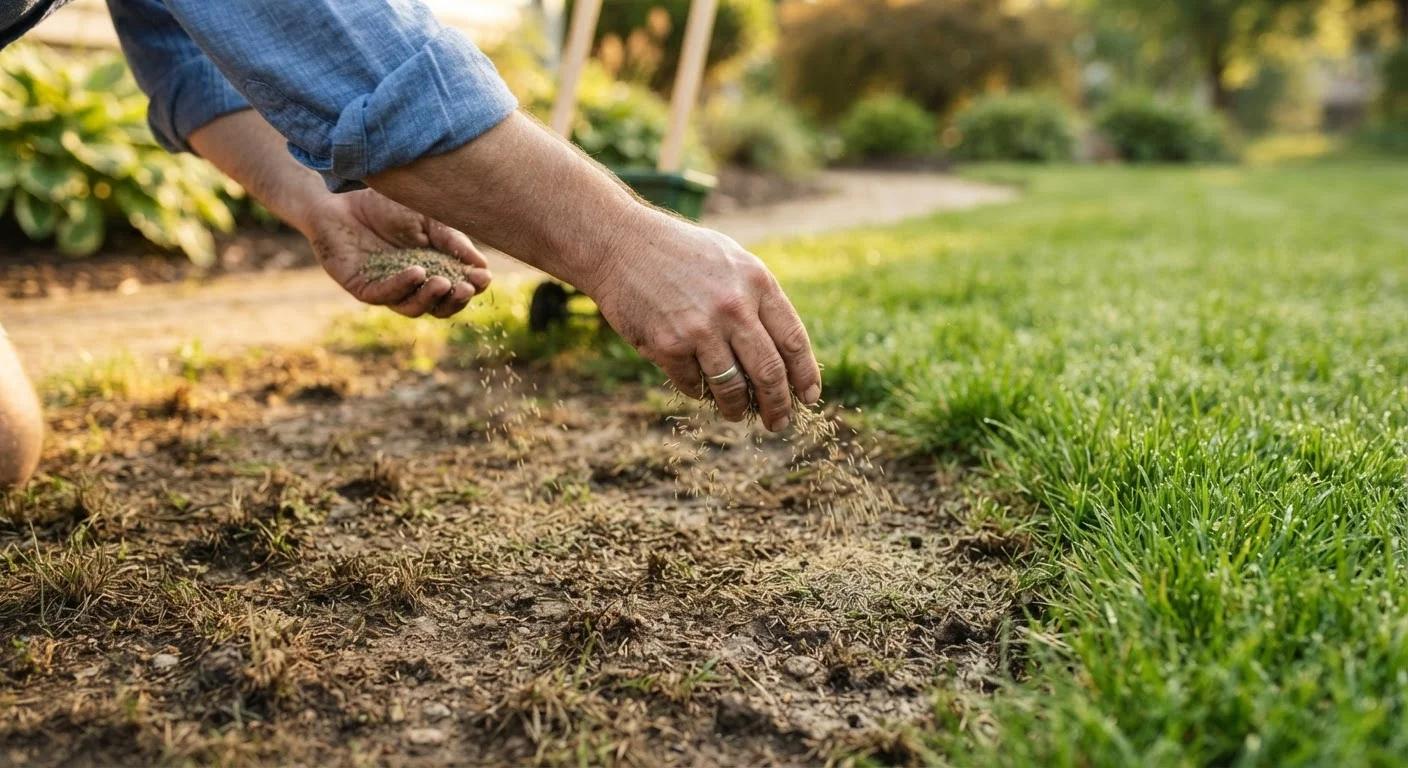
Photo: AnswersVista.com | Trustworthy Information Every Day editorial
Key Takeaways
- Fall is the best time to overseed cool-season grasses; late spring suits warm-season varieties.
- Light soil preparation dramatically improves seed-to-soil contact without disturbing existing grass.
- Consistent moisture in the first two to three weeks is the biggest factor in germination success.
- Match your new seed to the existing grass type so the lawn grows in uniformly.
- Avoid mowing newly seeded areas until new grass reaches at least three inches tall.
Why Overseeding Works - and When to Do It
Overseeding means spreading grass seed directly over existing turf to fill in thin or bare areas without tearing up the whole lawn. Done correctly, it densifies your lawn, crowds out weeds, and restores a uniform look - all without the cost or disruption of laying sod. For a fuller comparison of both approaches, see our grass seed vs. sod guide.
Timing is critical and depends on the grass in your lawn:
- Cool-season grasses (Kentucky bluegrass, tall fescue, perennial ryegrass): overseed in late summer to early fall, roughly six weeks before the first expected frost. Soil is still warm enough for germination, and cooler air reduces heat stress on seedlings.
- Warm-season grasses (Bermuda, Zoysia, St. Augustine): overseed in late spring once soil temperatures consistently reach 65-70°F.
Avoid overseeding in midsummer heat or right before a hard freeze - seedlings need time to establish before facing temperature extremes.
Soil Temperature Matters More Than Air Temperature
What You'll Need Before You Start
Gathering the right materials upfront saves multiple trips back to the garage. Keep the following on hand:
Dethatching rake or power dethatcher
Removes the layer of dead organic matter blocking seed from reaching the soil.
Hand cultivator or garden fork
Loosens compacted soil in bare spots to create a receptive seedbed.
Broadcast or drop spreader
Distributes grass seed evenly over large areas for uniform coverage.
Starter fertilizer
Provides phosphorus to support root development in newly germinating grass seed.
Compost or seed-starting topdressing
Protects seed from drying out and improves seed-to-soil contact after spreading.
Oscillating or misting sprinkler
Delivers a gentle, even spray that moistens seed without washing it away.
Lawn mower with bag attachment
Cuts existing grass short before seeding and collects clippings that could smother seed.
What you will need
Step-by-Step: Overseeding Without Harming Existing Grass
Follow these steps in order for the best germination rate while protecting the turf you've already grown. If your lawn has significant compaction issues, consider pairing overseeding with aeration - our article on lawn aeration and when it matters explains how the two practices work together.
Mow Existing Grass Short
Cut your current lawn to about 1.5-2 inches - lower than your normal mowing height. This reduces competition for light and ensures seed reaches the soil surface rather than landing on top of a thick canopy of existing grass. Bag the clippings to prevent them from smothering seed.
Dethatch or Rake the Surface
Thatch - the layer of dead stems and roots between the soil and living grass blades - blocks seed from reaching the soil. Use a dethatching rake or power dethatcher to loosen this layer in patchy areas. You don't need to strip the whole lawn; focus on spots thicker than about half an inch of thatch. Rake away the debris before seeding.
Loosen the Soil Surface in Bare Spots
In completely bare areas, use a hand cultivator or garden fork to scratch the top quarter-inch of soil. This creates small furrows that cradle seed and dramatically improve germination rates compared to scattering seed on hard, sealed soil.
Select and Apply the Right Seed
Match your seed to the grass already in your lawn. Mixing incompatible grass types results in an uneven, patchwork appearance even after the new seed fills in. Apply seed at the rate recommended on the package for overseeding (typically half the rate used for new lawns). Use a broadcast or drop spreader for even coverage - avoid hand-scattering over large areas, which leads to clumping.
Apply a Thin Layer of Topdressing
Lightly rake the seed into the top of the soil after spreading, then apply a thin layer (about one-quarter inch) of compost or a seed-starting topdressing mix. This covers the seed to protect it from birds and drying out, while improving soil contact. Avoid applying more than a quarter-inch - burying seed too deep prevents it from germinating.
Apply a Starter Fertilizer
Use a starter fertilizer formulated for new grass seed - these are higher in phosphorus, which supports root development. Apply according to package directions immediately after seeding. Avoid standard lawn fertilizers at this stage, as their nitrogen levels can burn emerging seedlings.
Water Immediately and Maintain Moisture
Water the seeded area gently right after finishing - use a mist or gentle spray setting to avoid washing seed away. Begin the twice- or three-times-daily light watering routine described in the after-care section and maintain it consistently until germination is visible, typically 7-21 days depending on grass type and conditions.
After-Care: Keeping New Seed Alive
The weeks after seeding are where most attempts succeed or fail. New grass seed has no established root system, making it completely dependent on consistent surface moisture.
- Water lightly and frequently: aim for two to three short waterings per day (5-10 minutes each) to keep the top inch of soil moist - not soggy. As seedlings emerge and roots deepen, gradually shift to deeper, less frequent watering.
- Hold off on mowing: wait until new grass is at least 3 inches tall before the first cut, and never remove more than one-third of the blade at once.
- Delay fertilizing: if you applied a starter fertilizer at seeding, skip additional feeding for six to eight weeks to avoid burning tender roots.
- Keep foot traffic minimal: rope off or flag newly seeded areas if needed; even a few weeks of protection makes a real difference.
This is also a good time to revisit your broader lawn care calendar. Overseeding fits neatly into the larger spring lawn prep checklist if you're tackling multiple tasks in one season.
Avoid Weed Killers Around Seeding Time
The content provided on our blog site traverses numerous categories, offering readers valuable and practical information. Readers can use the editorial team’s research and data to gain more insights into their topics of interest. However, they are requested not to treat the articles as conclusive. The website team cannot be held responsible for differences in data or inaccuracies found across other platforms. Please also note that the site might also miss out on various schemes and offers available that the readers may find more beneficial than the ones we cover.