
Grass Seed vs. Sod: Choosing the Right Start for Your Lawn

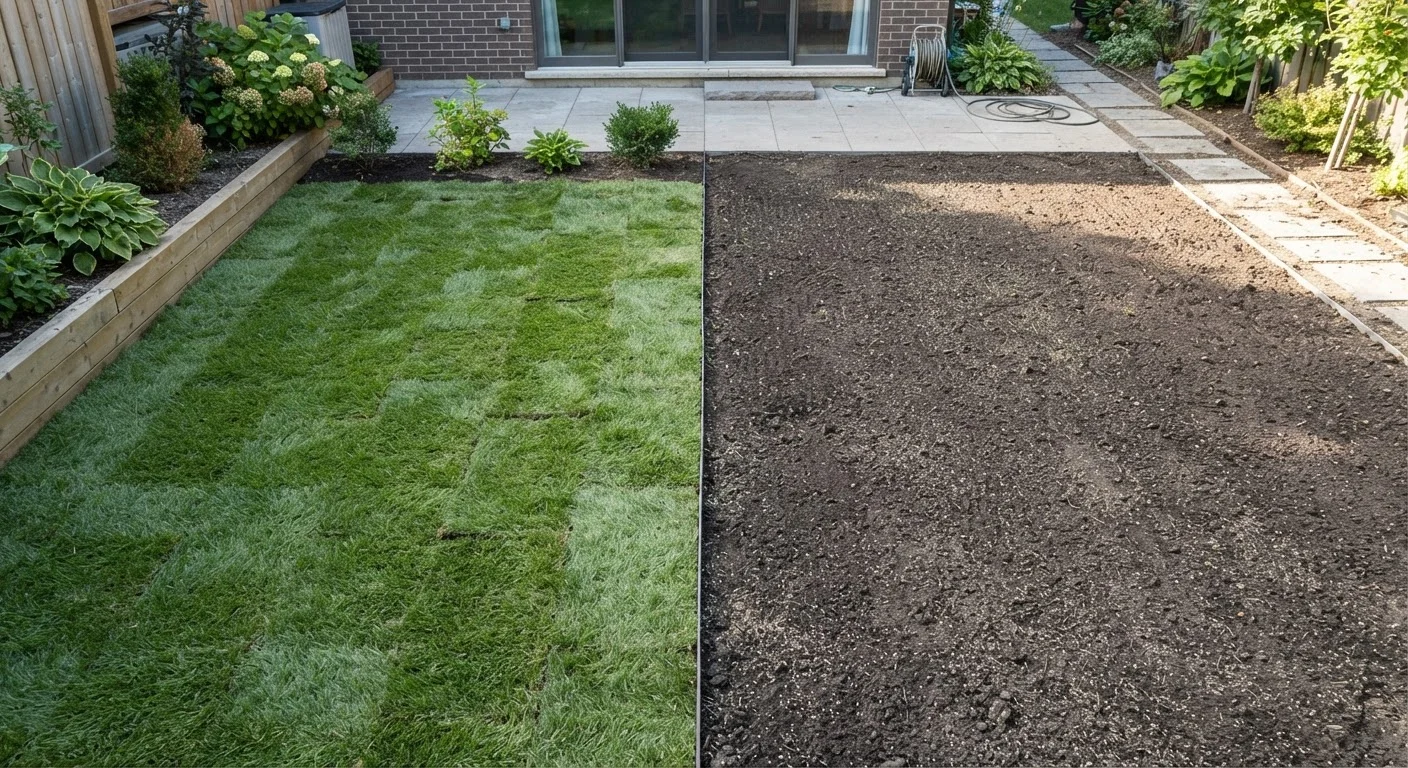
Photo: AnswersVista.com | Trustworthy Information Every Day editorial
Key Takeaways
- Grass seed costs far less upfront but requires weeks of careful watering and protection before it establishes.
- Sod provides near-instant ground cover and is ready for light use within two to three weeks.
- Timing matters for both: cool-season grasses establish best in fall, warm-season grasses in late spring.
- Soil preparation is equally critical for either method - skipping it undermines both options.
- Grass seed offers far more variety in grass type and is better suited to large or irregular areas.
- Sod is the stronger choice for slopes, high-traffic zones, or situations where erosion is an immediate concern.
What You're Really Choosing Between
Grass seed and sod are both legitimate ways to establish a lawn, but they represent fundamentally different trade-offs. Seed asks you to invest time and patience in exchange for lower cost and greater grass-type flexibility. Sod asks you to invest money in exchange for speed and immediate coverage. Neither is universally better - the right choice depends on your yard, your timeline, and your budget.
Both methods start from the same foundation: well-prepared soil. Regardless of which path you choose, skipping soil prep is the single most common reason new lawns fail. Loosen the top 4-6 inches of soil, amend with compost if needed, and grade the surface to slope gently away from any structures. That groundwork applies equally to seed and sod. For deeper context on how soil health affects grass roots long-term, see our piece on lawn aeration and what it actually does.
Cost, Effort, and Timeline Compared
The cost difference between seed and sod is substantial. Grass seed typically runs between $0.05 and $0.30 per square foot depending on grass type, while sod generally costs $0.50 to $0.90 per square foot for the material alone - before factoring in delivery, grading, or professional installation. For a 2,000-square-foot lawn, that gap can easily reach $1,000 or more.
| Criterion | Grass Seed | Sod |
|---|---|---|
| Material cost (per sq ft) | $0.05-$0.30 | $0.50-$0.90+ |
| Time to usable lawn | 8-12 weeks | 2-3 weeks |
| Grass variety options | Very broad selection | Limited by local farms |
| Erosion control | Poor until established | Immediate |
| Installation labor | Light (spreading seed) | Heavy (rolling, cutting, laying) |
| Watering demand | High for 6-8 weeks | High for 2-3 weeks |
| Best for large areas | Yes - cost-effective | Expensive at scale |
| Root depth long-term | Typically deeper over time | Must re-establish after install |
Effort levels differ as well. Sod requires heavy physical labor during installation - rolls are dense and awkward - but once laid, care is straightforward: water deeply twice daily for the first two weeks, then taper off. Seed demands less muscle during application but more sustained attention: daily or twice-daily watering for up to eight weeks, plus protecting the area from foot traffic, birds, and heavy rain until seedlings fully establish.
Timing: When You Plant Changes Everything
Grass type and planting season are tightly linked, and this applies equally to seed and sod. Cool-season grasses - fescues, bluegrass, ryegrass - establish best when soil temperatures are between 50°F and 65°F, which typically means early fall across most of the northern U.S. Warm-season grasses - Bermuda, Zoysia, St. Augustine - prefer soil temperatures above 65°F and establish most reliably in late spring and early summer.
Fall is the single best window for seeding cool-season lawns. Soil is warm enough to promote germination, air temperatures are moderate, and cooler nights reduce moisture stress. Spring seeding is possible but competing with weed pressure makes establishment harder. For warm-season sod, summer installation works well as long as watering is consistent. Avoid installing sod during drought conditions or extreme heat without a reliable irrigation plan.
50°F-65°F
Ideal soil temp for cool-season grass seed germination
University cooperative extension guidelines consistently cite this range as optimal for fescue, bluegrass, and ryegrass establishment.
2-3 weeks
Time for sod to root and handle light foot traffic
Most turfgrass professionals recommend a minimum two-week rest period before allowing regular use of newly laid sod.
10x
Approximate cost multiplier of sod versus seed
Per-square-foot material cost comparisons generally show sod running five to ten times more expensive than seed for equivalent coverage.
Where Each Method Genuinely Excels
Sod wins clearly on erosion control and speed. If you've just had grading work done, replaced a septic system, or need the yard usable for children or pets by a specific date, sod removes the uncertainty. It also performs better on slopes where seed wash-off is a persistent problem.
Seed wins on variety, scalability, and long-term adaptability. If your yard has dense shade, unusually dry conditions, or heavy clay soil, you can select a seed blend specifically bred for those conditions - options that sod farms rarely offer. Seed is also far easier to work into existing grass for repairs. Our guide to overseeding patchy lawn areas covers that process in detail.
One often-overlooked consideration: grass grown from seed on your specific soil tends to develop deeper, more resilient root systems over time than transplanted sod, which must re-establish its roots after the trauma of being cut and relocated. Be aware, though, that common lawn care myths - like scalping new grass or watering lightly and frequently - can undermine either approach during the critical establishment phase.
The content provided on our blog site traverses numerous categories, offering readers valuable and practical information. Readers can use the editorial team’s research and data to gain more insights into their topics of interest. However, they are requested not to treat the articles as conclusive. The website team cannot be held responsible for differences in data or inaccuracies found across other platforms. Please also note that the site might also miss out on various schemes and offers available that the readers may find more beneficial than the ones we cover.