
Spring Lawn Prep: A Season-Opening Checklist for Homeowners

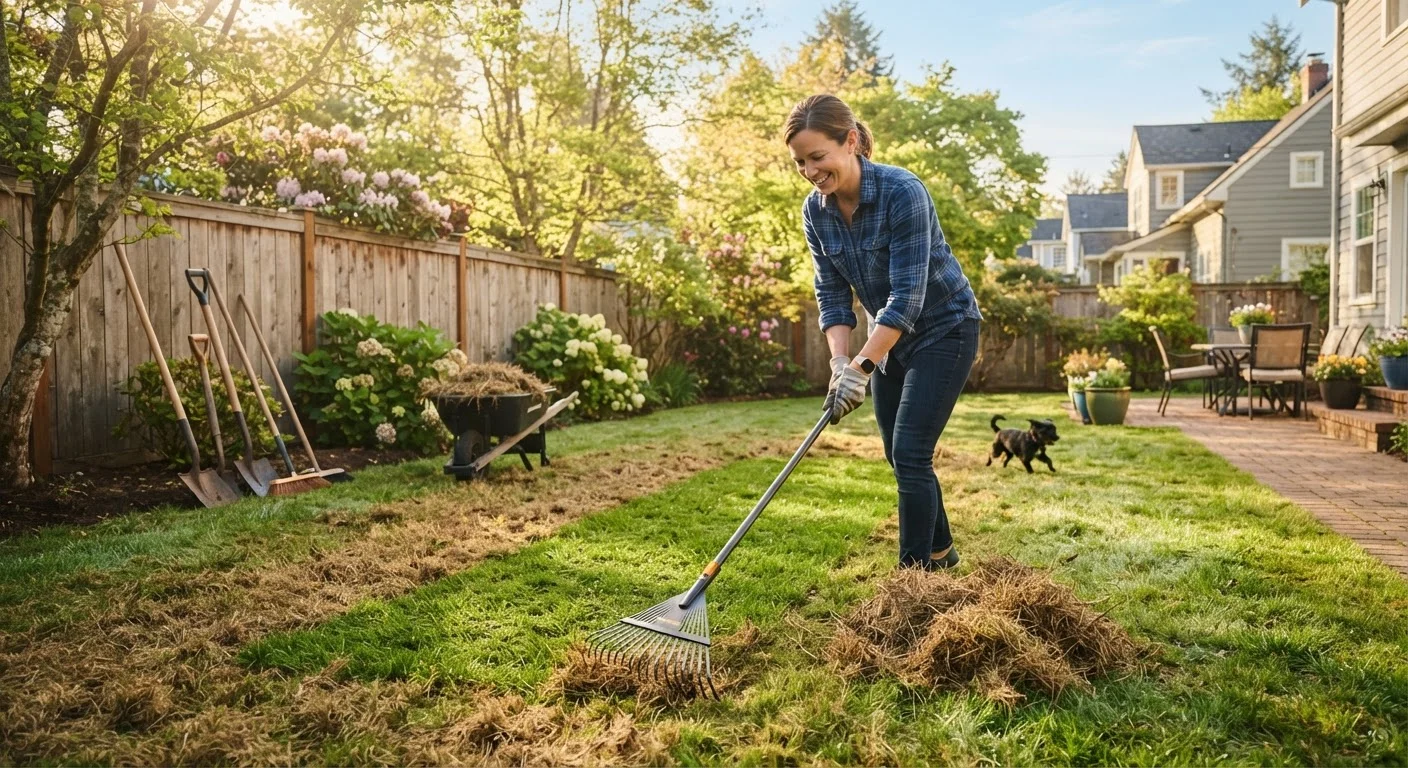
Photo: AnswersVista.com | Trustworthy Information Every Day editorial
Key Takeaways
- Wait until soil is no longer soggy before doing any lawn work to avoid compaction.
- Raking out thatch and debris is the essential first step before any other treatment.
- Aerating compacted soil dramatically improves root growth and water absorption.
- Apply fertilizer only after a soil test confirms what your lawn actually needs.
- Edging and overseeding bare patches early prevents weeds from moving in first.
- A thorough equipment check before you begin saves time and frustration mid-task.
Why a Spring Checklist Saves Your Lawn
Most lawn problems in summer - patchy growth, weak turf, persistent weeds - trace back to skipped or poorly timed spring tasks. A structured checklist removes the guesswork and ensures you address every area in the right sequence. Rushing straight to fertilizer without clearing debris or relieving compaction, for example, wastes money and effort.
Spring lawn prep also connects directly to your broader seasonal home routines. Just as a seasonal walk-through of your home's overlooked spots catches quiet problems before they escalate, a lawn checklist ensures nothing slips through the cracks outdoors.
Work through the groups below in order. Each builds on the previous one, and skipping ahead can undermine results.
Leaf rake or dethatching rake
Removes matted debris and loosens the thatch layer so air and nutrients can reach the soil.
Core aerator (manual or rental)
Pulls small plugs from compacted soil to improve root growth and water absorption.
Soil test kit or lab service
Determines your lawn's actual pH and nutrient needs so amendments aren't applied blindly.
Broadcast or drop spreader
Distributes seed, fertilizer, and lime evenly across the lawn surface.
Lawn edger or half-moon edging iron
Creates sharp, defined borders between lawn and garden beds or paved surfaces.
Garden hose or irrigation system
Provides consistent moisture after overseeding and fertilizing to support establishment.
How to Work Through the Checklist
Start by checking soil conditions. Squeeze a handful of soil - if it crumbles apart when you open your hand, it's dry enough to work. If it stays clumped and sticky, wait a few more days. Walking on or working saturated soil compacts it and damages the structure you're trying to improve.
Once conditions are right, move through the checklist groups in sequence: cleanup first, then assessment, then soil treatment, then seeding and feeding, and finally edging and equipment.
Equipment & Safety Check
Cleanup & Debris Removal
Soil Assessment
Aeration & Soil Treatment
Seeding & Feeding
Edging & Final Pass
For guidance on whether your lawn genuinely needs aeration - and which method works best for your soil type - see our detailed explainer on what lawn aeration actually does and when it matters.
If your yard tends toward heavy maintenance demand, it may also be worth reviewing low-maintenance landscaping approaches that can reduce seasonal workload without sacrificing appearance.
Don't Apply Pre-Emergent and Overseed at the Same Time
After the Checklist: Keep the Momentum
Once you've worked through every item, note the date and any observations - thin spots, drainage issues, areas that needed extra seed - in a simple notebook or phone note. This record becomes valuable the following spring and helps you detect patterns over time.
If you're also planning a vegetable garden this season, the soil prep and timing principles overlap considerably. Our guide on starting a vegetable garden from the ground up covers site selection and soil preparation that pairs naturally with lawn season prep.
Consistent spring attention - even a single focused weekend - is the single most reliable way to keep your lawn resilient through summer heat, drought, and foot traffic.
Fertilizer Without a Soil Test Can Cause Damage
The content provided on our blog site traverses numerous categories, offering readers valuable and practical information. Readers can use the editorial team’s research and data to gain more insights into their topics of interest. However, they are requested not to treat the articles as conclusive. The website team cannot be held responsible for differences in data or inaccuracies found across other platforms. Please also note that the site might also miss out on various schemes and offers available that the readers may find more beneficial than the ones we cover.