
Low-Maintenance Landscaping Ideas That Still Look Intentional

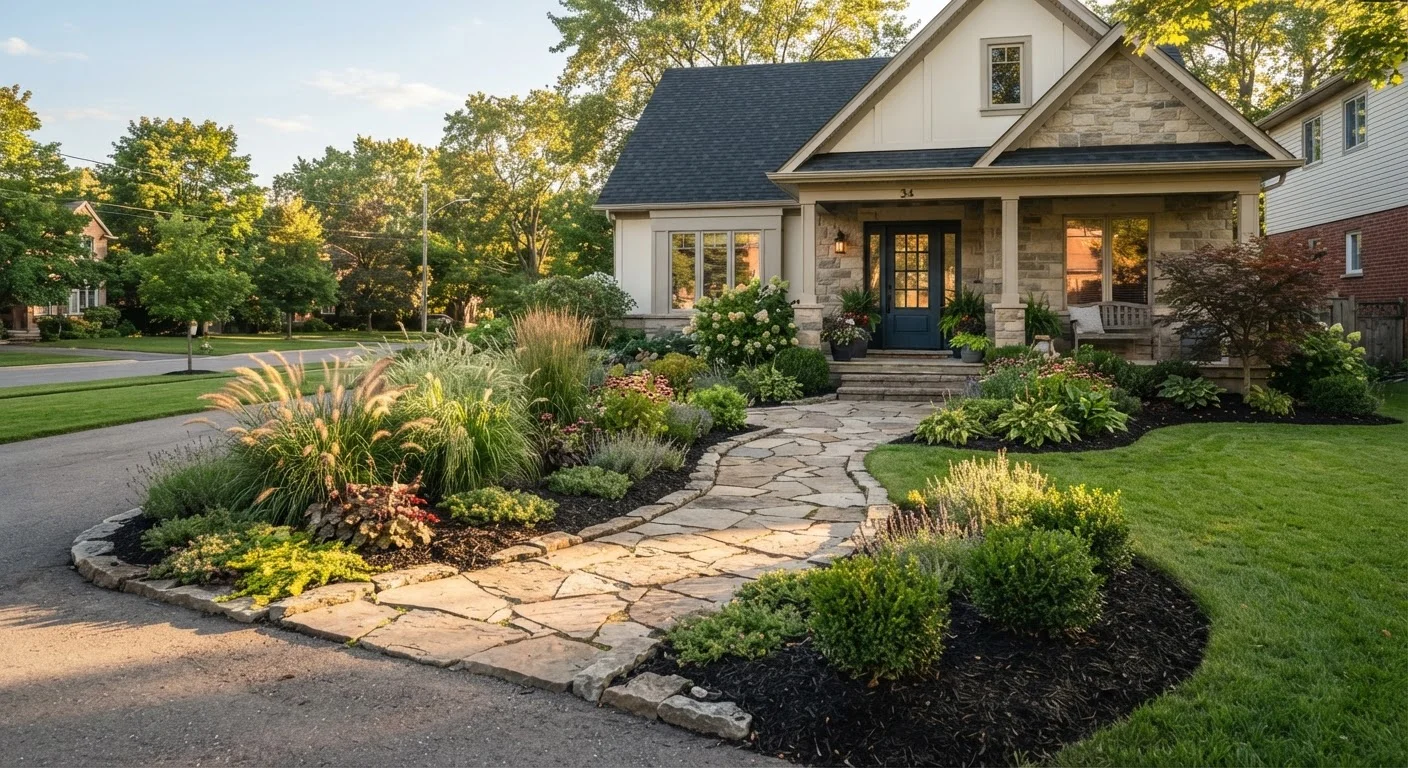
Photo: AnswersVista.com | Trustworthy Information Every Day editorial
Key Takeaways
- Replacing high-maintenance turf sections with ground covers or mulch can dramatically reduce mowing and watering demands.
- Grouping plants by water and sun needs - called hydrozoning - cuts irrigation time and reduces plant loss.
- Native and drought-adapted plants typically require far less intervention once established than traditional ornamentals.
- Defined borders and consistent mulching do most of the visual work that makes a yard look intentional.
- Drip irrigation and permeable hardscaping reduce both water bills and routine maintenance tasks.
Why Low-Maintenance Doesn't Mean Low-Effort at the Start
There's a common misconception that a low-maintenance yard just happens. In reality, the upfront planning is where most of the work lives - and it pays off for years afterward. The homeowners with the tidiest-looking yards often aren't working harder; they've simply designed smarter.
The core principle is reducing the number of tasks that recur weekly - mowing, hand-watering, pulling weeds - by changing what's growing and how it's arranged. That shift can look like replacing a struggling grass patch with a mulched bed, or swapping a water-hungry shrub border with drought-adapted perennials that fill in on their own over a couple of seasons.
If you've been wrestling with a thinning lawn, it's worth asking whether a full grass-first approach is right for your yard. For areas where you do want to keep turf, see our guide to overseeding thin or bare lawn areas - but for the rest of the yard, the ideas below offer a path to lasting, attractive low effort.
Replace Problem Turf Areas with Ground Covers
Grass is one of the most labor-intensive plants in any yard. In areas where it struggles - under trees, along steep slopes, or in narrow strips - replacing it with a spreading ground cover eliminates mowing, reduces irrigation, and suppresses weeds naturally as the plants fill in.
Creeping thyme, liriope, creeping Jenny, and ajuga are common options depending on your climate and sun exposure. Many spread reliably on their own within two to three seasons, creating a dense mat that crowds out weeds without spraying. Visually, a uniform ground cover reads as intentional and designed rather than neglected.
Where grass struggles, ground covers do the work automatically - no mowing required.
Use Hydrozoning to Group Plants by Water Needs
Hydrozoning means placing plants with similar water requirements together in the same bed or zone. This allows each area to be watered on its own schedule - drought-tolerant plants in one zone, thirstier perennials in another - rather than running a single blanket irrigation cycle that over-waters some plants and under-waters others.
Beyond efficiency, hydrozoning reduces plant loss and the need for intervention. Plants that receive the right amount of water at the right frequency simply stay healthier, which means less replanting, less troubleshooting, and fewer surprises through a dry summer. Our article on managing your garden through a hot, dry summer covers how to sustain plants once the heat sets in.
Grouping plants by water needs removes the guesswork from irrigation scheduling.
Choose Native and Regionally Adapted Plants
Plants native to your region have evolved to thrive in local soil, rainfall patterns, and temperature swings without much intervention. Once established - typically after one full growing season - they rarely need supplemental watering, fertilizing, or pest management beyond what nature provides.
This doesn't mean a yard full of wildflowers (though that's a valid choice). Many native shrubs, grasses, and perennials have refined, structural appearances that work well in traditional landscaping schemes. The practical case for native plants is worth reviewing before you choose species, since site conditions and regional variation both matter.
Native plants invest their first season in roots - and reward you with near-independence afterward.
Define Edges and Borders Consistently
One of the biggest visual differences between a yard that looks maintained and one that doesn't is edge definition. Sharp, clean lines between a lawn and a planting bed signal care and intentionality - even if the bed itself requires almost no maintenance.
Physical edging materials like steel, aluminum, or composite borders installed once along bed edges hold their shape season after season with minimal upkeep. Compared to string-trimming along undefined borders week after week, a one-time installation pays off quickly. It also prevents grass from creeping into beds, which is one of the most time-consuming recurring weeding tasks in a typical yard.
Defined edges do more visual work per square foot than almost any other landscaping choice.
Mulch Generously and Replenish Annually
A 2-3 inch layer of organic mulch in planting beds suppresses weeds, retains soil moisture, moderates soil temperature, and gradually improves soil quality as it breaks down. In practice, this means significantly fewer weeding sessions, less frequent watering, and healthier plants overall.
The key is consistent depth - thin spots let weeds through, so a generous, even application matters more than the type of mulch chosen. Most beds need a single top-up each spring to maintain effectiveness. Paired with physical edging, mulched beds essentially manage themselves between seasons.
Two to three inches of mulch is the single highest-return maintenance shortcut in any garden bed.
Install Drip Irrigation in Key Planting Areas
Drip irrigation delivers water directly to plant root zones at a slow, steady rate - reducing evaporation, runoff, and the time you spend hand-watering. For established planting beds, a simple drip system on a timer can eliminate one of the most time-consuming warm-season tasks entirely.
Unlike in-ground sprinkler systems, basic drip setups are accessible for DIY installation in most yard configurations. They also pair naturally with hydrozoning, since each zone can run independently on its own schedule. For reference on how lawn care routines compare to bed-focused maintenance, our spring lawn prep checklist outlines what a full seasonal routine looks like - useful context for deciding where to cut back.
A drip timer on planting beds can reclaim hours of hand-watering time each week in summer.
Add Permeable Hardscaping in High-Traffic or Problem Areas
Gravel paths, decomposed granite, stepping stones, and permeable pavers offer durable, attractive solutions for areas where growing anything reliably is difficult - narrow side yards, areas with heavy foot traffic, or spots with compacted soil and poor drainage. Once installed, they require almost no ongoing maintenance.
Visually, hardscaping anchors a yard's design and gives it structure that reads as deliberate. It also addresses a common frustration: areas where grass or ground cover repeatedly fails, leading to repeated replanting. Laying a weed barrier fabric beneath gravel or decomposed granite further reduces the need for periodic intervention.
Permeable hardscaping solves the problem areas where plants repeatedly fail - permanently.
Putting It All Together for Long-Term Results
The most successful low-maintenance landscapes share a common trait: intentionality at the design stage. Every element - from the width of a mulched bed to the species of a ground cover - was chosen with the yard's specific conditions in mind.
Combining several of these strategies compounds the benefit. Drip irrigation paired with hydrozoning and native plantings can reduce your outdoor water use substantially while cutting weekend maintenance to little more than seasonal tidying. For inspiration on how a more structured growing setup can reduce day-to-day workload, our comparison of raised beds vs. in-ground planting explores how layout choices affect ongoing effort.
Remember, results take a season or two to fully develop - especially with native plants, which spend their first year establishing root systems before they visibly thrive. Patience in year one usually means a near-effortless yard by year three.
Start With One Zone, Not the Whole Yard
The content provided on our blog site traverses numerous categories, offering readers valuable and practical information. Readers can use the editorial team’s research and data to gain more insights into their topics of interest. However, they are requested not to treat the articles as conclusive. The website team cannot be held responsible for differences in data or inaccuracies found across other platforms. Please also note that the site might also miss out on various schemes and offers available that the readers may find more beneficial than the ones we cover.