
Mulch Types and What Each One Is Actually Good For

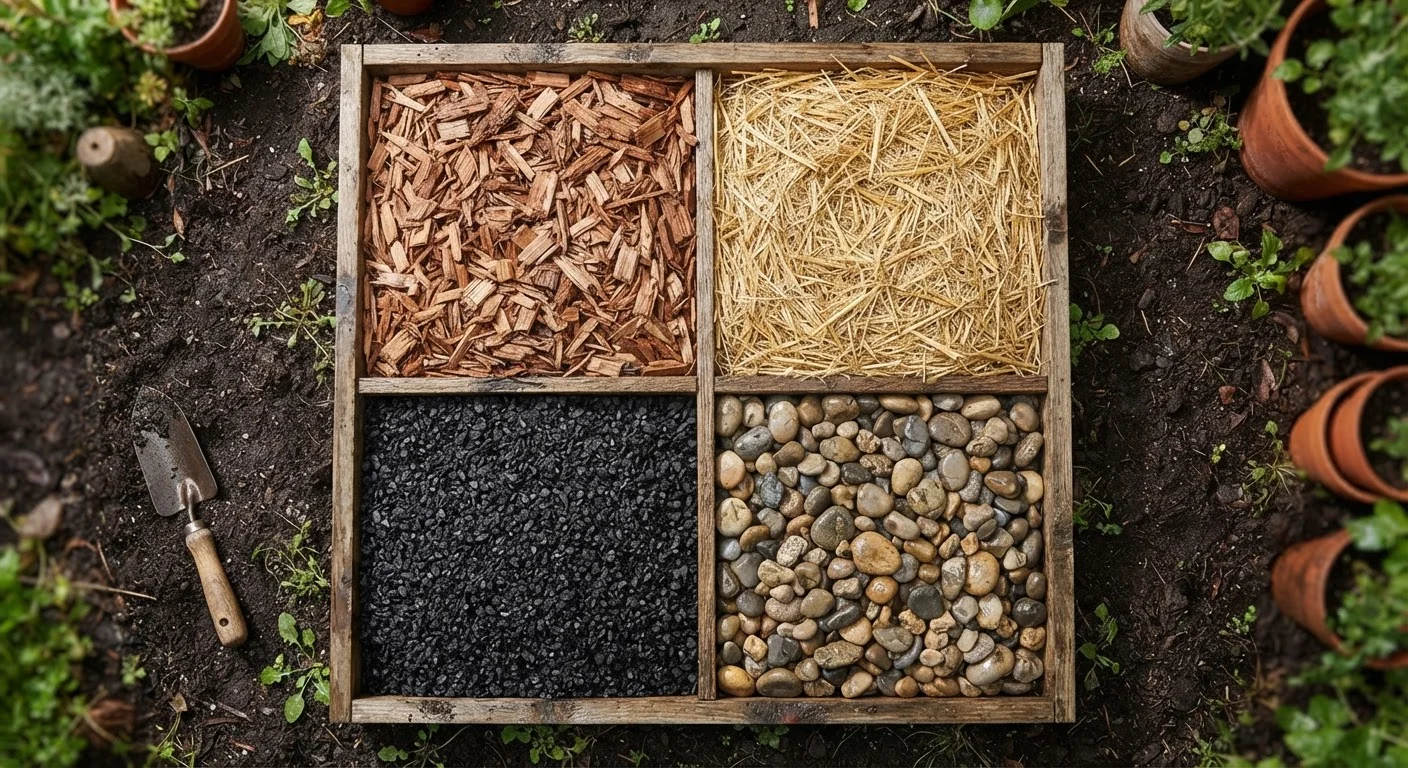
Photo: AnswersVista.com | Trustworthy Information Every Day editorial
Key Takeaways
- Organic mulches like wood chips and straw break down over time, enriching soil with nutrients.
- Inorganic mulches such as rubber and gravel don't decompose and require virtually no replenishment.
- Depth matters: most mulch should be applied 2-4 inches deep, keeping material away from plant stems.
- Straw mulch excels in vegetable gardens; wood chips are ideal for trees and shrubs.
- No single mulch type is universally best - match the material to your specific garden zone and goals.
Why Mulch Type Actually Matters
Spreading any mulch is better than leaving soil bare, but choosing the wrong type can work against your plants. Mulch performs several jobs at once: it suppresses weeds, regulates soil temperature, retains moisture, and - depending on the material - feeds soil biology as it breaks down. The catch is that each material does those jobs differently, and some actively harm certain plants when misapplied.
The basic divide is between organic mulches (wood chips, straw, bark, compost, pine needles) and inorganic mulches (rubber, gravel, river rock, landscape fabric). Organic types decompose and enrich soil; inorganic types are essentially permanent and change very little about the ground beneath them. Neither category is universally superior - context is everything. If you're also thinking about overall soil health, our guide to home composting covers how finished compost can work alongside mulch to rebuild depleted beds.
Organic Mulches: What Each One Does
Wood Chips
Arborist wood chips - the chunky, bark-and-wood mix produced when trees are chipped - are among the most studied organic mulches. Research from urban forestry programs consistently shows they moderate soil temperature well, suppress weeds effectively, and support beneficial fungal networks as they decompose. They're ideal for tree rings, shrub beds, and perennial borders. Apply 3-4 inches deep, and keep chips a few inches away from trunks to prevent rot.
Dyed wood mulch (often sold in red, brown, or black) performs similarly but uses colorants that are generally considered safe for garden soil, though the base wood quality can vary widely.
Straw
Straw (not hay, which carries weed seeds) is the go-to for vegetable gardens. It's lightweight, easy to move between rows, breaks down in a single season, and doesn't steal nitrogen from the soil the way fresh wood chips can when tilled in. It also does a remarkable job preventing soil splash - a key way fungal diseases spread to lower plant leaves.
Pine Needles (Pine Straw)
A common misconception is that pine needles drastically acidify soil. In practice, the effect is modest. Pine straw is an excellent choice for acid-loving plants like blueberries, azaleas, and rhododendrons, but it won't dramatically shift pH in a single season. It's also slow to decompose, making it a longer-lasting organic option. See how it pairs with plant selection strategies in our perennials vs. annuals planning guide.
Shredded Leaves
Free and effective - shredded fall leaves (run over with a mower to break them up) make a serviceable mulch for most beds. Whole leaves can mat and repel water, so shredding is key. They decompose quickly and add organic matter readily.
| Wood Chips | Straw | Pine Needles | Rubber | Gravel/Rock | |
|---|---|---|---|---|---|
| Soil enrichment | High | Moderate | Low-Moderate | None | None |
| Weed suppression | Strong | Moderate | Moderate | Strong | Moderate |
| Moisture retention | High | High | Moderate | Moderate | Low |
| Longevity | 1-3 years | 1 season | 2-3 years | 10+ years | Indefinite |
| Best application | Trees & shrubs | Vegetable beds | Acid-loving plants | Playgrounds, paths | Xeriscaping, foundations |
| Relative cost | Low-Free | Low | Low | Moderate-High | Moderate-High |
Inorganic Mulches: Durability at a Trade-Off
Rubber Mulch
Made from recycled tires, rubber mulch doesn't decompose, doesn't harbor mold, and stays in place well. It's a popular choice around playground equipment. However, it does nothing to improve soil fertility, can heat up significantly in direct sun, and raises questions among some gardeners about long-term leaching - though regulatory consensus on garden use remains largely permissive. It's best reserved for non-edible zones.
Gravel and River Rock
Gravel and decorative rock work well in xeriscaped yards, along foundations where drainage is a concern, and in high-heat climates where soil moisture retention is less critical. Rock mulch reflects heat back upward, which can stress plants in warm climates - a useful trait in cool regions, a liability in desert zones if not planned carefully. Unlike organic options, rock mulch doesn't need annual replenishment, but it's difficult to remove once installed.
Get Free Wood Chips From Local Arborists
Application Tips That Apply to All Mulch Types
Regardless of material, a few application principles hold across the board:
- Depth: Aim for 2-4 inches. Less won't suppress weeds reliably; more can suffocate roots and create anaerobic conditions.
- Volcano mulching: Avoid piling mulch against tree trunks or plant crowns. This traps moisture against bark and invites disease and pests - a practice sometimes called "volcano mulching" that's unfortunately common.
- Replenishment: Organic mulches break down and need topping off annually or every other year. Factor this into your planning.
- Weed barrier fabric under mulch: Fabric can be useful under gravel but tends to degrade under organic mulch, creating a tangled mess over time. Skip it in planted beds.
For a broader look at how soil health underpins everything in the yard, our lawn aeration explainer is a useful companion read.
The content provided on our blog site traverses numerous categories, offering readers valuable and practical information. Readers can use the editorial team’s research and data to gain more insights into their topics of interest. However, they are requested not to treat the articles as conclusive. The website team cannot be held responsible for differences in data or inaccuracies found across other platforms. Please also note that the site might also miss out on various schemes and offers available that the readers may find more beneficial than the ones we cover.