
What Diversification Actually Means in a Personal Portfolio

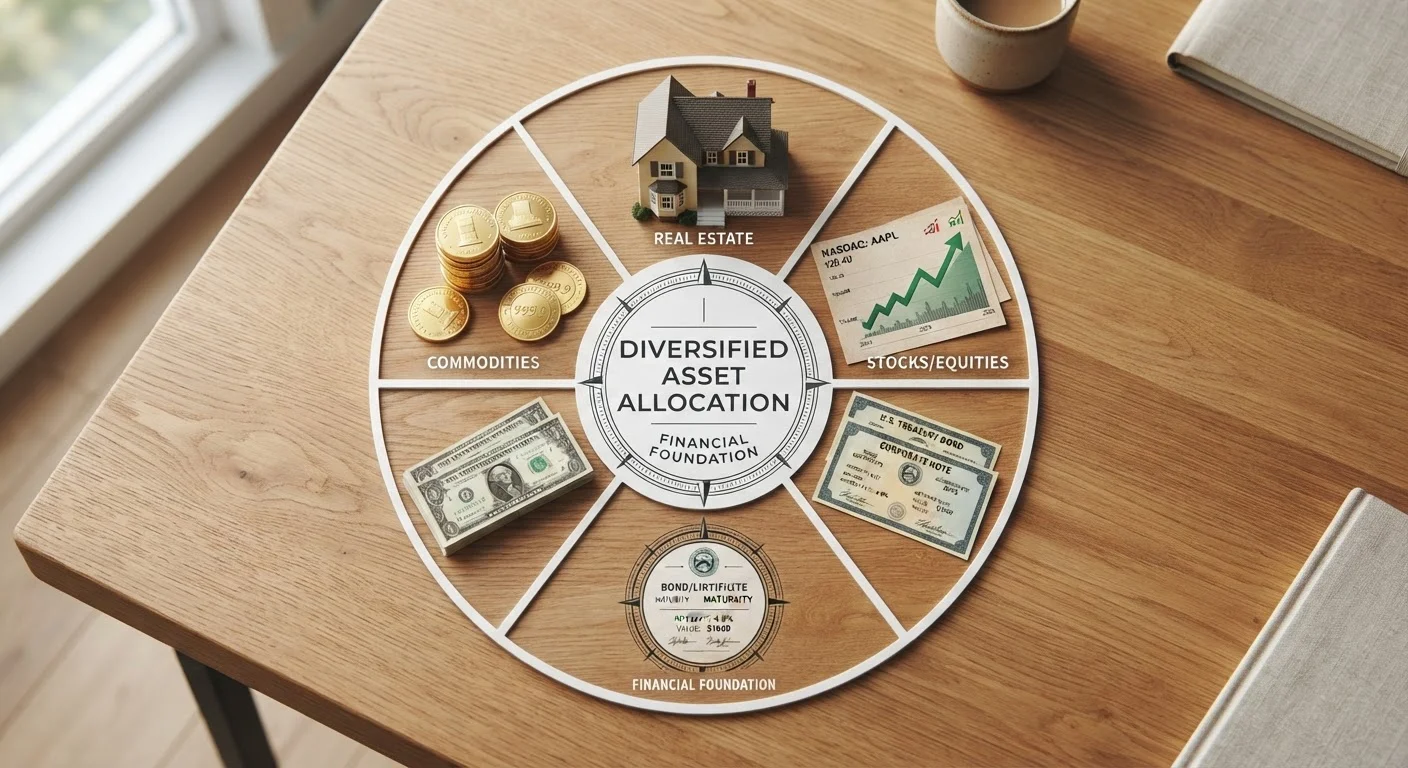
Photo: AnswersVista.com | Trustworthy Information Every Day editorial
Key Takeaways
- Owning many stocks in the same sector is not true diversification - sector risk remains concentrated.
- True diversification spans asset classes: stocks, bonds, real estate, and cash equivalents.
- Geographic diversification adds protection against country-specific economic downturns.
- Diversification reduces risk but does not eliminate it - all investing carries some level of uncertainty.
- Index funds can offer broad diversification in a single, low-effort investment vehicle.
The Common Misconception: More Stocks Equals Less Risk
Many investors assume that owning a large number of stocks automatically means they're diversified. But if all of those stocks are technology companies, for example, a downturn in the tech sector hits every single holding at once. That's concentration risk hiding behind the appearance of variety.
True diversification isn't about quantity - it's about how differently your investments behave relative to each other. The goal is to build a portfolio where not everything moves in the same direction at the same time.
Diversification Does Not Guarantee Against Loss
What Real Diversification Actually Covers
Genuine diversification operates across several layers simultaneously:
- Asset classes: Stocks, bonds, real estate (including REITs), cash equivalents, and commodities each respond differently to economic conditions. Bonds, for instance, have historically provided some cushion when stock markets decline.
- Sectors and industries: Within equities, spreading holdings across healthcare, energy, consumer staples, financials, and technology reduces sector-specific risk.
- Geographies: U.S. markets and international markets don't always move in lockstep. Holding some international exposure - developed and emerging markets - can smooth out country-specific downturns.
- Investment styles: Blending growth-oriented and value-oriented holdings adds another layer of balance, since these styles often perform differently across market cycles.
For many everyday investors, a simple combination of a broad U.S. stock index fund, an international fund, and a bond fund covers most of these dimensions without complexity. Our explainer on index funds for everyday investors breaks down how these vehicles work in practice.
~20-30
Stocks needed to reduce company-specific risk significantly
Academic research, including work cited in standard portfolio theory literature, suggests this range captures most of the risk-reduction benefit of equity diversification - provided holdings span different industries.
40%+
Share of global equity market outside the U.S.
According to MSCI index data, non-U.S. markets represent a substantial portion of global equity value, underscoring the potential risk of a purely domestic equity portfolio.
Diversification and Time: Why Both Matter Together
Diversification and time horizon work hand in hand. A well-diversified portfolio still fluctuates in value - but over longer periods, the probability of recovering from downturns increases significantly. Someone with 30 years until retirement can absorb more short-term volatility than someone five years out.
This is also why diversification connects directly to the power of staying invested. Compounding interest requires time in the market to do its work - and a diversified portfolio makes it psychologically and financially easier to stay the course through inevitable downturns, rather than panic-selling at the worst moment.
Your time horizon should also shape how you diversify. Shorter-term financial goals - like saving for a home down payment - call for a fundamentally different approach than retirement investing. Understanding when to save versus invest is essential context before deciding on any allocation.
“Diversification is the only free lunch in investing. It allows investors to reduce risk without necessarily sacrificing expected returns.”
— Harry Markowitz, Nobel Prize-winning economist and pioneer of Modern Portfolio Theory
Maintaining Diversification Over Time
A diversified portfolio doesn't stay that way automatically. As different assets grow at different rates, your original allocation drifts. A portfolio designed to be 70% stocks and 30% bonds might become 80/20 after a strong equity bull market - taking on more risk than you intended.
Rebalancing - periodically selling a portion of overweighted assets and adding to underweighted ones - restores your target allocation. Many investors rebalance annually or when an asset class drifts more than 5-10 percentage points from its target.
Some target-date funds handle rebalancing automatically, gradually shifting toward more conservative allocations as a retirement date approaches. If you're managing your own portfolio, building a simple rebalancing schedule into your annual financial review is a practical habit.
This article is for general informational and educational purposes only. It does not constitute personalized financial, investment, tax, or legal advice. Consult a qualified, licensed financial adviser before making decisions based on your individual circumstances.
Frequently Asked Questions
The content provided on our blog site traverses numerous categories, offering readers valuable and practical information. Readers can use the editorial team’s research and data to gain more insights into their topics of interest. However, they are requested not to treat the articles as conclusive. The website team cannot be held responsible for differences in data or inaccuracies found across other platforms. Please also note that the site might also miss out on various schemes and offers available that the readers may find more beneficial than the ones we cover.