
Gas vs. Electric Ranges: The Technical Tradeoffs Behind Each Cooking Style

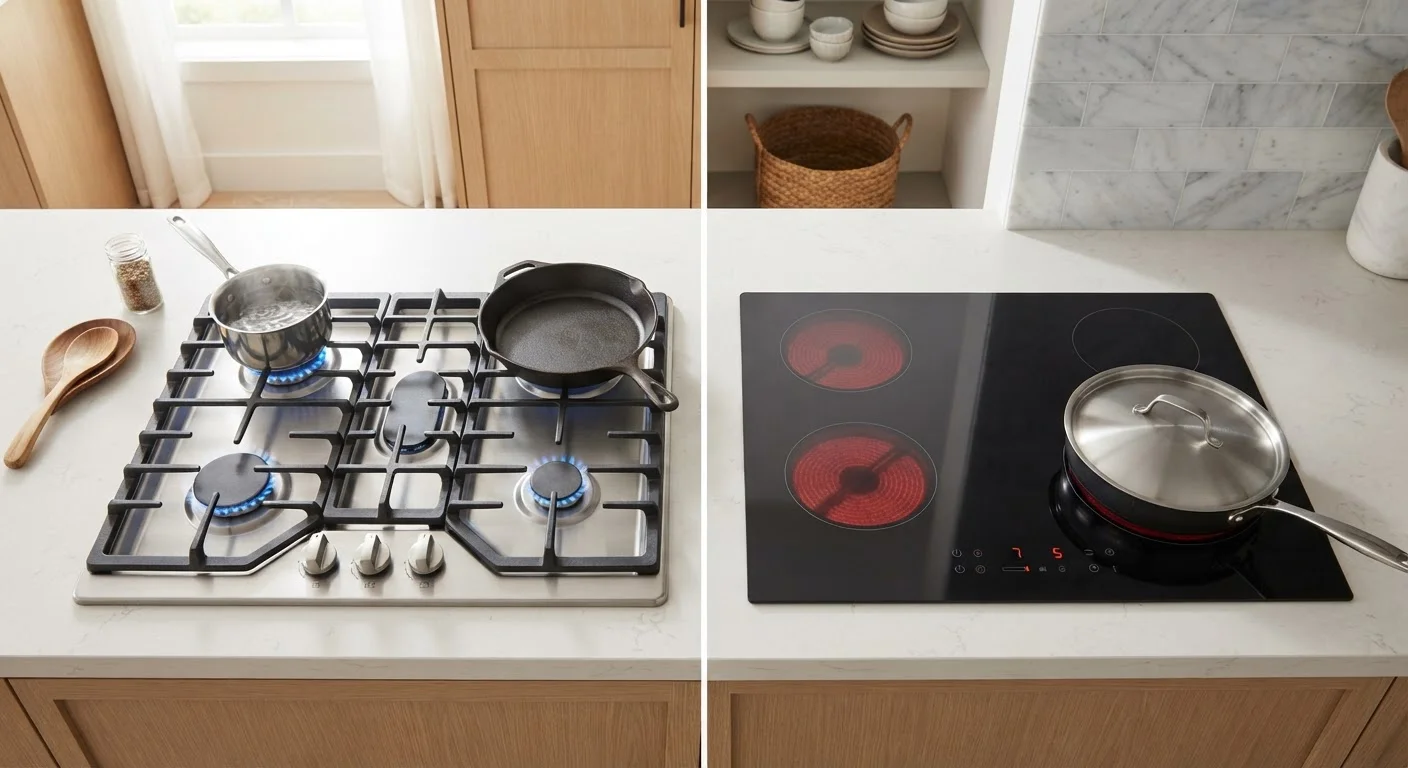
Photo: AnswersVista.com | Trustworthy Information Every Day editorial
Key Takeaways
- Gas burners respond instantly to dial adjustments; electric elements lag behind but distribute heat more evenly.
- Electric ranges typically cost less upfront; gas may have lower operating costs depending on local utility rates.
- Installation requirements - gas line access, 240V outlet, ventilation - often determine which type is practical.
- Smooth electric cooktops are easier to clean; gas grates require more regular maintenance.
- Induction, a subset of electric, offers the fastest heat response and highest energy efficiency of all three types.
How Each System Delivers Heat
The core technical difference between gas and electric ranges is how they generate and transfer heat. Gas burners combust natural gas or propane, producing an open flame that heats cookware directly through convection and radiation. The result is immediate, visible feedback - you can see the flame size change the moment you adjust the dial.
Electric ranges work differently depending on their element type. Traditional coil or smooth-top radiant elements use electrical resistance to heat a metal or glass surface, which then conducts heat into the pan. This indirect transfer means there's a lag - both in heating up and cooling down. Induction cooktops, however, use electromagnetic fields to generate heat inside the pan itself, bypassing the surface entirely. Induction is technically the most responsive electric option and the most energy-efficient of all three types.
In ovens, the distinction shifts. Electric ovens typically maintain more consistent temperatures because they can heat from both top and bottom elements simultaneously and don't introduce combustion byproducts that affect humidity. Gas ovens tend to run slightly hotter at the bottom and can cycle temperature more noticeably - something experienced bakers often compensate for by rotating trays.
Heat Control, Response Time, and Cooking Performance
For cooktop cooking, gas has a practical edge in immediacy. Lowering the flame produces an instant reduction in heat output, which matters when a sauce threatens to scorch or you're finishing a delicate reduction. Cooks accustomed to wok cooking, for instance, often prefer the high-BTU output and rapid adjustment gas provides.
Radiant electric elements respond more slowly - turn the dial down, and the element retains residual heat for a minute or more. This can catch cooks off-guard, particularly when transitioning from a high sear to a gentle simmer. Induction largely closes this gap, with response times approaching gas, but it requires compatible (magnetic) cookware - cast iron and most stainless steel work; aluminum and copper do not unless they have a magnetic base.
| Gas Range | Radiant Electric | Induction Electric | |
|---|---|---|---|
| Cooktop heat response | Immediate (visual flame) | Slow - residual heat lingers | Fast - near-gas response |
| Oven temperature consistency | Moderate - bottom-heavy heat | High - even top/bottom elements | High - even top/bottom elements |
| Energy efficiency (cooktop) | ~40% to pan | ~74% to pan | ~85-90% to pan |
| Installation complexity | Requires gas line + ventilation | Needs 240V outlet (common) | Needs 240V outlet (common) |
| Surface cleaning ease | Difficult - grates and ports | Moderate - flat glass surface | Easy - cool surface, wipes clean |
| Cookware compatibility | All types | All types | Magnetic cookware only |
| Safety considerations | Open flame, combustion gases | Hot surface burn risk | Surface stays cool; lowest burn risk |
For oven performance, electric tends to edge ahead for baking due to drier, more consistent heat. Gas ovens add moisture from combustion, which some bakers find beneficial for bread but problematic for crisping pastry. As with any appliance, manufacturer specs don't always reflect real-world cooking conditions - see our guide on manufacturer specs vs. real-world performance for how to evaluate oven temperature claims more critically.
Installation, Cost, and Energy Considerations
Installation requirements are often the deciding factor before performance even enters the conversation. Gas ranges require an active gas line and proper ventilation - if your kitchen doesn't have one, running a new line involves permits, licensed contractors, and significant cost. Electric ranges need a dedicated 240V outlet, which most modern kitchens already have, making swaps simpler and cheaper.
Check Your Utility Rates Before Deciding
Operating costs vary by region. Natural gas is generally cheaper per BTU than electricity in many U.S. markets, but local utility rates fluctuate significantly - what's economical in one state may not be in another. Induction's efficiency advantage (roughly 85-90% of energy reaches the pan, versus about 40% for gas) can offset higher electricity rates in some cases, though individual results depend heavily on usage patterns and local pricing.
This tradeoff between fuel types parallels broader energy debates, including those in transportation. The total ownership cost comparison between EVs and gas-powered cars follows a similar structure: higher upfront or infrastructure cost for electric, potentially lower ongoing operating expense.
Maintenance, Safety, and Practical Living
Day-to-day maintenance differs noticeably. Gas cooktops have grates, burner caps, and igniter ports that trap grease and require regular cleaning. Smooth electric and induction surfaces are flat glass - spills wipe off easily, though burnt-on residue on a hot radiant surface can be stubborn.
On safety, electric ranges eliminate open-flame risks - no gas leaks, no pilot light failures, no combustion byproducts in an unventilated kitchen. Induction cooktops go further: the surface itself doesn't get hot (only the pan does), dramatically reducing burn risk. Gas cooking indoors does produce nitrogen dioxide and particulate matter; adequate ventilation - a range hood vented to the outside - is important regardless of cooking frequency.
If you're also evaluating air fryers or countertop convection ovens as supplements to your range, understanding how different heating methods compare is useful groundwork - our breakdown of air fryers vs. convection ovens covers that territory in detail.
Ultimately, neither range type is objectively superior across every metric. Matching the technology to your actual cooking style, kitchen setup, and utility environment produces a more durable decision than defaulting to habit or kitchen aesthetics.
The content provided on our blog site traverses numerous categories, offering readers valuable and practical information. Readers can use the editorial team’s research and data to gain more insights into their topics of interest. However, they are requested not to treat the articles as conclusive. The website team cannot be held responsible for differences in data or inaccuracies found across other platforms. Please also note that the site might also miss out on various schemes and offers available that the readers may find more beneficial than the ones we cover.