
Myths About 'Higher Price Means Better Quality' in Consumer Electronics

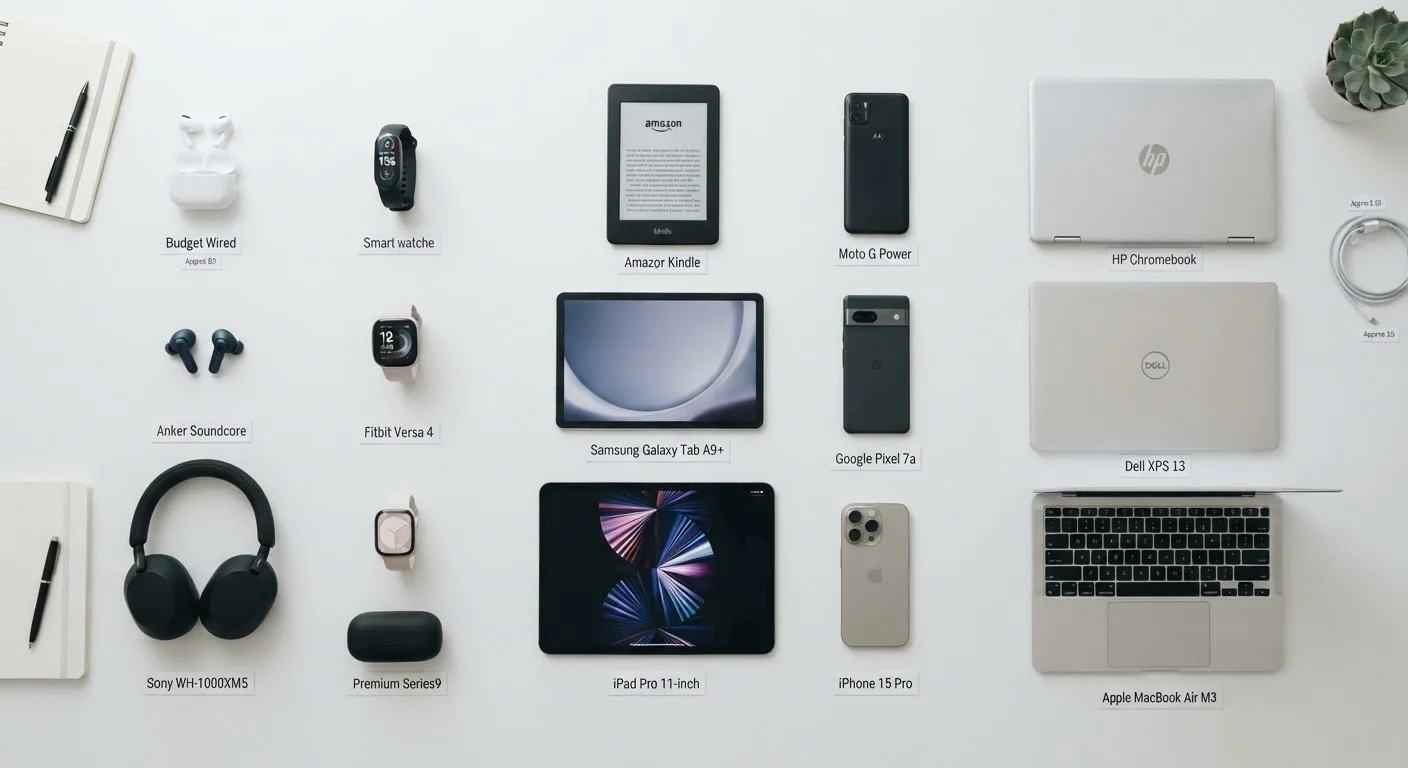
Photo: AnswersVista.com | Trustworthy Information Every Day editorial
Key Takeaways
- Premium pricing in consumer electronics often reflects branding and marketing costs, not superior components.
- Independent benchmark testing frequently shows mid-range devices matching or outperforming expensive flagships in everyday use.
- Warranty length, repairability, and support quality are stronger quality signals than sticker price alone.
- Diminishing returns set in quickly - meaningful performance gains shrink as price climbs above mid-tier.
- Specs printed on a box rarely translate directly to real-world experience; verified reviews matter more.
Why the Price-Quality Assumption Is So Persistent
The belief that a higher price signals a better product is deeply ingrained - and understandable. In many traditional categories, like hand-stitched leather goods or precision instruments, craftsmanship genuinely correlates with cost. Consumer electronics inherited this assumption, but the manufacturing reality is fundamentally different.
Modern electronics are built around commodity components sourced from a small number of global suppliers. Displays, processors, and batteries often come from the same factories regardless of which brand name ends up on the finished device. What separates a $300 product from a $900 product is frequently a mix of industrial design, marketing spend, retail markup, and brand equity - not a doubling or tripling of internal component quality.
Understanding where price does and doesn't track with performance is one of the most practical skills a consumer can develop. For a broader view of how price relates to true value, see our guide to value vs. price.
Myth
If a TV or smartphone costs twice as much, it must perform twice as well.
Fact
Performance gains become smaller - not proportional - as price increases above the mid-tier.
Doubling the price rarely doubles any meaningful metric. In display technology, for example, the perceptual difference between a mid-range and a premium panel is often far smaller than the price gap suggests. Benchmark organizations consistently find that performance curves flatten sharply past a certain threshold, meaning an extra few hundred dollars buys marginal gains in everyday use.
Myth
Expensive audio equipment produces objectively better sound for all listeners.
Fact
Perceived audio quality is highly subjective and shaped by use case, ear anatomy, and source material - not price alone.
Controlled listening tests - including well-known blind trials in the audiophile community - have repeatedly shown that listeners struggle to reliably distinguish between mid-range and high-end headphones or speakers when brand labels are removed. For most streaming use cases, the source audio quality and listening environment play a larger role in perceived sound quality than the hardware's price tier.
Myth
A premium-priced laptop will last significantly longer than a mid-range model.
Fact
Longevity is driven by build materials, repairability, and software support commitments - not price category alone.
Some mid-range laptops use durable chassis materials and carry extended software support cycles, while some premium models prioritize thin form factors using designs that complicate repairs and reduce serviceable lifespan. A device's repairability score, availability of replacement parts, and the manufacturer's track record on OS or firmware updates are more predictive of useful lifespan than the original purchase price.
Myth
Expensive smartphones always have better cameras.
Fact
Camera quality depends on sensor size, computational processing, and software optimization - advantages that mid-range devices increasingly share.
Camera improvements have been one of the fastest-moving areas in smartphones, and mid-tier devices have closed the gap substantially. Computational photography - the software processing that happens after the shutter fires - has made sensor-level differences less decisive for most shooting scenarios. Independent camera benchmark organizations regularly show mid-range phones producing results comparable to flagship cameras in typical lighting conditions.
Myth
A higher-priced product must be built from superior materials.
Fact
Premium pricing often reflects design, brand positioning, and retail channel costs rather than component-level upgrades.
Many consumer electronics brands source components - chipsets, displays, batteries - from the same global suppliers. A higher retail price frequently incorporates marketing budgets, distribution costs, and brand margin rather than a fundamentally different bill of materials. Checking teardown analyses from independent hardware reviewers can reveal when two differently priced products share significant internal components.
What Actually Predicts Quality in Consumer Electronics
If price isn't a reliable proxy, what signals should shoppers trust? Several factors have a stronger track record.
~80%
Performance delivered by mid-tier devices vs. flagships
Independent technology reviewers commonly note that mid-range consumer electronics deliver roughly 80% of flagship performance at 40-60% of the cost in categories like smartphones and laptops.
2-3×
Typical price multiplier over mid-range for marginal gains
Consumer electronics pricing structures frequently show a two-to-three times price increase for improvements that benchmark testing rates as perceptually minor in normal use conditions.
- Independent benchmark scores: Third-party testing organizations measure real-world performance - battery life under load, display color accuracy, audio frequency response - without a stake in which product wins.
- Repairability ratings: Devices with accessible parts and available replacement components tend to last longer in practice, regardless of their launch price.
- Warranty and support terms: A longer warranty backed by accessible customer service indicates a manufacturer's confidence in their product. Read the fine print - not all warranties cover the same failure types.
- Review consistency over time: Early reviews reflect day-one performance. Returning to reviews 12-18 months after a product launches reveals whether durability holds up.
Specs printed on packaging are also worth scrutinizing carefully. Manufacturer figures are typically captured under ideal conditions and can diverge significantly from everyday results - our explainer on specs vs. real-world performance walks through exactly how that gap forms and what questions close it.
Brand reputation is a separate consideration. In some electronics categories it reflects genuine quality infrastructure; in others it's mostly a premium for the label. Our look at generic vs. name brand products maps out where the distinction is real and where it isn't.
Price Is Not a Substitute for Research
The content provided on our blog site traverses numerous categories, offering readers valuable and practical information. Readers can use the editorial team’s research and data to gain more insights into their topics of interest. However, they are requested not to treat the articles as conclusive. The website team cannot be held responsible for differences in data or inaccuracies found across other platforms. Please also note that the site might also miss out on various schemes and offers available that the readers may find more beneficial than the ones we cover.