
Robot Vacuums vs. Traditional Vacuums: Matching the Right Tool to Your Cleaning Habits

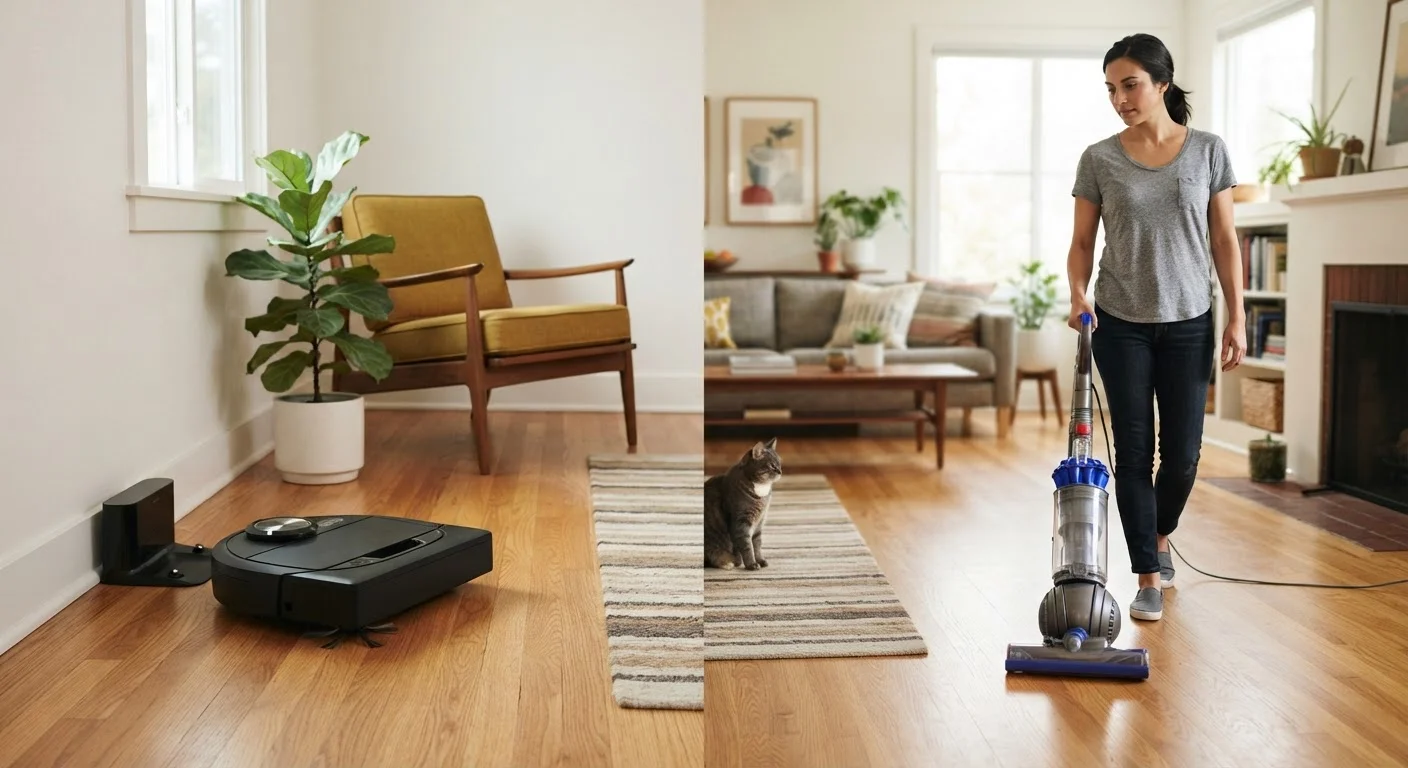
Photo: AnswersVista.com | Trustworthy Information Every Day editorial
Key Takeaways
- Robot vacuums excel at frequent, light-touch maintenance but struggle with deep cleaning and cluttered spaces.
- Traditional vacuums offer greater suction power, versatility across surface types, and no recharging delays.
- Homes with pets, stairs, or thick carpet typically get better results from a traditional vacuum.
- Robot vacuums require regular upkeep - emptying bins, clearing sensors, and keeping floors tidy enough to navigate.
- Many households find the two tools complement each other rather than serve as true replacements.
What Each Tool Is Actually Built to Do
Robot vacuums are designed for frequency, not depth. They run on a schedule, navigating autonomously across open floor space using sensors or mapping technology, collecting surface-level dust, hair, and debris along the way. Their strength is consistency - keeping floors in reasonable shape day to day without any effort from you.
Traditional vacuums - whether upright, canister, or stick - are designed for thoroughness and control. You direct the machine, adjust suction, swap attachments, and tackle specific problem areas. That direct involvement is a feature, not a flaw; it's what lets you clean stairs, upholstery, baseboards, and embedded carpet debris effectively.
The core tension between them isn't about which is better overall - it's about which cleaning behavior they support. Understanding that difference is the fastest path to a practical decision. For a deeper look at how corded and cordless form factors affect traditional vacuum performance, see how vacuum specs translate to real-world results.
Head-to-Head: Key Differences That Matter
Breaking the comparison down by specific criteria reveals where each vacuum genuinely wins - and where the marketing language often overstates the case.
| Criterion | Robot Vacuum | Traditional Vacuum |
|---|---|---|
| Suction power | Moderate - suited for surface debris | High - effective for deep cleaning |
| Automation | Fully autonomous, scheduled runs | Manual operation required |
| Stairs & above-floor cleaning | Not possible | Yes, with attachments |
| Pet hair on carpet | Limited - brush tangles frequently | Strong, especially with agitator brush |
| Floor layout flexibility | Open, uncluttered spaces only | Works in any layout |
| Upfront cost range | Generally moderate to high | Wide range - budget to premium |
| Ongoing maintenance | Frequent bin, brush, sensor care | Periodic bag or canister changes |
| Session time required from user | Near zero during operation | Full session time required |
One area worth calling out: maintenance burden. Robot vacuums are often marketed as low-effort, but they require regular attention - emptying small dustbins, cleaning brush rolls tangled with hair, wiping sensors, and occasionally updating software. Traditional vacuums typically need less frequent bag or canister changes and have fewer components to maintain.
When Your Floor Plan Shapes the Answer
Layout is one of the most underweighted factors in this decision. Robot vacuums perform best in open, uncluttered spaces with consistent flooring. Rooms with many chair legs, low furniture, cables on the floor, or irregular thresholds between floor types challenge navigation and reduce cleaning coverage.
Multi-story homes are a particular sticking point: robot vacuums cannot climb stairs, so you'd need one per floor or accept that stairs go unaddressed. Traditional vacuums handle multi-level homes without compromise.
Homes with pets introduce another layer. Animal hair tends to wrap aggressively around robot vacuum brush rolls - a design constraint that requires more frequent maintenance and can reduce suction over time if not managed consistently. Traditional vacuums with tangle-free brush roll designs or strong suction typically handle pet hair more reliably.
Robot Vacuums Need a Tidy Floor to Work Well
Before committing to either type, it helps to do a room-by-room audit of your actual cleaning needs. A room-by-room checklist for major home purchases can help you identify factors you might otherwise overlook.
The Case for Using Both
For many households, the most practical answer isn't a choice between the two - it's a layered approach. A robot vacuum handles daily or every-other-day surface maintenance on open floors, while a traditional vacuum handles weekly or biweekly deep cleaning, stairs, upholstery, and any area the robot can't reach effectively.
This mirrors a broader principle found in home maintenance generally: routine, frequent upkeep reduces the burden of each deeper session. Staying consistent with routine maintenance almost always pays off in less effort over time - whether that's a car or a floor.
The trade-off is cost: you're buying two devices and maintaining both. Whether that's worthwhile depends on your floor area, household size, and how much value you place on automation versus direct control. There's no universal right answer, but there is a right answer for your specific situation - and it comes down to honest self-assessment of how you actually clean, not how you intend to.
~30 min
Average robot vacuum run time per charge
Many robot vacuum models offer 60-120 minutes of runtime per charge, though actual coverage depends heavily on room layout and floor type.
2-4x
Suction advantage of traditional over robot vacuums
Consumer testing organizations have generally found that upright traditional vacuums outperform robot models on embedded carpet debris by a significant margin.
The content provided on our blog site traverses numerous categories, offering readers valuable and practical information. Readers can use the editorial team’s research and data to gain more insights into their topics of interest. However, they are requested not to treat the articles as conclusive. The website team cannot be held responsible for differences in data or inaccuracies found across other platforms. Please also note that the site might also miss out on various schemes and offers available that the readers may find more beneficial than the ones we cover.