
The Long-Term Payoff of Staying on Top of Routine Maintenance

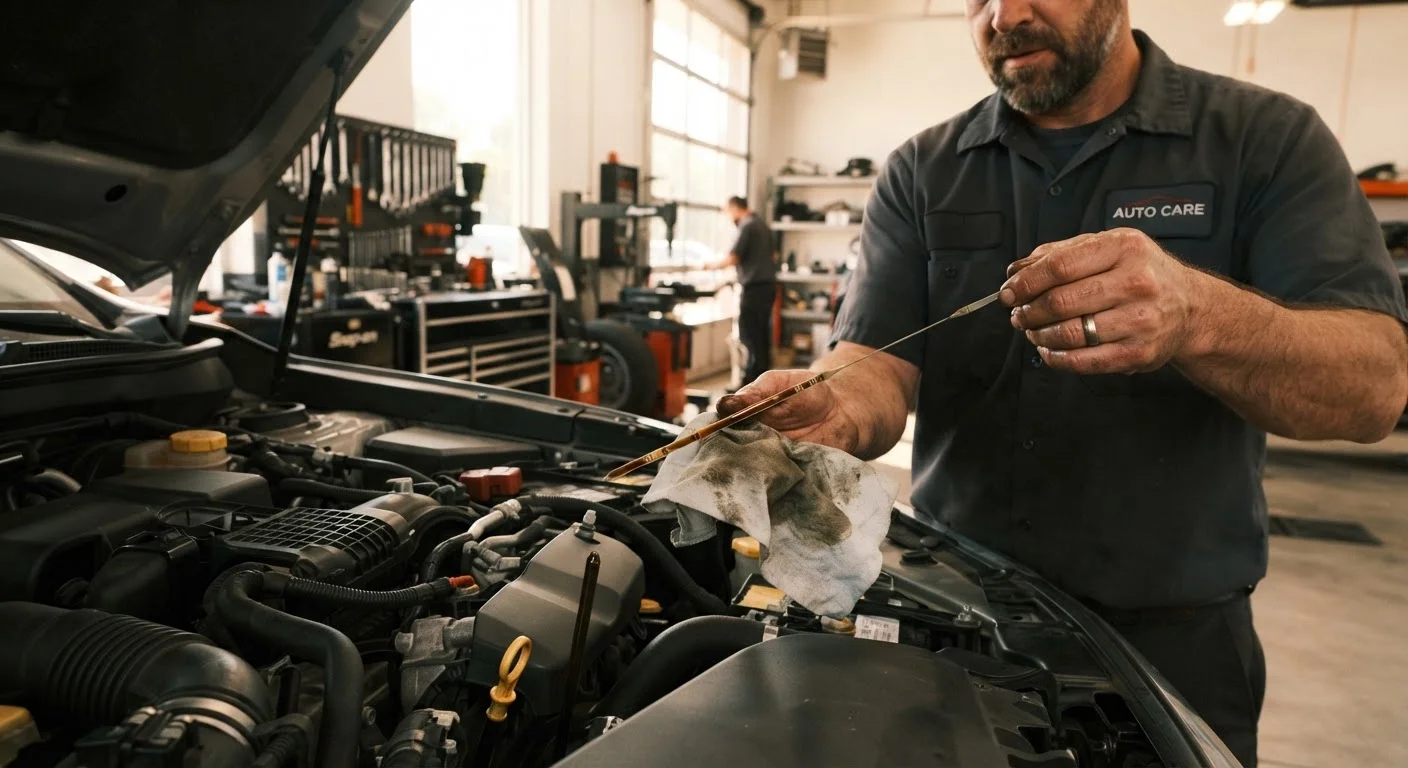
Photo: AnswersVista.com | Trustworthy Information Every Day editorial
Key Takeaways
- Consistent maintenance prevents small issues from escalating into expensive repairs.
- Routine upkeep preserves resale value and extends the usable life of your vehicle.
- Maintenance does carry real costs in time and money that vary by vehicle type and age.
- Skipping scheduled services rarely saves money over the long term.
- Understanding your owner's manual service schedule is the foundation of smart vehicle ownership.
Prevents small problems from becoming major failures
Catching a worn belt, low brake fluid, or a developing leak during a routine service typically costs a fraction of the repair bill that results from ignoring it. Deferred maintenance is one of the leading causes of premature component failure.
Extends the usable life of the vehicle
Engines and transmissions that receive consistent fluid changes and inspections simply last longer. Many vehicles with documented maintenance histories routinely reach 200,000 miles or more without major drivetrain work.
Supports stronger resale and trade-in value
A verifiable service history is one of the most persuasive factors for used-car buyers. Vehicles with documented maintenance records command measurably better prices than comparable cars without them.
Maintains fuel efficiency
Fresh engine oil, properly inflated tires, and clean air filters all contribute to optimal fuel economy. Neglected vehicles can experience meaningful efficiency losses over time, adding up at the pump.
Keeps the vehicle safer to operate
Brake inspections, tire condition checks, and fluid level monitoring are directly tied to safe vehicle operation. Routine maintenance catches safety-critical issues before they create hazardous situations on the road.
Reduces the likelihood of unexpected breakdowns
Breakdowns are not only expensive - they are disruptive. Regular maintenance dramatically reduces the chance of a roadside failure during a commute or long-distance trip.
Routine services add up to real money
Oil changes, tire rotations, fluid flushes, and filter replacements each carry a cost. Across a full year, these scheduled expenses can total several hundred dollars depending on the vehicle type and service provider.
Time at the shop is a genuine inconvenience
Dropping a vehicle off for service, arranging alternative transportation, and waiting for completion requires planning. For drivers with demanding schedules, finding time for maintenance appointments is a recurring friction point.
Older vehicles may have escalating maintenance demands
As a vehicle ages, the frequency and complexity of required services tends to increase. At a certain point, the cumulative cost of maintenance must be weighed honestly against the vehicle's remaining value and reliability outlook.
Not all service recommendations are equally urgent
Service providers may recommend items beyond the manufacturer's schedule, some of which have limited urgency. Drivers without mechanical knowledge may struggle to distinguish necessary services from lower-priority upsells.
Why Routine Maintenance Is Worth Taking Seriously
Most vehicle problems do not appear without warning - they develop gradually, driven by wear, contamination, and neglect. Routine maintenance is the systematic practice of addressing those predictable wear points before they become failures. Oil changes, tire rotations, brake inspections, fluid top-offs, and filter replacements are not arbitrary service-shop inventions; they reflect the actual degradation rates of specific components under real-world driving conditions.
The manufacturer's maintenance schedule in your owner's manual is the most reliable roadmap for this. It specifies service intervals by mileage and time because both matter - an oil change due at 5,000 miles is equally necessary if six months have passed, even if the mileage hasn't been reached.
Understanding what these intervals protect against is the first step toward making maintenance a financial strategy rather than just an obligation.
Prevents small problems from becoming major failures
Catching a worn belt, low brake fluid, or a developing leak during a routine service typically costs a fraction of the repair bill that results from ignoring it. Deferred maintenance is one of the leading causes of premature component failure.
Extends the usable life of the vehicle
Engines and transmissions that receive consistent fluid changes and inspections simply last longer. Many vehicles with documented maintenance histories routinely reach 200,000 miles or more without major drivetrain work.
Supports stronger resale and trade-in value
A verifiable service history is one of the most persuasive factors for used-car buyers. Vehicles with documented maintenance records command measurably better prices than comparable cars without them.
Maintains fuel efficiency
Fresh engine oil, properly inflated tires, and clean air filters all contribute to optimal fuel economy. Neglected vehicles can experience meaningful efficiency losses over time, adding up at the pump.
Keeps the vehicle safer to operate
Brake inspections, tire condition checks, and fluid level monitoring are directly tied to safe vehicle operation. Routine maintenance catches safety-critical issues before they create hazardous situations on the road.
Reduces the likelihood of unexpected breakdowns
Breakdowns are not only expensive - they are disruptive. Regular maintenance dramatically reduces the chance of a roadside failure during a commute or long-distance trip.
The Real Costs and Drawbacks to Acknowledge
Balanced decision-making means confronting the genuine trade-offs. Routine maintenance has real costs - in dollars, in time, and occasionally in inconvenience - and understating them does drivers a disservice.
Routine services add up to real money
Oil changes, tire rotations, fluid flushes, and filter replacements each carry a cost. Across a full year, these scheduled expenses can total several hundred dollars depending on the vehicle type and service provider.
Time at the shop is a genuine inconvenience
Dropping a vehicle off for service, arranging alternative transportation, and waiting for completion requires planning. For drivers with demanding schedules, finding time for maintenance appointments is a recurring friction point.
Older vehicles may have escalating maintenance demands
As a vehicle ages, the frequency and complexity of required services tends to increase. At a certain point, the cumulative cost of maintenance must be weighed honestly against the vehicle's remaining value and reliability outlook.
Not all service recommendations are equally urgent
Service providers may recommend items beyond the manufacturer's schedule, some of which have limited urgency. Drivers without mechanical knowledge may struggle to distinguish necessary services from lower-priority upsells.
For drivers managing tight budgets, these pressures are especially real. Maintaining your vehicle on a limited budget requires prioritising the services that carry the greatest risk if deferred - typically oil changes, brake checks, and tire condition - over lower-urgency items that can be responsibly delayed with monitoring.
The Long-Term Financial Picture
$9,000+
Average annual vehicle ownership cost in the U.S.
AAA's annual Your Driving Costs study consistently places total ownership expenses - including maintenance, fuel, insurance, and depreciation - above $9,000 per year for the average American driver.
~31%
Share of vehicles with overdue oil changes
Industry surveys have repeatedly found that a significant portion of vehicles on American roads are operating with degraded engine oil past its recommended change interval.
200,000+ miles
Realistic lifespan of a well-maintained modern vehicle
Automotive engineers and independent mechanics broadly agree that modern vehicles maintained according to manufacturer schedules can reliably reach 200,000 miles or more.
The financial argument for consistent maintenance becomes clearest when viewed over the full ownership period. A vehicle maintained according to schedule will typically reach higher mileage with fewer major component failures than one subjected to deferred care. This matters most for drivers who plan to keep their car past 100,000 miles - a segment that now represents a growing share of American vehicle owners, given rising new-car prices and longer loan terms.
Resale value is another tangible factor. A documented service history signals to private buyers and dealerships alike that the vehicle was cared for, which supports a stronger asking price. The costs of skipping maintenance are rarely visible in the moment - they accumulate quietly and surface at the worst times.
For those planning to keep an aging vehicle running, the principles covered in keeping a high-mileage car reliable build directly on a foundation of consistent routine care.
Maintenance Costs Vary Significantly by Vehicle
The content provided on our blog site traverses numerous categories, offering readers valuable and practical information. Readers can use the editorial team’s research and data to gain more insights into their topics of interest. However, they are requested not to treat the articles as conclusive. The website team cannot be held responsible for differences in data or inaccuracies found across other platforms. Please also note that the site might also miss out on various schemes and offers available that the readers may find more beneficial than the ones we cover.