
Understanding Your Car's Maintenance Schedule

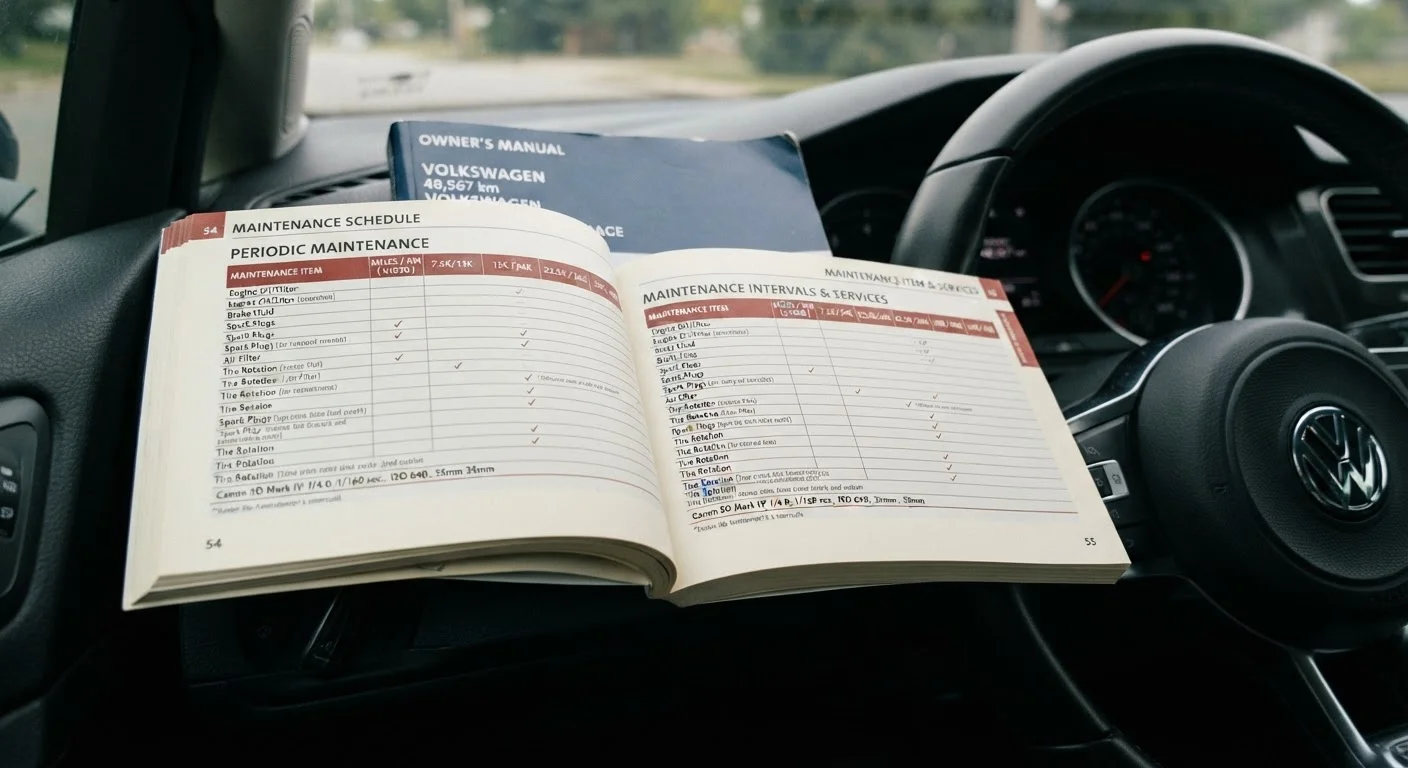
Photo: AnswersVista.com | Trustworthy Information Every Day editorial
Key Takeaways
- Your owner's manual - not a quick-lube shop sign - is the authoritative source for your vehicle's service intervals.
- Both mileage and time triggers matter; whichever comes first should prompt the service.
- Skipping scheduled maintenance can void warranty coverage and lead to significantly higher repair costs.
- Many drivers qualify for the 'severe' driving schedule without realizing it, requiring more frequent service.
- Keeping service records protects resale value and helps diagnose future problems faster.
What a Maintenance Schedule Actually Is
Every new vehicle comes with a factory maintenance schedule - a manufacturer-engineered list of service tasks tied to specific mileage or time milestones. It's not a suggestion. Engineers develop these schedules based on how components wear under real operating conditions, so the intervals reflect the point at which fluids degrade, filters clog, or parts approach the end of their reliable service life.
The schedule lives in your owner's manual. Not on a sticker in your windshield, not on the sign at a quick-lube shop - in the manual. That document is specific to your vehicle's engine, transmission, and design. It's part of the broader picture of responsible vehicle ownership that spans everything from the first oil change to long-term reliability planning.
Maintenance schedule
A manufacturer-defined list of service tasks tied to specific mileage or time intervals, designed to keep a vehicle running safely and efficiently.
Service interval
The mileage or time period between required maintenance tasks - for example, an oil change every 5,000 miles or 6 months, whichever comes first.
Severe driving conditions
Operating patterns - like frequent short trips, towing, or extreme temperatures - that put greater stress on vehicle components and require more frequent servicing than standard schedules.
Preventive maintenance
Routine service performed on a schedule to prevent breakdowns before they happen, rather than reacting after something fails.
Multi-point inspection
A systematic check of key vehicle systems performed by a technician, usually covering fluids, tires, brakes, belts, and lights during a service visit.
Mileage vs. Time Intervals: Why Both Matter
Most service tasks carry two triggers: a mileage figure and a time period - for example, "every 7,500 miles or 12 months, whichever comes first." Both exist for good reason. Mileage captures mechanical wear; time captures chemical degradation. Oil sitting in an engine for 14 months has begun to break down and accumulate moisture even if the car has barely moved. The same principle applies to coolant, brake fluid, and other liquids.
The practical rule: whichever trigger arrives first is the one that matters. Drivers who put on low annual mileage - retirees, remote workers, or those with a second vehicle - often hit the time limit before the mileage limit and should service accordingly. Ignoring the time trigger because the odometer hasn't climbed is a common and costly mistake.
Quick-Lube Boards Aren't Your Service Guide
The Most Common Service Milestones Explained
Most maintenance schedules share a recognizable structure built around these recurring tasks:
- Oil and filter change: The most frequent item. Interval varies by vehicle and oil type - some modern engines with full-synthetic oil can go 7,500-10,000 miles between changes. Your manual specifies the right interval and the correct oil viscosity.
- Tire rotation: Typically every 5,000-7,500 miles, often aligned with oil changes for convenience. Rotations even out tread wear and extend tire life. Pair this with the numbers in our guide to tire pressure and tread depth.
- Air filter replacement: Usually every 15,000-30,000 miles. A clogged engine air filter reduces fuel efficiency and performance.
- Brake fluid flush: Often every 2 years regardless of mileage, since brake fluid absorbs moisture over time and lowers its boiling point.
- Spark plugs: Conventional plugs may need replacement around 30,000 miles; iridium or platinum plugs used in many modern engines can last 60,000-100,000 miles.
- Timing belt or chain: One of the highest-stakes items. Timing belt replacement is typically required between 60,000-100,000 miles depending on the manufacturer. Belt failure can cause catastrophic engine damage.
For a detailed breakdown of what each milestone means for your specific vehicle, see our mileage milestone explainer.
Set a Calendar Reminder Alongside Your Odometer
Normal vs. Severe Driving Conditions
Nearly every owner's manual contains two schedules: one for normal driving and one for severe or special operating conditions. Most drivers assume they fall into the normal category, but the severe-duty definition is broader than many expect. Manufacturers typically define severe conditions to include:
- Frequent trips of less than 5 miles (the engine never fully warms up)
- Extensive idling or low-speed driving in stop-and-go traffic
- Towing, hauling heavy loads, or driving on steep grades
- Operating in extreme heat, extreme cold, or dusty environments
If your daily commute involves short urban trips and frequent idling - a description that fits millions of American drivers - you likely qualify for the severe schedule. That means shorter intervals between oil changes, more frequent fluid checks, and earlier filter replacements. Check your manual's specific criteria rather than assuming.
Understanding these conditions also matters for high-mileage vehicles. If you're keeping an older car long-term, the guidance in keeping a high-mileage car reliable addresses how to adapt your maintenance approach as components age.
Electric and Hybrid Vehicles Differ
How to Actually Use Your Owner's Manual
The owner's manual is the single most underused document in most glove compartments. Here's how to put it to work:
- Find the maintenance section. It's usually indexed clearly. Look for a table listing services by mileage and time. Some manufacturers also provide a separate "Maintenance Guide" booklet.
- Identify which schedule applies to you. Read the severe-duty conditions list carefully before defaulting to the normal schedule.
- Note the next three upcoming service items. This gives you visibility ahead and prevents surprises.
- Keep a service log. Record every completed service - date, mileage, what was done, and who did it. This protects your warranty, helps with what mechanics evaluate during inspections, and strengthens resale value.
Consistent maintenance is one of the most direct ways to manage long-term ownership costs. For a fuller picture of the financial upside, explore the long-term payoff of routine maintenance. And if budget is a concern, car maintenance on a tight budget offers practical strategies for staying on schedule without overspending.
Frequently Asked Questions
The content provided on our blog site traverses numerous categories, offering readers valuable and practical information. Readers can use the editorial team’s research and data to gain more insights into their topics of interest. However, they are requested not to treat the articles as conclusive. The website team cannot be held responsible for differences in data or inaccuracies found across other platforms. Please also note that the site might also miss out on various schemes and offers available that the readers may find more beneficial than the ones we cover.