
Tire Pressure and Tread Depth: The Numbers Every Driver Should Know

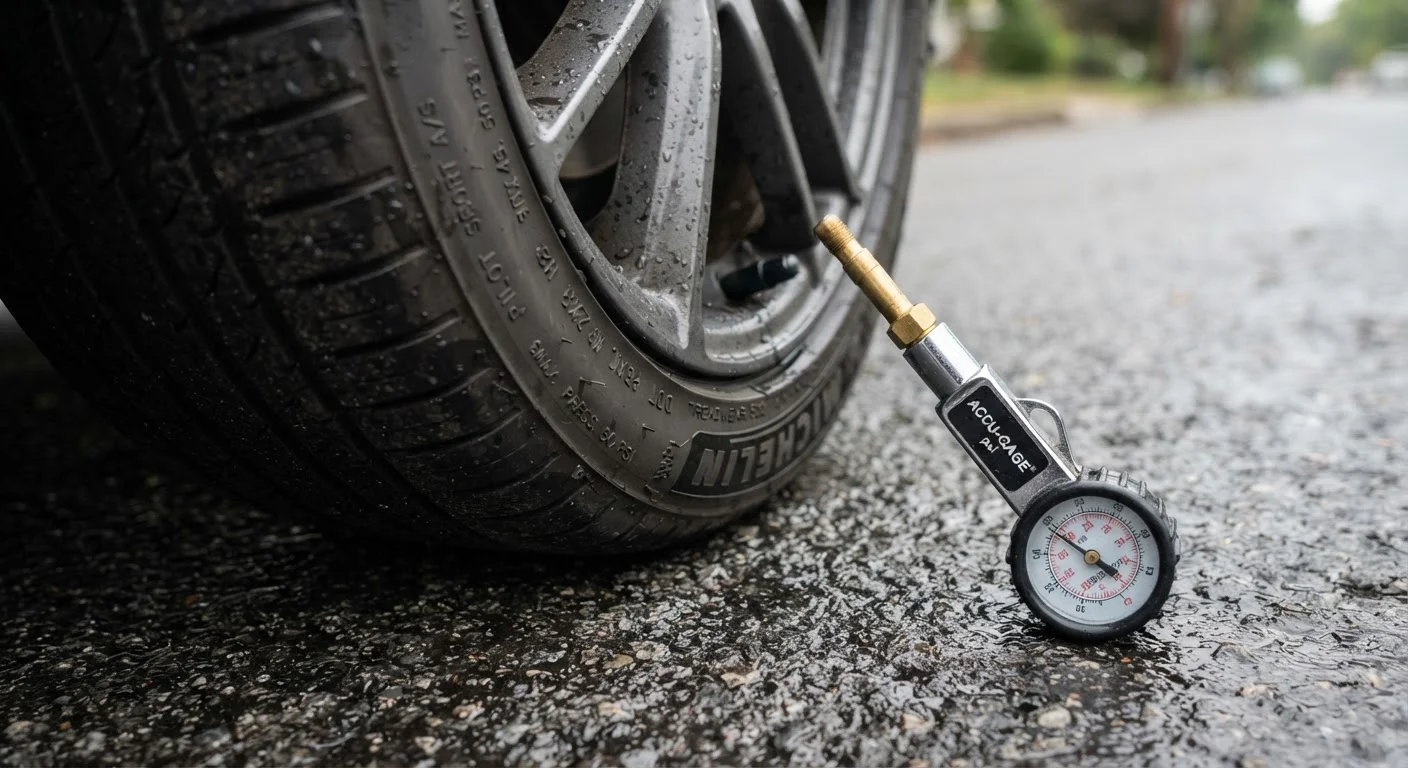
Photo: AnswersVista.com | Trustworthy Information Every Day editorial
Why These Two Numbers Matter More Than Most Drivers Realize
Tires are the only part of your vehicle that actually contacts the road. Every steering input, braking force, and acceleration impulse passes through four contact patches, each roughly the size of a hand. The pressure inside the tire and the depth of its tread grooves determine how well those patches do their job - especially in rain, gravel, and emergency stops.
Driving on tires that are underinflated, overinflated, or worn past their safe limit is one of the most common - and most preventable - causes of loss of vehicle control. Understanding the actual numbers, not just vague warnings, is the first step to making confident decisions. This article is part of a broader resource on tire maintenance from the ground up.
Tire Pressure: What PSI to Look For and How to Check It
PSI stands for pounds per square inch - the unit used to measure tire inflation. Most passenger cars require between 32 and 35 PSI, while light trucks and SUVs often call for 35-45 PSI. The exact figure for your vehicle is printed on a sticker inside the driver's door jamb, or in your owner's manual. It is not the maximum PSI molded onto the tire sidewall - that number is the tire's structural limit, not the recommended driving pressure.
Check pressure when tires are cold - meaning the vehicle has been parked for at least three hours or driven fewer than a mile. Heat from driving temporarily raises PSI readings, which can lead you to underinflate a warm tire. A simple dial or digital gauge (available at any auto parts store) is all you need. Many gas stations also have air machines with built-in gauges.
Tires lose roughly 1 PSI per month naturally, and drop about 1 PSI for every 10°F drop in ambient temperature. Monthly checks are a reasonable habit; checking before any long trip is essential. If your vehicle has a Tire Pressure Monitoring System (TPMS), note that the warning light typically illuminates only when pressure drops 25% below recommended - by then, handling is already compromised. See how TPMS fits into the broader picture of dashboard warning lights you should recognize.
PSI (Pounds Per Square Inch)
The unit of measurement for tire inflation pressure. Your vehicle's recommended PSI is specific to that model and load rating - always check the door jamb sticker, not the tire sidewall.
Tread Depth
The distance from the top of the tire's rubber tread to the bottom of its deepest grooves, measured in 32nds of an inch. Deeper tread channels water away more effectively, improving wet-road grip.
Tread Wear Indicators
Small raised rubber bars molded into tire grooves at the 2/32" mark. When the surrounding tread is flush with these bars, the tire has reached its legal wear limit.
TPMS (Tire Pressure Monitoring System)
A federally mandated sensor system in vehicles made after 2008 that alerts the driver when one or more tires fall significantly below the recommended PSI. It is a safety backstop, not a substitute for regular manual checks.
Cold Inflation Pressure
The tire pressure measured after the vehicle has been stationary for at least three hours. Checking pressure on cold tires gives the most accurate baseline reading.
Tread Depth: Reading the Numbers and the Built-In Indicators
Tread depth is measured in thirty-seconds of an inch (32nds). A new tire typically starts at 10/32" to 11/32" of tread. The legal minimum in most U.S. states is 2/32", and many safety organizations recommend replacing tires at 4/32" - especially if you drive in rain or snow regularly.
The easiest measurement tool is a tread depth gauge, which costs just a few dollars. A classic workaround is the penny test: insert a penny into the tread groove with Lincoln's head pointing down. If you can see the top of his head, you're at or below 2/32" and the tire should be replaced immediately. The quarter test (using Washington's head) signals 4/32" - a more conservative and generally safer threshold.
Modern tires also have tread wear indicators - small raised bars molded directly into the grooves at 2/32". When the tread surface is flush with these bars, the tire has reached its legal wear limit. Check multiple grooves across the tire width; uneven wear often signals alignment or inflation problems worth addressing before they progress.
Staying on top of tire condition doesn't have to be expensive. The car maintenance on a tight budget guide covers practical ways to keep safety-critical checks from falling through the cracks when money is tight.
The content provided on our blog site traverses numerous categories, offering readers valuable and practical information. Readers can use the editorial team’s research and data to gain more insights into their topics of interest. However, they are requested not to treat the articles as conclusive. The website team cannot be held responsible for differences in data or inaccuracies found across other platforms. Please also note that the site might also miss out on various schemes and offers available that the readers may find more beneficial than the ones we cover.