
Hard-Shell vs. Soft-Shell Luggage: What Each Handles Best

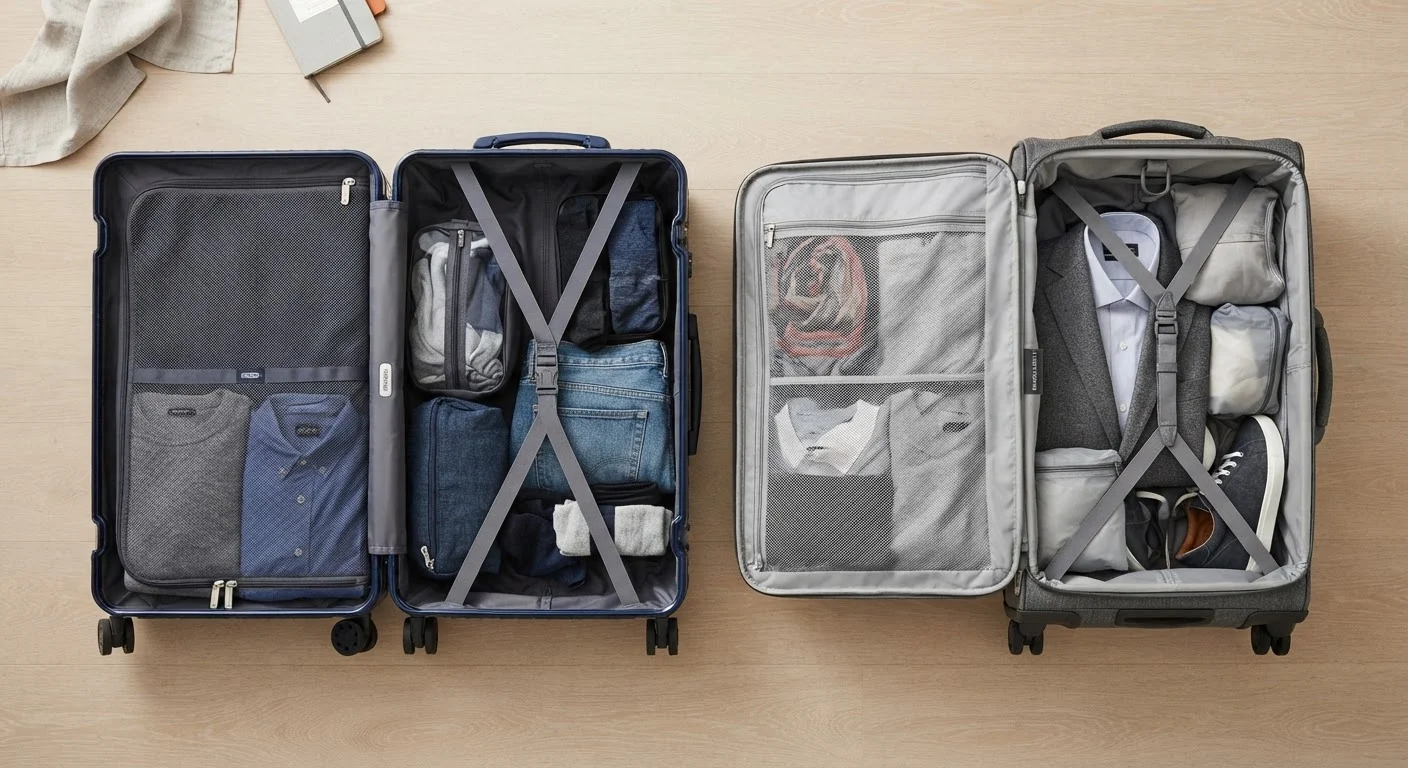
Photo: AnswersVista.com | Trustworthy Information Every Day editorial
Key Takeaways
- Hard-shell cases offer better impact protection, making them ideal for checked bags with fragile contents.
- Soft-shell bags are generally lighter and offer more packing flexibility, especially useful as carry-ons.
- Hard shells are waterproof on the exterior; soft shells can absorb moisture but often include water-resistant coatings.
- Soft-shell bags typically offer exterior pockets; hard shells do not, limiting quick-access storage.
- Weight matters — soft-shell bags often weigh less, giving you more allowance for clothes and gear.
- Neither shell type is universally superior — the right choice depends on your travel style and trip type.
How Each Shell Type Handles the Physical Demands of Travel
Luggage takes a beating — tossed by handlers, crammed into cargo holds, and dragged across every surface imaginable. How your bag holds up depends heavily on what it's made of.
Hard-shell cases, typically made from polycarbonate or ABS plastic, are rigid by design. That structure is an asset when your bag is checked: it resists crushing, deflects impact, and keeps contents from being compressed by the weight of other bags. If you're packing a camera, glass bottles, or anything that doesn't bounce back from a squeeze, a hard shell gives meaningful protection. The downside is inflexibility — you can't squeeze in one more item once the zipper meets its limit.
Soft-shell bags, made from nylon or polyester fabrics, work in the opposite way. The material gives, which means you can overstuff slightly and still zip it closed. That flexibility is a genuine advantage when you're trying to fit a carry-on into a tight overhead bin or need to accommodate souvenirs on the return trip. For more on managing that return-trip overflow, see why your suitcase always feels too full on the way home.
| Criterion | Hard-Shell | Soft-Shell |
|---|---|---|
| Impact protection | High — rigid exterior absorbs force | Moderate — fabric absorbs some flex |
| Packing flexibility | Low — fixed interior volume | High — fabric gives for overpacking |
| Typical empty weight | Heavier (polycarbonate/ABS) | Lighter (nylon/polyester) |
| Water resistance | Excellent — fully repellent shell | Good — coating fades over time |
| Exterior pockets | None | Yes — multiple on most models |
| Best use case | Checked bags, fragile contents | Carry-on, flexible packing needs |
| Scratch and scuff resistance | Moderate — shows marks over time | Better — fabric hides surface wear |
Weight, Access, and the Everyday Practicalities
Shell type affects more than durability — it shapes how you interact with your bag from the moment you pack it to when you land.
Weight: Empty weight varies by brand and size, but soft-shell bags tend to run lighter than hard-shell equivalents. That difference — sometimes half a pound to a full pound — matters when you're targeting a 50-pound checked bag limit or a 22-pound carry-on cap. If you're already packing efficiently, those savings go directly toward your actual gear. Pairing shell-type awareness with smarter packing methods can stretch your capacity further; rolling vs. folding your clothes is one variable worth examining.
Exterior access: Soft-shell bags almost always include outer pockets — useful for travel documents, a jacket, snacks, or a portable charger. Hard shells offer a clean, seamless exterior with no exterior pockets, which means accessing anything requires opening the entire case. For travelers who want items at arm's reach throughout the day, that's a real friction point.
Weather resistance: Hard shells win here outright. Rain, spills, and humidity can't penetrate the shell itself. Soft-shell fabrics typically feature water-resistant coatings, but those coatings wear over time and don't match the complete repellency of polycarbonate or ABS.
~1 lb
Typical weight difference between shell types
Soft-shell bags often weigh roughly half a pound to a full pound less empty than comparable hard-shell cases, a meaningful difference against airline weight limits.
50 lbs
Standard checked bag weight limit (most U.S. carriers)
Most major U.S. airlines cap checked bags at 50 pounds; every pound your empty bag weighs is a pound taken from your clothing and gear allowance.
22 x 14 x 9 in
Common U.S. carry-on size limit
This is a widely used carry-on dimension guideline among U.S. airlines, though policies vary — always verify with your specific carrier before travel.
Deciding between checking and carrying on is a related calculation — the carry-on vs. checked bag trade-offs guide walks through how trip length and airline policies factor in.
Which Shell Type Fits Your Travel Pattern
Neither shell type is objectively better. The right pick depends on how you travel and what you're hauling.
If your trips regularly involve checking bags and you're carrying anything that doesn't survive impact — bottles, electronics, ceramics — a hard shell is a practical investment. The same applies if you travel through climates where rain or humidity is consistent. For business travel where you want the bag to arrive at baggage claim looking polished, hard shells also resist scuffs better than fabric (though spinner wheels and corner points still take abuse).
If you're a carry-on-only traveler, or someone who tends to come home with more than they left with, a soft-shell bag rewards flexibility. The ability to compress or expand slightly, combined with exterior pockets and lighter weight, makes soft-shell bags the everyday workhorse for a wide range of trips. For deeper guidance on building a carry-on strategy, see packing light vs. checking bags.
Some travelers use both: a hard-shell checked bag for longer international trips and a soft-shell carry-on for short domestic flights. That combination covers most scenarios without compromise.
This article provides general travel information. Actual bag weights, dimensions, and material performance will vary by manufacturer. Always verify airline baggage policies before you travel.
The content provided on our blog site traverses numerous categories, offering readers valuable and practical information. Readers can use the editorial team’s research and data to gain more insights into their topics of interest. However, they are requested not to treat the articles as conclusive. The website team cannot be held responsible for differences in data or inaccuracies found across other platforms. Please also note that the site might also miss out on various schemes and offers available that the readers may find more beneficial than the ones we cover.